10 Tips to Supercharge Your Headless CMS
Headless CMS optimization in 2026 requires implementing smart GraphQL caching strategies, structuring content for AI visibility, and leveraging agentic workflows with proper governance. Organizations can achieve sub-100ms response times through persisted queries and CDN caching, while structured evidence chains increase AI citation rates by over 20%.
Key Takeaways
• GraphQL Performance: Persisted queries and GET-based caching on CDNs can reduce response times by orders of magnitude for frequently accessed content
• AI Optimization: High-quality, evidence-backed content sees a +20.6% increase in citation rate with advanced AI models like Claude Opus 4.6
• Market Growth: The headless CMS market is projected to reach $5.53 billion by 2032, growing at 22.1% CAGR
• Enterprise Efficiency: Multi-site CMS implementations demonstrate 30% decreased production time for new sites
• Migration Complexity: 40% of users report navigation difficulties during platform migrations, highlighting the need for careful planning
The headless CMS market is projected to exceed $7.1 billion by 2035, driven by organizations demanding flexible, API-driven content delivery across channels. But choosing a headless CMS is only half the battle. In 2026, headless CMS optimization means tuning your platform for speed, AI visibility, and autonomous workflows that keep pace with buyer expectations. This guide delivers 10 actionable tips to help you extract maximum value from your investment.
Why Headless CMS Optimization Now Matters
Time to market is the primary business driver for content management systems today. According to Forrester, businesses are consolidating to a single CMS to gain efficiencies, and 90% of global technology decision-makers anticipated increasing their budgets for consumer-facing digital products and services over the next 12 months.
This investment surge reflects a fundamental shift. Headless delivery and composable architecture have become the building blocks for AI-powered digital content management. Organizations that optimize their headless CMS now gain compounding advantages in speed, governance, and AI search visibility.
For teams managing content across multiple brands, regions, or channels, optimization is no longer optional. It is the difference between scaling efficiently and drowning in technical debt.
Key takeaway: Optimizing your headless CMS today positions you to capture AI search traffic, reduce manual workload, and accelerate content operations across your entire portfolio.
How Can Smart GraphQL Caching Slash Response Times?
GraphQL powers many modern headless CMS implementations, but its flexibility creates caching challenges. "GraphQL itself doesn't actually include any native caching mechanisms—any caching you want to add you need to build yourself." This reality means teams must proactively implement caching strategies to achieve sub-100ms response times.
The use of persisted GraphQL queries is strongly recommended by Adobe for AEM implementations, and the same principle applies across platforms. Persisted queries reduce parsing overhead and enable CDN caching that dramatically improves performance.
Three strategies deliver the fastest results:
CDN caching for GraphQL requests: Configure your WordPress or CMS site to cache GraphQL requests on a CDN until the underlying content changes
Server-side response caching: Store GraphQL query responses in fast in-memory stores like Redis or Memcached
Schema optimization: Structure your GraphQL schema to allow individual fields to be requested independently, making granular caching possible
Persisted & GET-based Queries
Persisted queries are when a GraphQL query is predefined and stored on the server with a unique identifier. Instead of sending the full query string with each request, clients send only the identifier. This approach enables HTTP GET requests, which CDNs can cache natively.
The WPGraphQL Smart Cache plugin enables GraphQL requests via the GET method for improved network caching. When combined with proper cache-control headers, this setup can reduce response times by orders of magnitude for frequently accessed content.
Edge Headers & Surrogate Keys
Edge caching improves performance for Front-End Sites that rely on API endpoints and reduces CMS load during high-traffic periods. The @pantheon-systems/wordpress-kit npm package exports a function, setEdgeHeaders, which takes in a response object and a cache-control header value.
Surrogate keys enable more flexible purging because cached responses include metadata. When content changes, you can invalidate only the affected cached responses rather than purging entire cache layers.
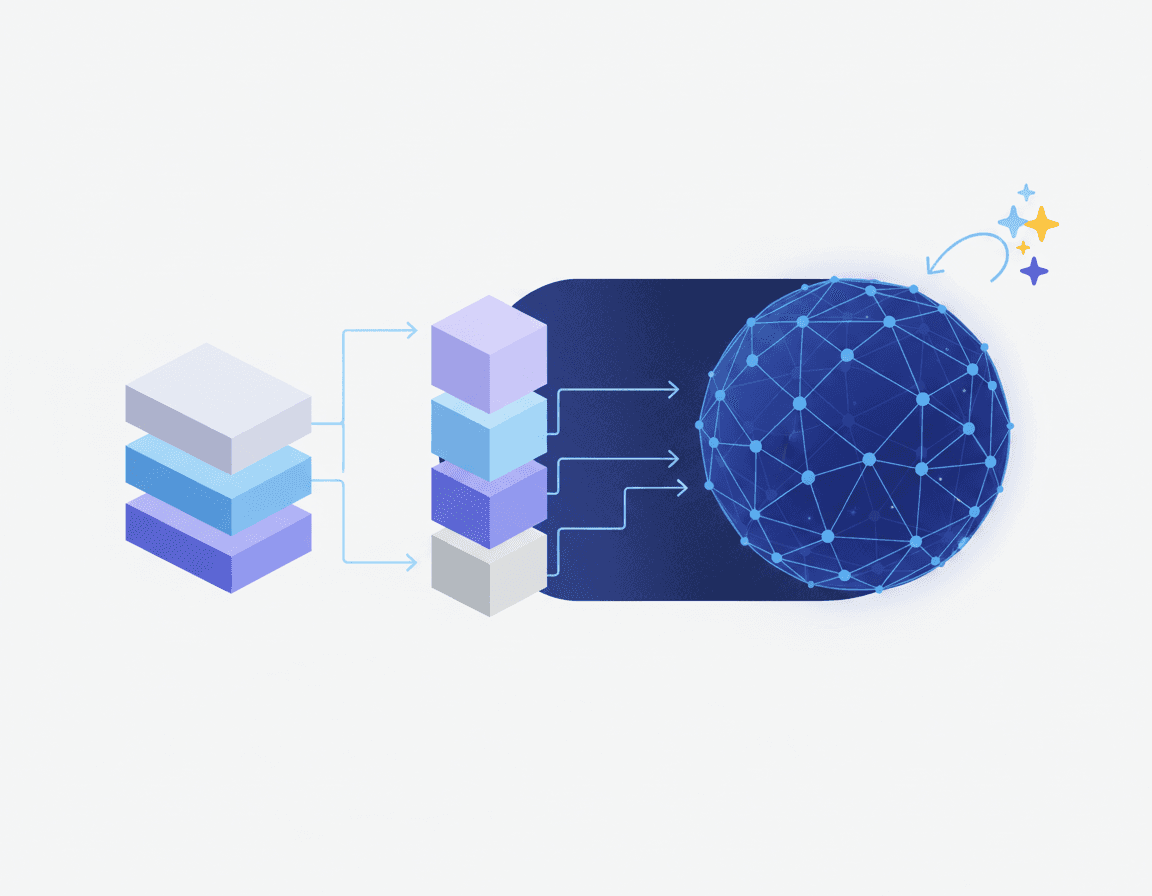
How Do You Structure Content for Generative Engine Optimization?
Generative Engine Optimization (GEO) is the practice of building clean, documented "interfaces" for large language models the same way you build REST endpoints for humans and machines. Unlike traditional SEO, which focuses on ranking for keyword queries, GEO optimizes for how AI-powered engines parse, embed, and synthesize information.
The stakes are significant. Evidence chains matter more than ever—claims must be supported with verifiable data. High-quality, evidence-backed content sees a +20.6% increase in citation rate with advanced AI models like Claude Opus 4.6, while medium-quality content sees an 18.2% decrease.
Three structural principles drive GEO success:
Semantic markup as a type system: Schema.org acts as TypeScript for content—add types once, stop guessing later
Consistent entity tagging: Tag the same author, product, or API consistently across pages to maintain referential integrity inside the model's knowledge graph
Cross-page consistency: AI engines with extended context windows can evaluate your entire content cluster for contradictions
Attach JSON-LD & ImageObject at Component Level
Set representativeOfPage to true for the primary visual so crawlers know which asset best summarizes the content. The ImageObject schema captures the authoritative description of a single image: where it lives, what it depicts, how large it is, and whether others can reuse it.
For images, the url property should resolve to the web page that features the image with supporting text, while contentUrl points to the direct CDN or storage URL. Use efficient formats like WebP and maintain minimum widths of 1200px for key images.
Build Claim → Evidence → Source Chains
Every major claim should follow the pattern: Claim → Evidence → Source → Implication. This structure mirrors how AI models evaluate content authority.
Opus 4.6's extended thinking fundamentally changes how AI evaluates content for citations—moving from pattern matching to genuine reasoning about content quality, accuracy, and authority. The model can distinguish between content that claims expertise and content that demonstrates it.
Why Combine Agentic Workflows with Built-In Security?
AI is taking over core user functions—think assistive authoring experiences with specialized AI agents to manage your content model, as well as content agents that automatically learn by generating variants based on analytics and interaction data.
Platforms like Hygraph offer enterprise-ready AI that accelerates content creation directly within the studio. With guided, schema-aware actions that require editor approval and ensure enterprise governance, teams work more quickly without sacrificing control.
The agentic CMS approach delivers measurable efficiency gains. A major multinational retail group reduced its collection launch time from 5 days to 90 seconds using an agentic workflow, according to the Agentic CMS Strategy Guide from Amplience.
But automation without governance creates risk. Effective agentic implementations require:
Role-based permissions: Control which users can trigger automated workflows and approve AI-generated content
Audit trails: Every action taken by an agent should be logged, showing exactly which model generated the copy and which human approved it
JWT-based user tokens: A User Token is a JWT that is issued specifically for a user of your app, and restricts which data they can access and which actions they can perform
Relixir's autonomous refresh capability continuously scans your entire content library for outdated information, auto-syncing with your knowledge base to keep everything current. This approach eliminates the content debt that accumulates in traditional CMS platforms while maintaining accuracy across all published materials.
Can Visual Editing and Next.js Live Previews Coexist?
Visual editors, personalization, and collaboration features are center stage in modern CMS selection. The question is no longer whether to support visual editing, but how to implement it without sacrificing the performance benefits of headless architecture.
Next.js is a React framework for the web, enabling you to create full-stack web applications. When combined with a headless CMS, it offers features like automatic code splitting and server-side rendering to enhance performance and SEO.
"Sanity's real-time collaboration is game-changing—two editors can simultaneously update a product description without conflicts (Google Docs-style operational transforms)." This capability demonstrates how modern headless platforms bridge the gap between developer flexibility and editor productivity.
Storyblok stands out with its Visual Editor—a distinctive feature that lets editors interact directly with the fully rendered frontend. Meanwhile, "Strapi's open-source nature means developers can modify the source code to fit their specific needs, providing unparalleled flexibility."
For Next.js implementations specifically:
Hygraph is GraphQL-native and offers precise data retrieval, minimizing over-fetching and optimizing efficiency
Builder.io allows you to visually build and manage your site without writing code, while still giving developers full control over the codebase
Builder.io supports A/B testing and personalization, enabling users to optimize content for different audiences
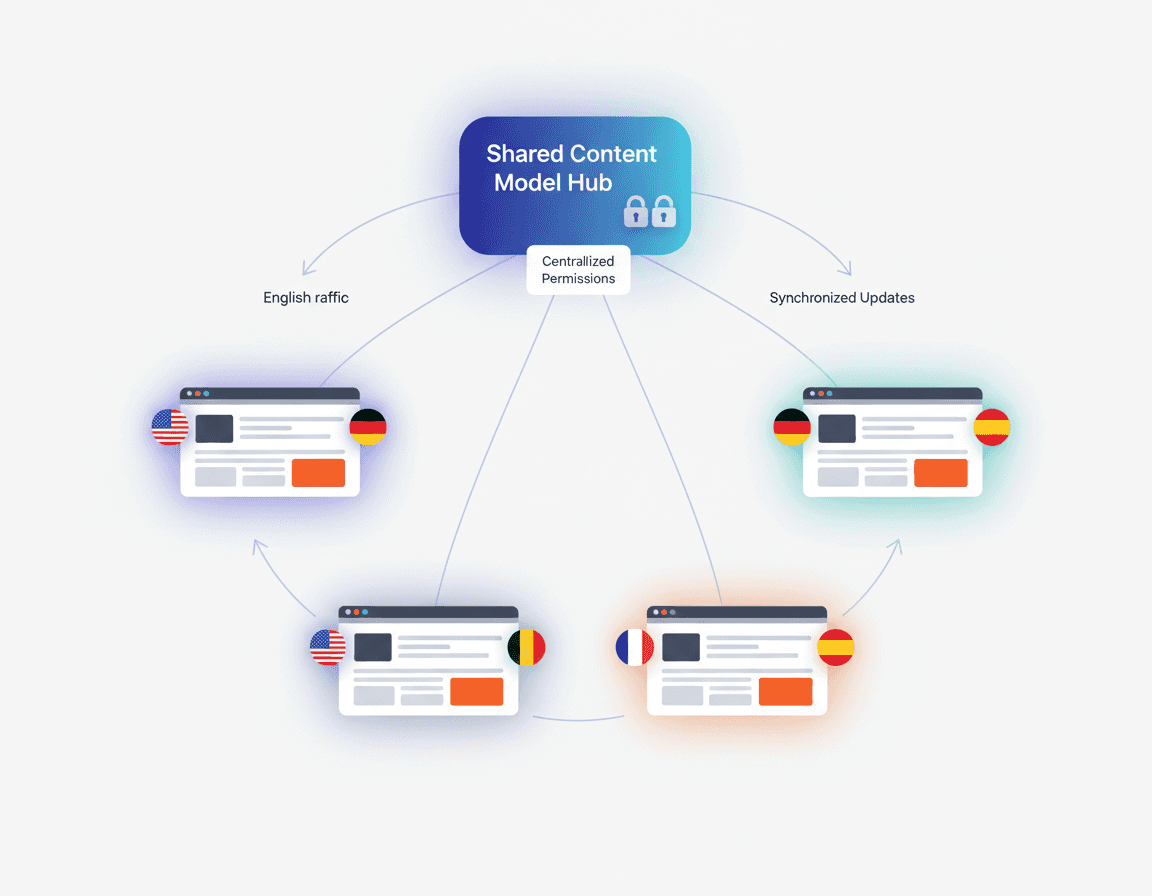
Master Multi-Brand & Multilingual Governance
Managing multiple websites across brands, regions, and languages has become a common but complex challenge for enterprise organizations. Multi-brand portfolios demand shared foundations with brand-level freedom—without duplicating content or teams.
A better approach is a shared content model with optional brand-specific fields, so core structures stay consistent while brand voices vary. This architecture enables the Create Once, Publish Everywhere (COPE) principle while maintaining editorial independence.
Effective multi-brand governance requires:
Capability | Implementation |
|---|---|
Centralized access controls | Set roles and permissions centrally with organization-level tokens |
Shared schemas | Use consistent content models with brand-specific field extensions |
Coordinated releases | Group changes and preview them together before synchronized publication |
API-driven delivery | Tailor frontends per brand without cloning data |
The results speak for themselves. Multi-site CMS implementations have demonstrated decreased production time for new sites by 30%. Enterprise SEO is now a product capability, not a plugin checkbox—governance must extend to how content appears in both traditional and AI search results.
Which Metrics Matter for Ongoing Performance & AI Visibility?
Traditional analytics platforms were not built to detect AI traffic. When ChatGPT or Claude visits your site, they sign their requests with Ed25519 signatures—but most analytics tools cannot identify this traffic. Loamly's Managed Proxy offers 100% accuracy using RFC 9421 and edge verification for AI traffic detection.
Understanding where your traffic originates is essential for measuring GEO success. Relixir delivers 65-85% accuracy in visitor identification from AI traffic, versus the industry standard of 5-30%. This visibility enables teams to attribute leads to specific AI search engines and measure the ROI of GEO investments.
For performance monitoring, Vercel Speed Insights stores the following information with every data point: Route, URL, Network Speed, Browser, Device Type, Device OS, Country, Web Vital metrics, and SDK Information. The recording of data points is anonymous and GDPR compliant.
Key metrics to track for headless CMS optimization:
AI mention rate: Percentage of relevant queries where your brand appears in AI-generated responses
Citation rate: How often AI search engines cite your content as a source
Content API latency: Response times for GraphQL and REST endpoints across regions
Time to first byte (TTFB): A critical signal for both traditional SEO and AI crawlers
Headless CMS Migration Pitfalls & Checklists
Migrating from one headless CMS to another is more than a technical transition—it is a semantic alignment exercise. Whether moving from Strapi to Contentful, Contentful to Strapi, or between any other platforms, careful planning prevents content loss and SEO disruption.
Three migration strategies suit different scenarios:
Manual Migration: A good fit for micro-sites or highly curated editorial pages, this hands-on method involves replicating your content structure within the target platform's interface
Automated Migration: Ideal for larger sites or structured content, this method uses APIs or scripts to export data and import it using the Content Management API or CLI
Hybrid Migration: A blended model where automation handles structured data while manual processes resolve complex relationships and rich media embeds
40% of users highlighted difficulties navigating Contentful's features during migrations. The learning curve varies significantly between platforms, making thorough planning essential.
The headless CMS market is projected to grow from approximately $751.6 million in 2022 to $5.53 billion by 2032, an explosive compound annual growth rate of 22.1%. This growth means more teams will face migration decisions as they outgrow initial platform choices or consolidate fragmented stacks.
Pre-migration checklist:
Audit existing content models and identify semantic structure differences
Map field types between source and target platforms
Plan for multilingual content handling—some platforms support single-entry, multi-locale structures
Test rich text transformations to avoid formatting loss
Maintain ID mappings to preserve internal linking
Validate content fidelity before switching production traffic
Key Takeaways: Optimize Today, Scale Tomorrow
Headless CMS optimization in 2026 requires attention across seven key areas:
GraphQL caching: Implement persisted queries, edge headers, and surrogate keys for sub-100ms response times
GEO structure: Build evidence chains with JSON-LD schema at the component level
Agentic workflows: Combine AI automation with robust governance and audit trails
Visual editing: Bridge developer flexibility with editor productivity through modern preview tools
Multi-brand governance: Share content models while enabling brand-level customization
Performance monitoring: Track AI visibility metrics alongside traditional analytics
Migration planning: Approach platform changes as semantic alignment exercises
Relixir customers consistently achieve a 3-5x increase in AI mention rate within 2-4 weeks of deployment. For teams seeking to turn their headless CMS into a citation engine for AI search, Relixir offers a GEO-native CMS that autonomously creates, publishes, and refreshes content optimized for LLM citations.
The window to establish AI search visibility is open now. Organizations that optimize their headless CMS today will compound their advantages as buyer behavior continues shifting from traditional search to AI-powered discovery.
Frequently Asked Questions
What is a headless CMS and why is it important?
A headless CMS is a content management system that decouples the backend from the frontend, allowing for flexible, API-driven content delivery across multiple channels. It's important because it enables faster content updates, better scalability, and improved integration with modern digital platforms.
How can GraphQL caching improve CMS performance?
GraphQL caching can significantly enhance CMS performance by reducing response times. Implementing strategies like CDN caching, server-side response caching, and schema optimization can help achieve sub-100ms response times, making content delivery faster and more efficient.
What is Generative Engine Optimization (GEO)?
Generative Engine Optimization (GEO) involves structuring content to optimize how AI-powered engines parse, embed, and synthesize information. It focuses on building evidence-backed content that AI models can easily cite, enhancing visibility in AI search results.
How does Relixir's autonomous refresh capability work?
Relixir's autonomous refresh capability continuously scans your content library for outdated information, syncing with your knowledge base to keep content current. This ensures that your content remains accurate and relevant, maintaining its visibility in AI search results.
What are the benefits of using a headless CMS for multi-brand governance?
A headless CMS allows for centralized content management while enabling brand-specific customization. This approach supports shared content models with brand-specific fields, reducing duplication and maintaining consistency across multiple brands and regions.
Sources
https://docs.pantheon.io/guides/decoupled/wp-backend-starters/caching
https://seenos.ai/model-upgrades/claude-evolution/claude-opus-46-geo-impact
https://kontent.ai/blog/manage-multiple-websites-efficiently-with-kontent-ai/
https://www.netsolutions.com/insights/contentful-migration-challenges/
https://www.netguru.com/blog/strapi-vs-storyblok-vs-contentful
https://www.forrester.com/report/buyers-guide-content-management-systems-2025/RES182341
https://docs.pantheon.io/guides/decoupled/wp-nextjs-frontend-starters/caching
https://strapi.io/blog/generative-engine-optimization-geo-guide
https://amplience.com/reports/the-agentic-cms-strategy-guide/
https://vercel.com/kb/guide/integrating-next-js-and-contentful-for-your-headless-cms
https://hrefcreative.com/contentful-vs-sanity-vs-strapi-best-headless-cms-2026
https://www.enterprisecms.org/guides/multi-brand-enterprise-cms-strategies
https://relixir.ai/blog/relixir-vs-profound-geo-native-cms-vs-geo-analytics-platform
https://kickassdevelopers.com/blog/migrating-from-strapi-to-contentful