
AI Content Management Version Control: Preventing Outdated Citations
Manual version control creates hidden costs through review delays, compliance gaps, and citation drift when AI systems pull outdated content. Research shows URLs older than six months contain significantly more outdated information, while automated systems maintain 95% content freshness automatically. Automated versioning tracks changes without manual intervention, ensuring the right version reaches AI crawlers and search engines at the right time.
TLDR
Manual versioning risks: Companies produce 5-10 document versions before finalizing content, creating review bottlenecks and incomplete audit trails
AI citation accuracy: 58% chance the top-ranked result gets cited in AI Overviews, amplifying both accurate and outdated information
Automated benefits: Systems like Relixir sync CMS content with AI search monitoring to detect and refresh outdated statistics automatically
Compliance requirements: ISO/IEC 27001 mandates documented version control with complete audit trails for information security
Implementation approaches: Deploy hooks, staging environments, and Git-based workflows enable automated publishing without full platform migrations
AI content version control has become the backbone of citation accuracy in an era when ChatGPT, Perplexity, and Google AI Overviews pull facts directly from your pages. If those pages reference stale statistics or deprecated product names, the misinformation spreads instantly across every AI-generated answer that cites you. Understanding why version control matters, how manual workflows break down, and what automated alternatives exist can help marketing and content teams stay accurate, compliant, and visible.
Why does version control matter in the AI-first content era?
Version control systems track changes to files over time, allowing teams to revert to previous versions if needed while also facilitating collaboration by merging changes from multiple contributors. In the context of AI search, that definition extends to training data, prompts, and the content LLMs crawl when they generate answers.
Document version control is a planned strategy for managing file updates within a document repository. Without it, teams lose visibility into who changed what and when, making fact-checking nearly impossible.
"Version control is a process that tracks and manages changes to information such as data, models, and system code," according to the Australian Government AI technical standard. When AI assistants pull from your site, they inherit whatever version they find. A single outdated figure can cascade through dozens of LLM responses before anyone notices.
The stakes extend beyond reputation. Compliance frameworks increasingly mandate version histories for audit trails, and search algorithms favor fresh, authoritative sources. Teams that treat version control as an afterthought risk losing both trust and visibility.
What are the hidden costs of manual CMS versioning?
Many content teams rely on workflows that amount to keeping the last 50 copies of a document. "Keeping the last 50 copies of a document is versioning, but it is far from a version control strategy," as one analyst put it. That approach creates several hidden costs:
Review-cycle delays: The average company produces 5-10 document versions before arriving at a final version, stretching timelines from hours to days.
Compliance exposure: In highly regulated industries like life sciences and medtech, document version control is essential for regulatory compliance. Manual tracking often leaves incomplete audit trails.
Governance gaps: Even well-regarded platforms can become bottlenecks when version control depends on human discipline rather than automation. A Forrester Consulting study found that enterprise headless CMS platforms helped organizations deploy content 90% faster and achieve a 320% ROI, but those gains assume teams follow strict processes.
Without automated guardrails, a single editor can overwrite a production asset, and the error may not surface until an AI Overview quotes the wrong number. Platforms like Relixir integrate CMS sync with AI search monitoring to detect outdated content automatically, giving teams end-to-end visibility from publication through citation tracking.
Key takeaway: Manual versioning saves nothing if it cannot guarantee that the right version reaches the right channel at the right time.
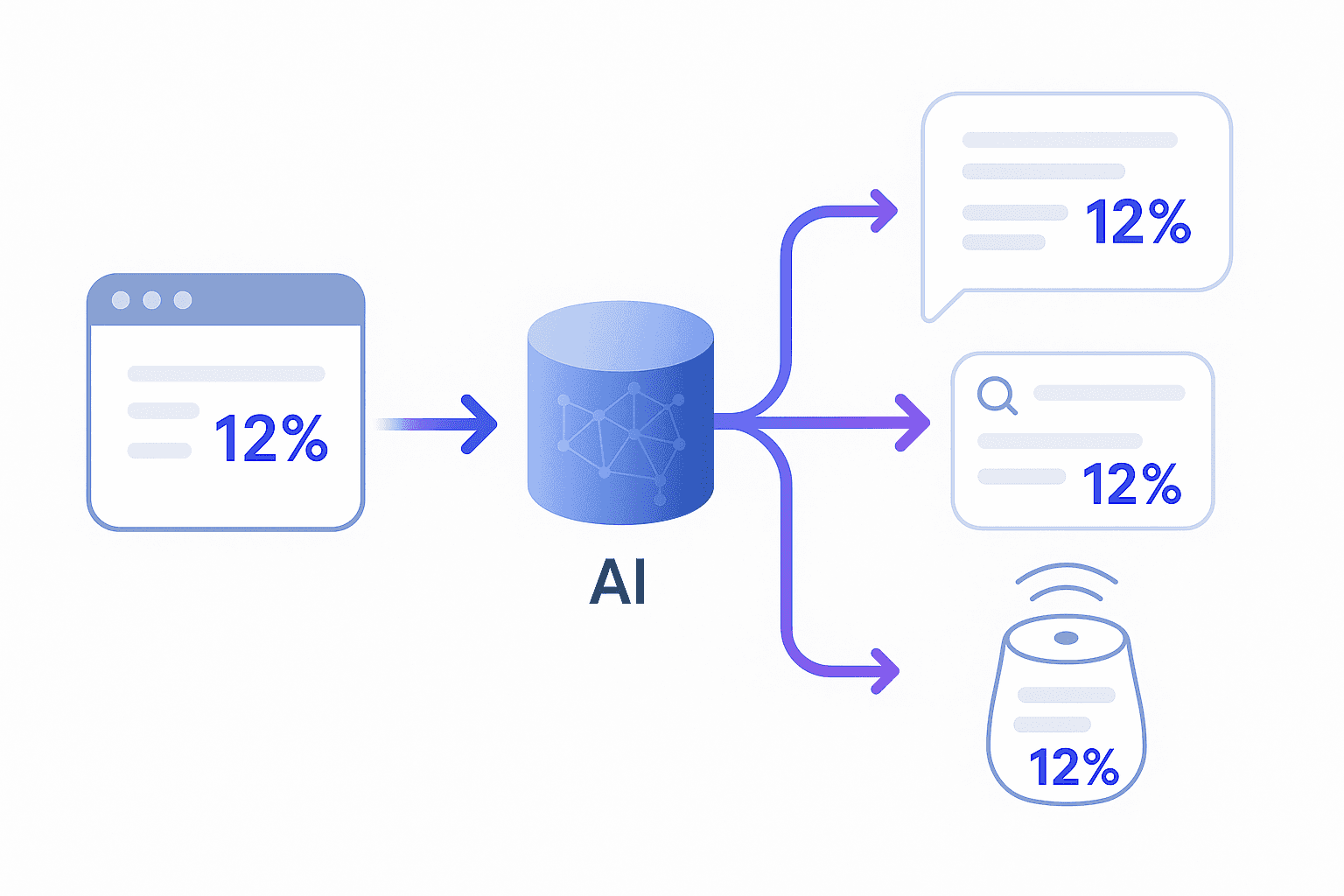
How does AI volatility turn minor errors into massive citation drift?
LLM instability compounds the risk of stale content. URLs older than six months were found to be significantly more likely to contain outdated information, according to recent research on URL freshness in AI-generated answers.
"The freshness of URLs in LLM-generated answers is crucial for maintaining the accuracy and relevance of the information provided."
Consider how AI Overviews source their citations:
Metric | Value |
|---|---|
Chance the top-ranked result is cited | |
Chance a first-page result is cited | |
Share of citations from top-10 results | 52% |
If your page sits in that top tier but contains outdated facts, the error propagates at scale. AI Overviews strongly favor top-ranked results, so high visibility amplifies both accuracy and inaccuracy.
Outdated URLs can lead to misinformation and reduce the trustworthiness of AI-generated content. Regularly updating URLs and content sources is essential for ensuring that AI-generated answers remain current and reliable.
Automated content versioning—what is it and why does it work?
Automated version control is "a system that automatically tracks, manages, and updates document versions without manual intervention." It removes the burden of remembering to commit changes, numbering files correctly, or chasing approvals through email threads.
Automated systems enhance accuracy and compliance, while real-time collaborative editing improves workflow and accountability. Core capabilities include:
Automatic change detection and version creation based on content modifications
Intelligent conflict resolution when multiple editors work simultaneously
Rule-based branching that isolates experiments from production content
Integration with content management systems for seamless publishing
MLflow's LoggedModel, for example, provides systematic version control for entire GenAI applications, capturing code, configurations, evaluations, and traces in a single versioned entity. That level of traceability means teams can link application versions to Git commits for complete reproducibility.
Relixir applies similar automation principles to content infrastructure, continuously analyzing your CMS library for outdated statistics, missing citations, and coverage gaps while automatically refreshing content to maintain both search rankings and AI citation accuracy.
Semantic vs. snapshot vs. graph-based tracking
Different algorithmic approaches suit different content architectures:
Approach | How It Works | Best For |
|---|---|---|
Semantic versioning | Uses MAJOR.MINOR.PATCH format; increments MAJOR for incompatible changes, MINOR for new features, PATCH for bug fixes | API documentation, product releases |
Snapshot-based | Records a content graph at a point in time so authors can manage changes without locking content | Marketing campaigns, multi-locale launches |
Graph-based | Treats content as structured documents, enabling granular history rather than opaque snapshots | Complex editorial workflows, compliance audits |
Amplience automatically keeps track of changes made to content so that teams can see changes over time, roll back changes, and control which versions are available. Restoring a previous version creates a new version with the same content as the earlier version, preserving the audit trail.
Kontent.ai vs automated platforms: a feature-by-feature look
Choosing the right CMS architecture affects how quickly teams can ship updates and how confidently they can roll back mistakes. Below is a comparison of Kontent.ai's manual-leaning approach against platforms with deeper automation.
Capability | Kontent.ai | Sanity | MLflow-Style Pipelines |
|---|---|---|---|
Version history | Per-item revisions | Granular, structured-document history | Full commit history with rollback |
Preview accuracy | Staging-site based | Click-to-edit presentation layer shows exact source content | Requires custom implementation |
Atomic publishing | Manual scheduling | Content Releases publish multi-document changes atomically | Git-triggered deploys |
API sync | Sync API v1 deprecated; users must migrate to Sync API v2 by December 31, 2025 | Real-time Content Lake queries | REST/GraphQL with versioned endpoints |
Compliance certifications | SOC 2, ISO 27001, GDPR | Role-based access, audit logs | Depends on hosting environment |
Deployment speed | Content deployed 90% faster per Forrester study | Versioned schemas and live reads let developers iterate without shutting down editorial work | CI/CD integration |
Kontent.ai is a proven enterprise CMS, but teams with stable channel surfaces may find its conservative change management sufficient. Teams pursuing rapid iteration, new channels, or stronger developer-author collaboration may benefit from platforms that treat versioning as a first-class data problem.
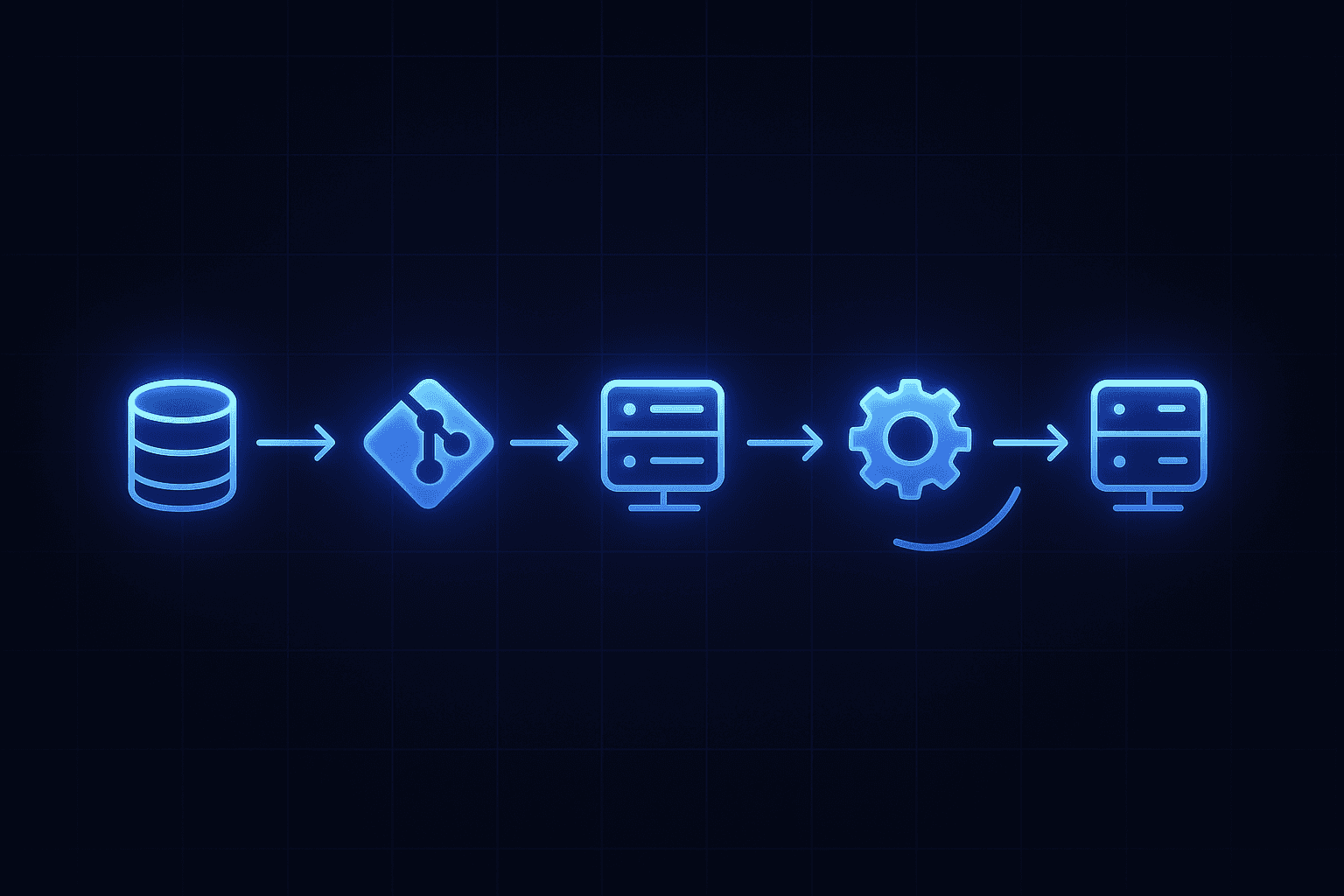
How can teams build an automated version control pipeline?
Moving from manual processes to automated pipelines does not require a full platform migration. Many teams start by connecting existing CMSs to Git-based workflows and deploy hooks.
You can configure continuous deployment with Netlify so that every git push triggers a new Deploy Preview. That feedback loop lets editors see exactly what will publish before it goes live.
Practical steps include:
Establish staging environments: To deploy updates, trigger a re-deploy on your deployment platform whenever content changes in the CMS.
Use deploy hooks: Using Vercel Deploy Hooks, you can trigger deployments based on content changes in the CMS or database without pushing commits to a Git repository.
Keep migrations small: The technique of avoiding breaking changes is called the "forward-only migration principle". Small, backward-compatible changes minimize disruptions.
Integrate automated checks: When building software, an integral part of delivering new features safely and efficiently is having a continuous delivery pipeline set up. The purpose of the pipeline is to move development changes into production through an automated set of steps that verify integrity and quality.
Fast rollback & A/B testing with versioned prompts
Prompt management parallels content versioning. "Shipping a prompt that 'feels' better without proof is a fast way to rack up regressions. The fix is not magic wording; it is process. Treat prompts like products: version them, test them, and attach numbers to every change."
Real applications need safe gates: dev, staging, and prod. You want fast rollback; you also want proof. Environment tiers ensure that rough drafts stay in development, stable candidates pass metric gates in staging, and production runs only the best prompt versions with a strict rollback policy.
Genum keeps full commit history so teams can roll back to any previous committed version and restore full prompt and model configuration. Built-in diff views help users compare versions by showing changes in prompt content and model parameters.
Which governance metrics prove semantic versioning works?
Compliance frameworks provide objective benchmarks for version control maturity. ISO/IEC 27001 specifies the requirements for establishing, implementing, maintaining, and continually improving an information security management system within the context of the organization. Documented information required by the ISMS shall be available, suitable for use, and adequately protected.
Key governance metrics include:
Audit trail completeness: Version control information should be recorded in audit logs, per Australian Government guidelines. Semantic versioning helps distinguish production from non-production data, models, and code.
Certification adoption: ISO/IEC 27001 is widely used around the world. As per the ISO Survey 2022, over 70,000 certificates were reported in 150 countries and from all economic sectors.
Content freshness rate: Automated systems maintained 95% content freshness automatically and reduced manual content auditing by 80% in documented use cases.
Teams that align version control with ISO/IEC 27001 or similar frameworks gain both operational benefits and external validation that reduces audit friction.
Key takeaways
AI content version control is no longer optional for teams that want accurate citations, compliant operations, and visibility in AI search. The core lessons:
Define a strategy, not just a habit: Version control systems track changes to files over time, allowing you to revert to previous versions if needed. A strategy includes naming conventions, commit practices, and governance policies.
Automate wherever possible: Manual versioning cannot keep pace with the speed of AI crawlers or the complexity of multi-channel publishing.
Measure governance outcomes: Audit trail completeness, content freshness rates, and certification alignment prove that your system works.
For teams seeking an end-to-end solution that connects CMS-native content management with AI search monitoring, Relixir offers automated content refresh, bi-directional CMS sync, and continuous citation tracking across ChatGPT, Perplexity, Gemini, and Google AI Overviews. Relixir detects outdated content and automatically refreshes it to maintain rankings and AI citation accuracy over time, helping 200+ B2B companies convert AI search demand into real pipeline.
Frequently Asked Questions
Why is version control important in AI content management?
Version control is crucial in AI content management as it tracks changes over time, ensuring that AI-generated answers pull accurate and up-to-date information from your content. This prevents the spread of outdated citations and maintains compliance and visibility in AI search results.
What are the drawbacks of manual CMS versioning?
Manual CMS versioning can lead to review-cycle delays, compliance exposure, and governance gaps. Without automated systems, teams may struggle with incomplete audit trails and the risk of outdated content being cited by AI, which can damage reputation and trust.
How does AI volatility affect content accuracy?
AI volatility can amplify the impact of outdated content, as AI Overviews often cite top-ranked results. If these contain outdated information, the error propagates widely, reducing the trustworthiness of AI-generated content. Regular updates are essential to maintain accuracy.
What are the benefits of automated content versioning?
Automated content versioning enhances accuracy and compliance by automatically tracking and managing document versions. It reduces the burden of manual updates, improves workflow efficiency, and ensures that the most current and accurate content is available for AI citation.
How does Relixir help with content version control?
Relixir integrates CMS sync with AI search monitoring to detect outdated content automatically. It provides end-to-end visibility from publication through citation tracking, ensuring that content remains accurate and compliant, thus maintaining search rankings and AI citation accuracy.
Sources
https://www.techtarget.com/searchcontentmanagement/tip/Why-is-document-version-control-important
https://www.digital.gov.au/policy/ai/AI-technical-standard/ai-technical-standard-statement-7
https://pdf.ai/resources/document-version-control-best-practices
https://mlflow.org/docs/latest/genai/prompt-version-mgmt/version-tracking/
https://vercel.com/kb/guide/set-up-and-use-deploy-hooks-with-vercel-and-headless-cms
https://www.contentful.com/developers/docs/concepts/deployment-pipeline/
https://www.statsig.com/perspectives/prompt-versioning-managing-history