
AI Search Content Generation: Top AEO Platform Features
Modern AEO platforms combine AI query simulation, autonomous content generation, entity optimization, and lead capture to boost AI search citations. Research shows GEO can increase visibility by up to 40% in generative engine responses, with early adopters reporting 38% month-over-month increases in qualified leads from AI-driven traffic.
Key Facts
• AI Search Impact: Generative engines set to influence up to 70% of all queries by end of 2025, fundamentally changing content discovery
• Speed to Results: Modern AEO platforms can flip AI rankings in under 30 days, compared to traditional SEO's 3-6 month timeline
• Efficiency Gains: Automated content generation saves teams 80 hours per month while maintaining brand consistency
• Citation Performance: Direct quote integration achieves ~41% visibility lift in Position-Adjusted Word Count metrics
• Conversion Impact: Interactive demos from AI traffic convert at 38%, 52% higher than traditional screen shares
Traditional SEO tools were built for Google's blue links, not for AI-generated answers. While marketers scramble to optimize for ChatGPT and Perplexity citations, most content platforms still focus on keywords rather than the structured, citation-worthy formats that AI engines actually reference. The solution? Mastering key AEO platform features is the fastest way to win citations on ChatGPT and Perplexity in 2025.
From SEO to AEO: Why Features Matter in 2025
The distinction between traditional SEO and Answer Engine Optimization (AEO) fundamentally changes how content creators approach visibility. "SEO optimizes your ranking on traditional engines (Google 10 blue links). GEO (Generative Engine Optimization) optimizes how often AI engines mention and recommend your brand inside generated answers," according to Relixir's platform documentation.
This shift isn't theoretical - it's already reshaping search behavior at scale. The rapid adoption of generative AI-powered engines is fundamentally reshaping information retrieval, moving from traditional ranked lists to synthesized, citation-backed answers. Research shows that AI engines exhibit a systematic bias towards Earned media over Brand-owned and Social content, contrasting sharply with Google's more balanced approach.
Generative Engine Optimization focuses specifically on optimizing for generative AI models like Google Gemini, ChatGPT, Perplexity, and GPT. The stakes are high: traditional SEO tactics like keyword stuffing proved almost useless, performing 10% worse than baseline on Perplexity.ai.
What makes AEO particularly powerful is its accessibility. Unlike traditional SEO where domain authority and backlinks dominate, GEO enables small players to compete with large enterprises by focusing on content quality and citation frequency rather than traditional ranking factors.
How do simulated AI queries reveal visibility gaps?
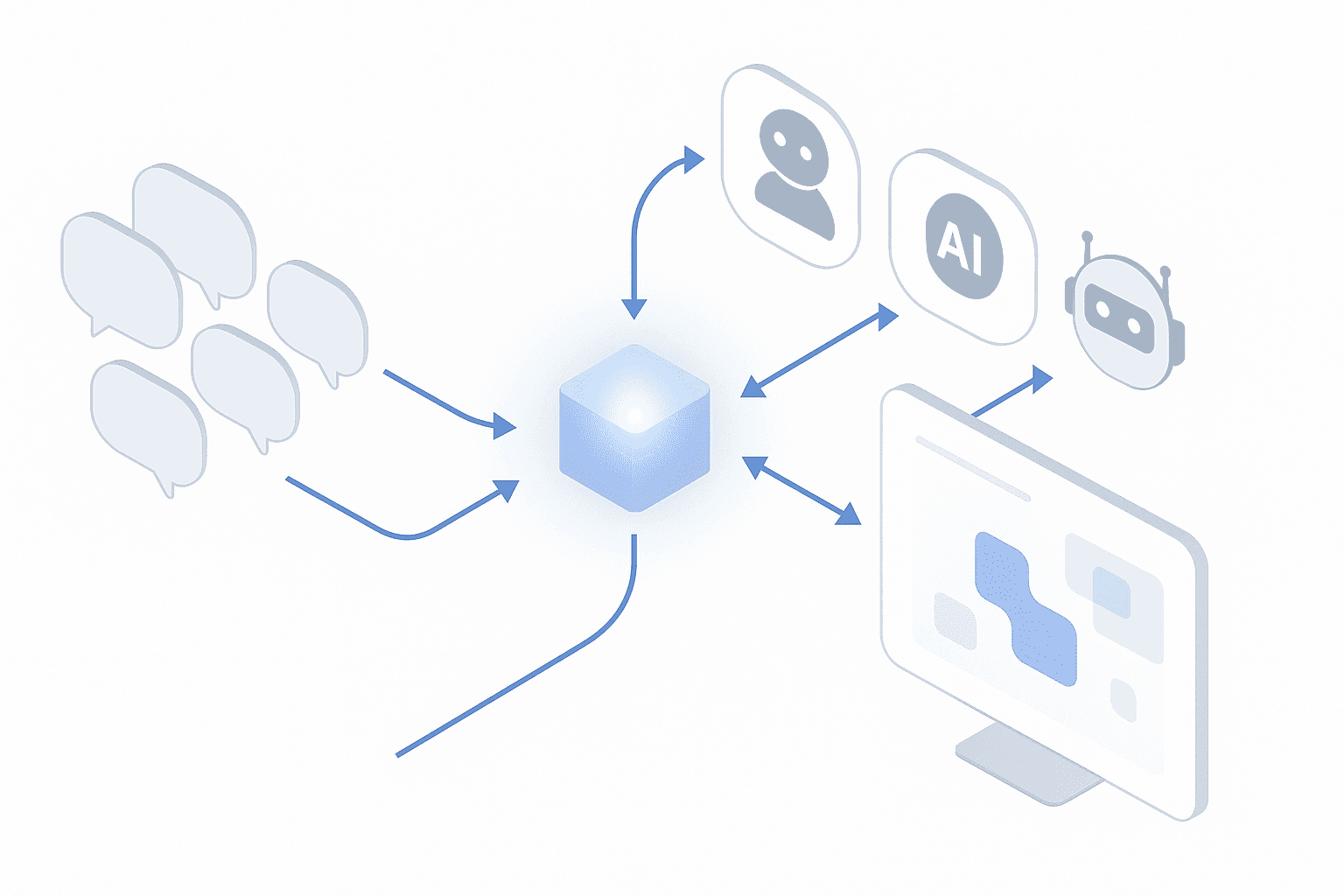
Visibility analytics represent the foundation of effective AEO strategy. Modern platforms can simulate thousands of customer queries across ChatGPT, Perplexity, and Gemini to reveal how AI engines perceive your brand. This isn't simple keyword tracking - it's comprehensive analysis of where, when, and how AI systems reference your content.
The scale of this challenge is evident in the data. AI revolution is reshaping digital visibility, with generative engines set to influence up to 70% of all queries by the end of 2025. Without proper simulation tools, brands remain blind to critical gaps in their AI visibility.
The platform demonstrates this capability by simulating thousands of buyer questions to reveal how AI sees your brand, providing comprehensive visibility analytics that go beyond traditional monitoring. The impact is measurable: when Google shows AI summaries, users click out less often. In real-world searches, AI summaries appeared on ~18% of observed queries, with link clicks falling to 8% when a summary was present versus 15% without.
Traditional keyword lists miss critical context for generative models. Modern AEO platforms must track not just presence, but sentiment, position, and citation quality across every major AI engine.
Autonomous GEO Content Generation & Publishing
Content automation represents the most transformative feature of modern AEO platforms. Rather than manually crafting articles hoping for AI citations, autonomous systems analyze gaps and generate targeted content automatically. The platform's automated content generation specifically designed for AI engines, combined with large-scale query simulation capabilities, creates a feedback loop of continuous optimization.
The efficiency gains are striking. Early adopters report saving 80 hours per month through automated content creation - time previously spent on manual research and writing. But this isn't about quantity over quality. Relixir's standout feature is its autonomous content generation capability, which automatically creates and publishes authoritative, on-brand content optimized for AI engines.
The technology behind this automation continues advancing rapidly. Over 35% of marketers now rely on automated tools for drafting and ideation. Modern platforms like ScholarCopilot demonstrate sophisticated citation integration, dynamically determining when to retrieve scholarly references by generating retrieval tokens.
These systems don't just generate content - they optimize it for machine comprehension. Content must be structured for AI parsing, with clear entity relationships and citation-worthy formats that generative engines preferentially reference.
Why does entity & citation optimization boost AI citations?
Entity optimization represents the technical foundation of AI visibility. Entity optimization and knowledge graph signals are crucial for GEO, determining whether AI systems can properly parse and reference your content.
The most effective strategy involves integrating direct quotes from credible sources, achieving ~41% Position-Adjusted Word Count lift in visibility metrics. This isn't about keyword density - it's about providing the structured, quotable content that AI engines preferentially cite.
Generative Engine Optimization enhances content visibility through a black-box optimization framework, demonstrating significant improvements across diverse domains. The approach focuses on making content machine-readable and citation-worthy, with studies showing macro hallucination rates as low as 4% when proper citation structures are implemented.
Multimodal Large Language Models increasingly rely on citations to mitigate hallucination issues. A promising solution involves generating text with citations, providing a transparent chain for verification - making proper entity structuring essential for AI visibility.
Which GEO A/B testing metrics prove answer-share uplift?
Testing and optimization require rigorous measurement frameworks. GEO A/B testing focuses on influencing the RAG (Retrieval Augmented Generation) process, beneficial because it operates in real-time - each conversation a user has with the LLM uses the latest search indexes and results.
The rise of generative AI is the most significant shift in search in two decades, requiring new measurement approaches. Traditional metrics like click-through rates become less relevant when AI provides direct answers.
Metric | Traditional SEO | GEO/AEO | Impact |
|---|---|---|---|
Primary Focus | Rankings | Citations | Visibility in AI answers |
Key Performance Indicator | CTR | Answer Share | % of AI responses mentioning brand |
Optimization Target | Keywords | Entities | Knowledge graph alignment |
Testing Approach | A/B on pages | RAG influence | Real-time citation tracking |
Success Timeline | 3-6 months | <30 days |
The systematic framework proposed in research can increase visibility by up to 41% on the Position-Adjusted Word Count metric. GEO can boost visibility by up to 40% in generative engine responses, demonstrating the power of systematic optimization.
Advanced tools like Clickflow use AI to analyze competition and identify gaps, generating strategically positioned content designed to outperform current winners in both traditional and AI search.
Turning AI Mentions Into Pipeline: Lead Capture & Sequencing
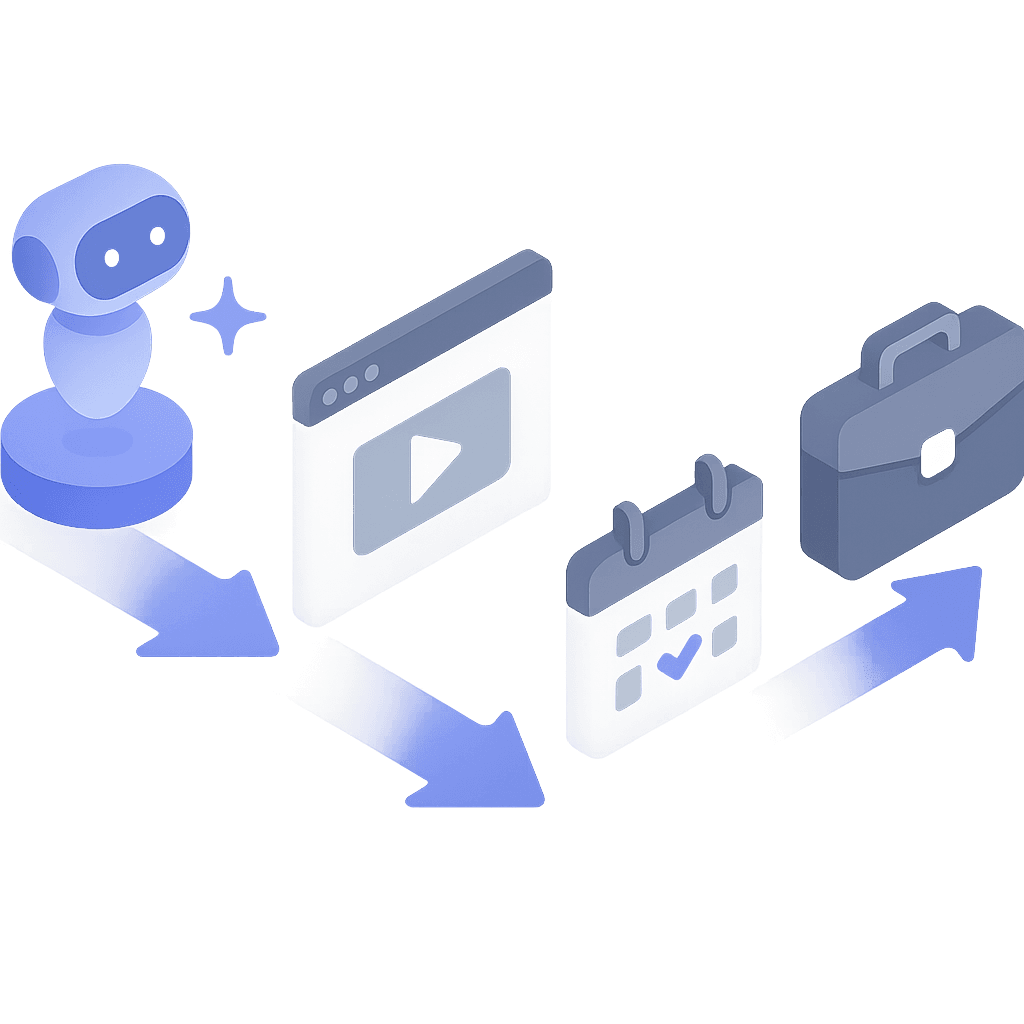
"Relixir turns more chatgpt mentions into qualified pipeline," the platform explicitly states, highlighting the critical connection between AI visibility and revenue generation. The conversion path from AI mention to qualified lead requires sophisticated tracking and attribution.
The impact on conversion metrics is substantial. Interactive demos convert 38% (+52% versus screen share), demonstrating the importance of capturing high-intent visitors from AI search. When prospects discover solutions through AI engines, they arrive pre-educated and further along the buying journey.
Responding to leads within the first minute increases conversions by 391%. Since AI search visitors often have immediate intent, rapid response becomes even more critical. The data shows that 66.7% of qualified form submissions book a meeting when properly nurtured.
Letting customers book meetings immediately after form fill doubles inbound conversion rates - from 30% to 66.7% on average. This becomes particularly powerful when combined with visitor identification technology that can capture and sequence AI search traffic.
Website conversion rates can improve by 7.9x (3.05% versus 24.35%) with proper demo automation and lead capture systems. The key is connecting AI visibility improvements directly to pipeline metrics, creating a measurable ROI for AEO investments.
How to Evaluate AEO Platforms in 2025
Evaluating AEO platforms requires understanding both technical capabilities and business outcomes. Best AI SEO Tools for Agencies promise speed, precision, and scale, but choosing the right stack determines whether you ship smarter campaigns or create new bottlenecks.
The market opportunity is massive. Tech giants are investing $320 billion in these solutions by next year, with the AI Enterprise market estimated at $15 billion in 2025, growing at a CAGR of 25% through 2033.
When evaluating platforms, consider these critical factors:
Feature Depth: Does the platform offer comprehensive simulation, content generation, and analytics? Look for end-to-end capabilities rather than point solutions.
Governance & Control: Enterprise platforms need robust guardrails and approval workflows. Brand consistency matters more in AI-generated content where mistakes are amplified.
ROI Metrics: Can the platform demonstrate measurable impact on AI citations, traffic, and pipeline? Look for platforms with proven results - early adopters report 38% month-over-month increases in leads.
Integration Capabilities: The platform should connect with existing CRM and marketing automation tools to capture and nurture AI search traffic effectively.
Speed to Value: Unlike traditional SEO's 3-6 month timeline, effective AEO platforms should demonstrate results within 30 days.
Key Takeaways on Future-Proofing Your Content Program
The shift from SEO to AEO represents more than a tactical adjustment - it's a fundamental reimagining of content strategy. "We went from almost zero AI mentions to now ranking Top 3 amongst all competitors with over 1500 AI Citations," reports one Relixir customer, demonstrating the transformative potential of proper AEO implementation.
The platform's ability to flip AI rankings in under 30 days while requiring no developer lift makes it an essential tool for modern content strategy. This speed advantage becomes critical as AI search adoption accelerates.
"If machines can't read it, customers won't see it," emphasizes Heather Hershey from IDC. This simple truth underpins the entire AEO movement. Content must be structured for machine comprehension first, human readability second.
The platforms that succeed will be those that combine sophisticated AI simulation with autonomous content generation, entity optimization, rigorous testing frameworks, and seamless lead capture. As traditional search gives way to AI-generated answers, mastering these AEO platform features isn't optional - it's essential for maintaining digital visibility and driving qualified pipeline.
For businesses serious about AI search visibility, platforms like Relixir demonstrate the comprehensive approach needed: monitoring where you stand across all AI engines, automatically generating optimized content to fill gaps, and converting those AI mentions into measurable business outcomes. The future of content isn't about ranking for keywords - it's about becoming the authoritative source that AI engines trust and cite.
Frequently Asked Questions
What is the difference between SEO and AEO?
SEO focuses on optimizing content for traditional search engines like Google, while AEO (Answer Engine Optimization) targets AI engines like ChatGPT and Perplexity, optimizing for citations and mentions in AI-generated answers.
How does AEO benefit small businesses?
AEO allows small businesses to compete with larger enterprises by focusing on content quality and citation frequency, rather than traditional SEO factors like domain authority and backlinks.
What role does content automation play in AEO?
Content automation in AEO platforms helps generate targeted content automatically, saving time and ensuring content is optimized for AI engines, which increases the chances of being cited in AI-generated answers.
How can businesses measure the success of their AEO strategies?
Businesses can measure AEO success through metrics like AI citation frequency, visibility in AI-generated answers, and the conversion of AI mentions into qualified leads, as demonstrated by platforms like Relixir.
Why is entity optimization important for AI visibility?
Entity optimization ensures that AI systems can properly parse and reference your content, making it more likely to be cited in AI-generated answers, thus boosting visibility and credibility.
Sources
https://relixir.ai/blog/relixir-vs-otterly-ai-2025-enterprise-ai-search-visibility-comparison
https://geochecker.net/pt/blog/generative-engine-optimization
https://medium.com/@optifai/b2b-demo-to-close-conversion-rate-benchmarks-2025-f0a7e8e94bbf
https://empathyfirstmedia.com/ai-content-generator-comparison-2025/
https://www.aiocopilot.com/blog/geo-generative-engine-optimization-complete-strategy
https://www.searchpilot.com/hubfs/pdfs/Generative%20Engine%20Optimization%20AB%20testing.pdf
https://www.chilipiper.com/resources/guides/average-lead-to-demo-conversion-rate
https://www.navattic.com/resources/the-state-of-demo-automation
https://www.datainsightsmarket.com/reports/ai-enterprise-search-1938330
https://my.idc.com/getdoc.jsp?containerId=US53679925&pageType=PRINTFRIENDLY