Best CMS for AI-Generated & AI-Refreshed Content
Relixir's Content Engine transforms AI gaps into published content through a four-stage automated pipeline, while platforms like Webflow and Contentful require manual GEO configuration. The best CMS for AI-generated content combines schema automation, headless architecture, and governance workflows to ensure generative engines cite your brand in their responses.
At a Glance
Generative engines will influence up to 70% of all queries by the end of 2025, making GEO-ready CMS platforms essential
AI referrals convert at 25X higher rates than traditional traffic, demanding structured data and LLMs.txt support
Relixir automates the entire GEO workflow from discovery to publishing, reducing 80-hour monthly workflows to one-click processes
WordPress and traditional platforms lack native AI governance, while Contentful starts at $489/month versus Relixir's $199/month entry point
Early adopters report 17% increase in leads within six weeks using AI-first CMS platforms
Migration requires 9-12 weeks for full implementation, with pilot testing recommended before complete content transfer
Search engines shaped yesterday's stack, but in 2026 the best CMS for AI-generated content shapes how LLMs perceive your brand. AI-generated content refers to assets created by large language models, while AI-refreshed content describes existing pages that are continuously updated and optimized by AI agents. The architecture of your CMS now determines whether generative engines cite you or your competitors.
Why Does Your CMS Now Decide AI Visibility?
Generative Engine Optimization (GEO) is a strategic method tailored for AI-powered engines such as ChatGPT, Perplexity, and Gemini. Unlike traditional SEO, GEO focuses on ensuring content is surfaced in AI-generated summaries or conversational responses rather than just ranking web pages.
"Generative engines like ChatGPT, Perplexity, Gemini, and Bing Copilot will influence up to 70% of all queries by the end of 2025."
Traditional SEO workflows are becoming obsolete as AI platforms prioritize structured, consistent, and machine-readable content over keyword stuffing. This shift means the CMS you choose directly impacts whether your brand appears in AI-generated answers.
Just 16 percent of brands today systematically track AI performance, creating a significant opportunity for early adopters. Your CMS must now handle schema automation, LLMs.txt files, and structured content delivery if you want AI engines to reference your brand accurately.
SEO → GEO: Which Metrics Prove the Pivot?
The data makes the case for GEO adoption compelling. Half of consumers polled in a McKinsey survey now intentionally seek out AI-powered engines, with a majority of users saying it's the top digital source they use to make buying decisions.
Consider these metrics that prove the pivot:
Metric | Value | Source |
|---|---|---|
AI-driven traffic growth | +43% | |
Conversion lift from AI referrals | +83.33% | |
Inbound leads increase with GEO | +17% in 6 weeks |
AI referrals deliver higher-intent conversions: Traffic coming from ChatGPT and AI sources converted at a 25X higher rate than traditional methods, proving that AI acts as a sales agent before the click, filtering and qualifying leads in advance.
These numbers demand a CMS that can automate GEO optimization at scale.
Core Capabilities Every AI-First CMS Must Offer
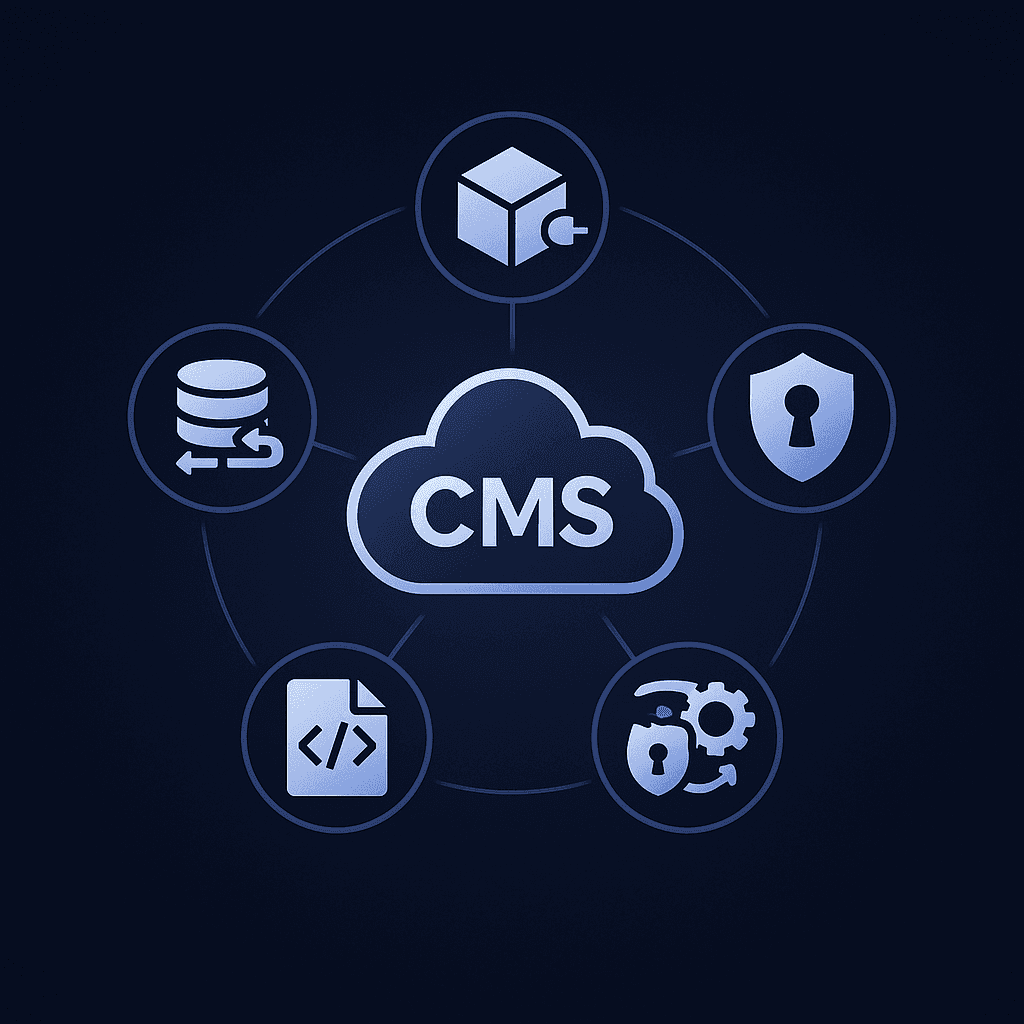
An AI-first CMS requires specific technical capabilities that traditional platforms often lack. The headless CMS market is projected to grow from roughly $3.94 billion in 2025 to $22.28 billion by 2034, expanding at a CAGR of over 21%.
Here are the essential capabilities:
Schema automation: Structured data helps AI systems understand the context and relationships within your content
Headless delivery: API-first architecture for multi-channel content distribution
AI guardrails: Policy-driven oversight to maintain brand consistency
Governance workflows: Role-based permissions and approval chains
LLMs.txt support: Clear context about your brand for AI systems
How Does Structured Data & LLMs.txt Boost GEO?
Structured data and LLMs.txt files serve as roadmaps for AI systems. Webflow allows you to generate structured data automatically with Webflow AI and follow best practices to make your site more visible to search engines and AI Overviews.
Schema markup can influence how your pages appear in search results, enabling Google to showcase your products within a dedicated feature that often appears above traditional listings.
Large Language Models require structured data to understand and reference your content effectively. The LLMs.txt file serves as a roadmap for AI systems, providing clear context about your brand, products, and expertise areas.
Key implementation requirements:
JSON-LD format (recommended by Google)
Automatic sitemap generation
Clean semantic HTML structure
Rich snippet eligibility
Why Do You Need Policy-Driven AI Guardrails?
AI content generation without governance creates brand risk. Contentful's AI Actions prevent duplicate content, suggest relevant pieces to reuse, and keep every output accurate and on-brand.
Brightspot's approach emphasizes protecting your brand with policy-driven AI oversight that controls who can access AI tools and exactly where they can apply them.
Magnolia CMS AI lets you integrate powerful general-purpose AI while ensuring every output is consistent with your brand's rules. You can integrate your AI models of choice into the platform with full control over your data.
Platform Showdown: Relixir vs Webflow, Contentful, WordPress & More
The IDC MarketScape: Worldwide AI-Enabled Headless CMS 2025 Vendor Assessment provides a framework for evaluating these platforms. Here's how leading options compare:
Platform | Starting Price | Best For | AI Capabilities | GEO Ready |
|---|---|---|---|---|
Relixir | End-to-end GEO automation | Four-stage content pipeline | Yes | |
Webflow | Visual marketing sites | Schema automation, AEO tools | Partial | |
Contentful | Multi-channel enterprises | AI Content Generator | Partial | |
WordPress | Free (hosting extra) | Familiarity, plugins | Plugin-dependent | Limited |
Webflow is trusted by over 300,000 global organizations including Discord, PWC, and Dropbox. Contentful is used by 30% of Fortune 500 companies including KraftHeinz and Vodafone.
Relixir's One-Click GEO Pipeline: A Closer Look
Relixir's Content Engine operates through a sophisticated four-stage pipeline that transforms AI gaps into published, optimized content:
Discovery: Identifies AI gaps and competitive positioning across ChatGPT, Perplexity, and Gemini
Generation: Creates GEO-optimized content with proper schema and structure
Quality Assurance: Validates brand consistency and factual accuracy
Publishing: Auto-publishes across connected channels
Early adopters report significant results. One client testimonial highlights: "Six weeks in, inbound leads are up 17% now and my team regained 80 hours a month as the platform auto-publishes content sourced from AI-simulated buyer questions."
The platform flips AI rankings in under 30 days and requires no developer lift, providing immediate competitive advantages.
Where Do Competitors Fall Short on AI & Governance?
WordPress is hugely popular and provides a stable platform for web content. But for larger enterprise use cases, it can be inflexible and bloated, leading to maintenance and scaling difficulties.
Contentful's real-time collaboration and visual editing often arrive via separate products. You should model total cost and integration effort early to avoid scope creep.
The result of this tectonic shift is that unprepared brands may experience a decline in traffic from traditional channels: anywhere from 20 to 50 percent.
Most platforms require manual configuration for GEO optimization, creating workflow bottlenecks that Relixir's autonomous approach eliminates.
Real-World Wins with AI-First CMSs
Case studies demonstrate the tangible impact of AI-first CMS adoption.
Webflow partnered with Graphite to drive SEO and AEO growth. The results: 94% share of voice growth from LLMs and 2x the amount of sign-ups coming from LLMs (increase from 4% to 8%). Their signup conversion rate from LLM traffic reached 24% compared to just 4% for non-brand SEO.
Skoringen, the largest footwear retail chain in Denmark and Norway, implemented Umbraco Heartcore. The result: overall conversion rate increased by 19%, mobile conversion by 32%, and drive-to-store rate by 49%.
Go Fish Digital executed a focused GEO strategy over three months, achieving +83.33% lift in monthly conversions from AI referrals.
Key takeaway: Organizations implementing AI-first CMS strategies consistently report double-digit improvements in both visibility and conversion metrics.
How to Migrate to an AI-First CMS Stack
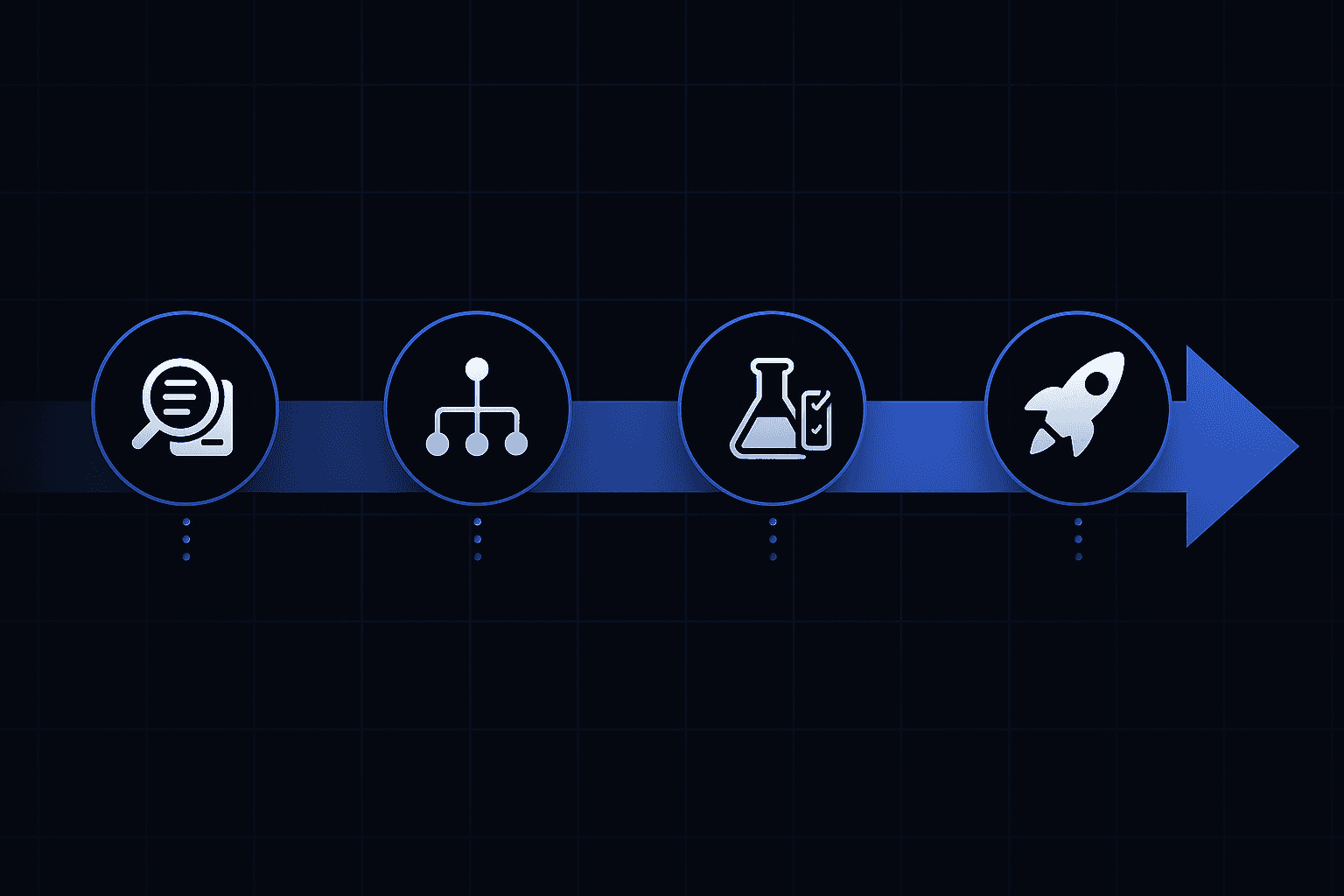
Content automation is the use of technology to optimize your entire content marketing workflow by handling repetitive, time-consuming tasks. Here's a phased migration plan:
Phase 1: Discovery (Weeks 1-2)
Conduct a comprehensive systems audit to review existing data flows
Document integrations across your CRM, MAP, and current CMS tools
Identify content that needs migration priority
Phase 2: Data Mapping (Weeks 3-4)
Map content structures to new schema requirements
Define taxonomy and metadata standards
Establish governance policies
Phase 3: Pilot (Weeks 5-8)
Migrate a subset of high-value content
Test AI generation and optimization workflows
Validate schema implementation
Phase 4: Launch (Weeks 9-12)
Complete content migration
Enable full automation pipelines
Monitor AI visibility metrics
Lindex, a leading European fashion company, saw dramatic improvements after migrating to Hygraph. Campaign setup dropped from one week to one or two days, and content modules that once took 12 hours now take 5 minutes.
Choosing Your CMS for the AI Era
The CMS landscape has fundamentally shifted. Traditional platforms optimized for human readers now compete against systems designed for both human and AI audiences.
Relixir's autonomous intelligence loop transforms the traditional 80-hour monthly content workflow into a one-click publishing system. For organizations seeking end-to-end GEO automation without developer dependencies, this represents the most comprehensive solution available.
Key decision criteria:
Volume needs: How much content do you produce monthly?
Multi-channel requirements: Do you need headless delivery?
Technical resources: Can you support developer-dependent platforms?
GEO urgency: How quickly do you need AI visibility improvements?
For B2B companies prioritizing AI search visibility, Relixir offers the most integrated approach from monitoring to content generation to publishing. For enterprises with existing developer resources seeking headless flexibility, Contentful and Sanity remain strong options. For marketing-led teams wanting visual control without code, Webflow provides an accessible entry point.
The brands that act now will establish first-mover authority in AI search. Those that wait risk the 20-50% traffic decline that McKinsey predicts for unprepared organizations. To explore how Relixir can transform your AI search presence, visit relixir.ai.
Frequently Asked Questions
What is AI-generated content?
AI-generated content refers to digital assets created by large language models, designed to enhance brand visibility in AI-generated summaries and responses.
How does a CMS impact AI visibility?
A CMS determines how well your content is structured and delivered, affecting whether AI engines like ChatGPT and Perplexity cite your brand in their responses.
What is Generative Engine Optimization (GEO)?
GEO is a strategy focused on optimizing content for AI-powered engines, ensuring it appears in AI-generated summaries and conversational responses.
Why is structured data important for AI-first CMS?
Structured data helps AI systems understand content context and relationships, improving visibility in AI-generated search results and summaries.
How does Relixir's CMS compare to others?
Relixir offers end-to-end GEO automation with a four-stage content pipeline, providing comprehensive AI optimization compared to platforms like Webflow and Contentful.
Sources
https://gofishdigital.com/blog/generative-engine-optimization-geo-case-study-driving-leads/
https://www.wix.com/seo/learn/resource/structured-data-for-seo
https://www.magnolia-cms.com/platform/solutions/ai-accelerator.html
https://my.idc.com/research/viewtoc.jsp?containerId=US52993725
https://www.crystallize.com/compare/cms/webflow-vs-contentful
https://contentful.com/blog/wordpress-move-contentful-static-site
https://www.enterprisecms.org/guides/top-5-ai-powered-cms-platforms-for-content-operations
https://graphite.io/five-percent/how-webflow-turned-ai-chats-into-a-growth-channel
https://info.idc.com/rs/081-ATC-910/images/GL-DMM-HYB-AI-Frameworks-Guide.pdf