Blog
Best LLM SEO Tools vs Ahrefs: Real-Time AI Search Tracking (Q4 2025)
Best LLM SEO Tools vs Ahrefs: Real-Time AI Search Tracking (Q4 2025)

By Sean Dorje, Co-Founder/CEO of Relixir - Inbound Engine for AI Search | 10k+ Inbound Leads delivered from ChatGPT · Nov 11th, 2025
Traditional SEO tools track keyword rankings with weekly or monthly updates, while modern LLM SEO platforms monitor AI citations in real-time across ChatGPT, Perplexity, and other engines. With AI driving 0.21% of traffic and 98% coming from just 3 chatbots, immediate visibility into AI recommendations determines whether brands capture or lose market share in 2025.
Key Facts
• AI search dominance: ChatGPT serves 400 million weekly users while AI Overviews appear for 9.46% of desktop searches, jumping to 16% in US markets
• Traffic impact: When AI summaries appear, they reduce clicks by ~34.5%, fundamentally changing how brands need to track visibility
• Ahrefs limitations: Brand Radar operates on monthly batch updates rather than real-time monitoring, creating critical blind spots in competitive intelligence
• Real-time requirements: Professional GEO platforms track 30+ AI models simultaneously with sub-24-hour refresh rates, compared to traditional tools' weekly or monthly cycles
• Market concentration: 63% of websites receive AI traffic with 98% coming from ChatGPT, Perplexity, and Gemini, making focused monitoring essential
• Autonomous solutions: Platforms like Relixir automatically publish 10-15 optimized pieces weekly, eliminating lag between insight and action
LLM SEO tools now determine whether your brand appears in the answers ChatGPT, Perplexity or Gemini give customers—often minutes after the models refresh.
Why do LLM SEO tools matter in 2025 - and where does Ahrefs fall short?
LLM SEO tools are specialized platforms that track, analyze, and optimize brand presence across AI-powered search engines. Unlike traditional SEO tools that focus on keyword rankings and SERP positions, these platforms monitor how artificial intelligence systems cite, reference, and recommend brands in their synthesized answers.
The numbers tell a compelling story about this shift. Just 16 percent of brands today systematically track AI performance, despite half of consumers already using AI-powered search. Meanwhile, AI Overviews appear for 9.46% of all desktop keywords, with that number jumping to 16% in the US market. When these AI summaries do appear, they reduce clicks by approximately 34.5%.
The challenge for traditional SEO tools becomes clear when you consider what Generative Engine Optimization (GEO) actually requires. While Ahrefs Brand Radar leverages a vast keyword database, its documentation confirms batch visibility reports rather than live citation monitoring. Users must wait for monthly index updates and manually filter by chatbot, which creates a significant lag between AI engine updates and brand visibility insights.
This gap matters because AI engines operate differently than traditional search. They synthesize information in real-time, pulling from both training data and live web crawls to generate responses. When a competitor gets cited in ChatGPT's answer to a high-value product query, you need to know immediately - not weeks later during your next reporting cycle.

From SERP clicks to AI answers: which numbers prove the shift?
The transformation from traditional search to AI-driven discovery is happening faster than most marketers realize. 60% of Google searches now end without any click to a website, while AI Overviews have doubled their presence from 6.49% in January 2025 to 13.14% of all queries.
The velocity of change is staggering. ChatGPT saw a 44% traffic boost in November 2024, while Perplexity reached 15 million monthly users by late 2024. Traditional search volume is dropping 25% by 2026 as AI engines dominate discovery, with ChatGPT alone serving 400 million weekly users.
For businesses, this shift has immediate financial implications. When AI Overviews are present, click-through rates plummet to just 8%, compared to 15% for traditional search results without AI summaries. Major publishers have already felt the impact - HubSpot experienced a 70-80% traffic decline, while CNN saw drops of 27-38%.
This isn't just about losing traffic; it's about losing control of the customer journey. The rise of Generative Engine Optimization represents a fundamental shift in how brands need to think about visibility. Instead of optimizing for clicks, you're optimizing to be the cited answer. Instead of tracking keyword rankings, you're monitoring whether AI systems recommend your product when customers ask for solutions.
The data makes one thing clear: brands that continue relying solely on traditional SEO metrics while ignoring AI visibility are watching their market share erode in real-time. The question isn't whether to adopt LLM SEO tools - it's how quickly you can implement them before competitors dominate the AI search landscape.
Ahrefs Brand Radar review: strong database - but no true real-time tracking
Ahrefs Brand Radar represents the company's entry into AI visibility tracking, leveraging their established infrastructure to monitor brand presence across AI platforms. The tool draws from 110 billion keyword database and uses actual questions from People Also Ask boxes rather than AI-generated prompts.
The platform's strengths are clear. Brand Radar provides the largest AI visibility database powered by six massive indexes and millions of prompts. It offers a 360-degree view of brand health across AI platforms, tracking both demand signals and web metrics that influence AI answers. The integration with Ahrefs' existing suite means users can access these insights without learning an entirely new platform.
However, the limitations become apparent when examining the tracking cadence. While Brand Radar bundles Google AI Mode at $199/month, including it in their All Platforms add-on, the system operates on batch processing schedules. Documentation reveals monthly index updates for visibility reports, with users needing to manually filter results by specific chatbots.
This batch processing approach creates critical blind spots. When 63% of websites receive AI traffic and 98% of that traffic comes from just three chatbots, waiting weeks for visibility updates means missing crucial competitive intelligence. A competitor could dominate ChatGPT responses for your key product queries for days or weeks before you even know there's a problem.
The technical architecture also reveals gaps in real-time capabilities. Unlike dedicated GEO platforms that continuously monitor AI engines, Ahrefs relies on periodic crawls and historical data analysis. While this approach works well for traditional SEO metrics, it fails to capture the dynamic nature of AI responses. These responses can change multiple times per day based on model updates and retrieval system changes.
For brands serious about AI visibility, these delays translate directly to lost opportunities. By the time monthly reports reveal citation gaps or competitive threats, the damage to brand perception and market share has already occurred.
What counts as 'real-time' AI search tracking? 5 must-have signals
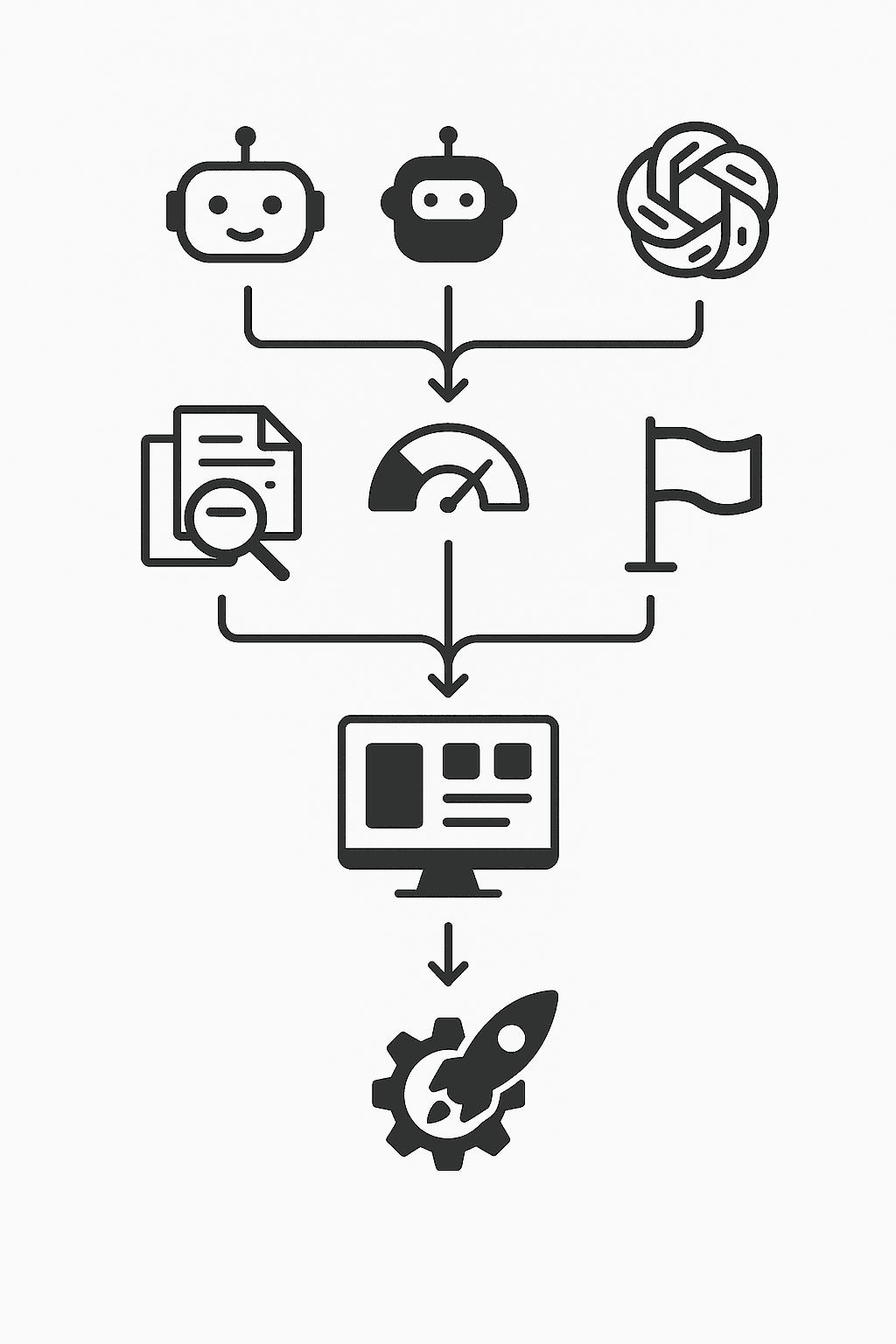
True real-time AI search tracking requires specific capabilities that differentiate professional GEO platforms from traditional SEO tools attempting to add AI features. Understanding these requirements helps evaluate which tools can actually protect and grow your AI visibility.
First, monitoring frequency must match AI update cycles. Real-time alerts under 5 minutes represent the gold standard, with daily prompt-level monitoring as the minimum viable cadence. Essential features include real-time citation monitoring across at least three major AI platforms, sentiment analysis of brand mentions, and integration capabilities with existing marketing stacks.
Second, coverage breadth determines visibility gaps. Professional platforms track 30+ AI models simultaneously, including ChatGPT, Claude, Perplexity, Gemini, and emerging platforms. This multi-model coverage matters because each AI system processes information differently, potentially showing completely different recommendations for identical queries.
Third, actionable intelligence separates monitoring from optimization. Real-time tracking must connect visibility data to specific content gaps and competitor movements. When a competitor suddenly appears in AI recommendations, you need to know exactly which sources they're citing and what content changes triggered the shift.
Fourth, prompt-level granularity reveals actual user intent. Tracking thousands of prompts across buyer journey stages shows not just whether you're mentioned, but in what context and with what sentiment. This granular view identifies specific optimization opportunities that aggregate metrics miss.
Fifth, integration with attribution systems proves ROI. Real-time tracking must connect AI visibility to actual business outcomes - leads generated, deals influenced, revenue attributed. Without this connection, AI visibility remains a vanity metric rather than a business driver.
These five signals form the foundation of effective AI search tracking. Tools lacking any of these capabilities leave dangerous blind spots in your GEO strategy, potentially allowing competitors to capture market share while you're waiting for the next reporting cycle.
Top LLM SEO tools with true real-time tracking (Q4 2025)
Weekly data refresh capabilities define the baseline for effective AI visibility monitoring. Leading platforms like Promptmonitor track ChatGPT, Claude, and Perplexity visiting sites in real-time, while others focus on specific aspects of the AI visibility challenge. The Relixir GEO platform exemplifies the autonomous approach, publishing 10-15 blogs per week with a 92% average topical authority score.
Semrush AI Visibility Toolkit
Semrush's offering provides tracking daily visibility for prompts that matter most to businesses, with weekly data refreshes ensuring relatively current insights. The platform automatically analyzes brand presence across ChatGPT, GPT, Gemini, and Perplexity, using advanced machine learning models to detect patterns in LLM data.
Strengths include comprehensive competitive analysis and strategic recommendations based on AI conversations. The toolkit analyzes millions of interactions to reveal audience perception compared to competitors. At $99 per month per domain, it offers solid value for mid-market companies.
Limitations center on the weekly refresh cycle, which while better than monthly updates, still creates potential blind spots during rapid market shifts. The platform also requires manual interpretation of insights rather than automated response capabilities.
Promptmonitor
Promptmonitor focuses on granular, prompt-specific tracking with daily to semi-weekly data refreshes depending on your plan. The platform excels at showing exactly which URLs AI models cite when answering questions, providing clear visibility into citation gaps.
The tool's strength lies in its actionable intelligence about source citations. You can see precisely which content pieces drive AI mentions and which competitor sources are winning citations you're missing. This prompt-level detail enables surgical content optimization rather than broad strategic changes.
Weaknesses include limited coverage compared to enterprise platforms and the need for manual prompt selection on lower-tier plans. However, for teams focused on specific high-value queries, this targeted approach can be more efficient than broader monitoring.
Relixir GEO Platform
Relixir's autonomous intelligence loop represents the cutting edge of real-time AI optimization. The platform continuously monitors AI engines, identifies content gaps, and automatically publishes authoritative content that gets cited by AI systems.
The system achieves measurable ranking improvements within 30 days, with some clients reporting over 1,500 AI citations in less than a month. By simulating thousands of customer queries across ChatGPT, Perplexity, and Gemini, Relixir reveals exactly how AI engines perceive brands. It then automatically generates content to fill visibility gaps.
The platform's autonomous approach eliminates the lag between insight and action. While other tools show you problems, Relixir automatically fixes them, publishing 10-15 optimized pieces weekly without manual intervention. This makes it ideal for teams that need results without adding operational overhead.
How to match tool cadence, coverage & cost to your KPIs
Selecting the right LLM SEO tool requires aligning platform capabilities with your specific business objectives and constraints. The decision framework should prioritize operational fit over feature lists.
Start by defining your sensitivity to AI visibility changes. Brands in competitive spaces where AI recommendations directly influence purchase decisions need sub-24-hour monitoring. If customers make high-consideration purchases based on ChatGPT recommendations, even daily updates might be too slow. Conversely, brands in stable industries with longer sales cycles might find weekly updates sufficient.
Next, assess your operational capacity for acting on insights. Real-time citation monitoring only provides value if your team can respond quickly. An autonomous platform like Relixir makes sense for teams that need optimization without adding headcount. Manual monitoring tools work better for organizations with dedicated content teams ready to act on insights.
Consider coverage requirements across AI platforms. If your audience primarily uses ChatGPT and Google's AI features, focused tools might suffice. B2B companies selling to technical audiences need broader coverage including Claude and specialized platforms. Enterprise sales teams should track Copilot and business-focused AI assistants.
Evaluate integration needs with existing systems. Profound positions around continuous tracking with 3M+ daily prompts and enterprise-grade features like SOC 2 compliance and SSO. These capabilities matter for organizations with strict security requirements or complex tech stacks.
Budget considerations extend beyond subscription costs. Factor in the operational expense of acting on insights, potential revenue impact of delayed visibility, and the opportunity cost of missing AI citations. A platform that costs more but delivers autonomous optimization might generate better ROI than cheaper tools requiring significant manual effort.
Match refresh rates to decision cycles. Weekly updates work for monthly reporting and quarterly planning. Daily tracking suits agile teams making rapid content decisions. Real-time monitoring becomes essential when AI visibility directly impacts daily revenue or when competing against aggressive rivals.
The right choice balances these factors against your unique situation. There's no universal best tool - only the best tool for your specific needs, resources, and objectives.
Key takeaways: real-time or bust
The evidence is overwhelming: brands that fail to implement real-time AI search tracking are ceding market share to more agile competitors. With 400 million weekly users trusting AI over Google, and ChatGPT driving measurable business outcomes, the question isn't whether to adopt LLM SEO tools - it's how quickly you can implement them.
Ahrefs Brand Radar, despite its robust database and integration with existing SEO workflows, falls short of the real-time requirements that define effective GEO. Monthly batch updates and manual filtering simply cannot match the pace of AI engine evolution. While the tool provides value for brands beginning their AI visibility journey, it lacks the speed and automation required for competitive markets.
The platforms that excel - Semrush's AI Toolkit with weekly refresh capabilities, Promptmonitor's granular citation tracking, and especially Relixir's autonomous optimization - share common characteristics. They monitor continuously, alert immediately, and enable rapid response to visibility changes.
For most organizations, the path forward is clear. Start with focused monitoring of high-value prompts using accessible tools like Promptmonitor or Semrush. As you prove ROI and build operational muscle, graduate to autonomous platforms that can scale your AI visibility without proportionally scaling headcount.
The window for establishing AI search dominance is measured in months, not years. Brands that move now, armed with real-time tracking and autonomous optimization capabilities, will capture the citations and recommendations that drive tomorrow's revenue. Those waiting for perfect solutions or relying on traditional SEO tools will find themselves invisible in the conversations that matter most.
The choice is binary: implement real-time AI search tracking now, or watch competitors become the default answer when your customers ask AI for recommendations. In the age of Generative Engine Optimization, visibility isn't about ranking - it's about being the trusted answer. And that requires tools built for the speed of AI, not the pace of traditional search.
About the Author
Sean Dorje is a Berkeley Dropout who joined Y Combinator to build Relixir. At his previous VC-backed company ezML, he built the first version of Relixir to generate SEO blogs and help ezML rank for over 200+ keywords in computer vision.
Fast forward to today, Relixir now powers over 100+ companies to rank on both Google and AI search and automate SEO/GEO.
Frequently Asked Questions
What are LLM SEO tools?
LLM SEO tools are platforms that track, analyze, and optimize brand presence across AI-powered search engines, focusing on how AI systems cite and recommend brands in their synthesized answers.
Why is real-time AI search tracking important?
Real-time AI search tracking is crucial because AI engines synthesize information in real-time, affecting brand visibility and customer engagement. Delays in tracking can lead to missed opportunities and competitive disadvantages.
How does Ahrefs Brand Radar compare to other LLM SEO tools?
Ahrefs Brand Radar offers a robust database and integration with existing SEO workflows but lacks real-time tracking capabilities. It relies on monthly batch updates, which can create blind spots in AI visibility.
What are the key features of effective AI search tracking tools?
Effective AI search tracking tools offer real-time alerts, broad coverage across AI models, actionable intelligence, prompt-level granularity, and integration with attribution systems to connect visibility to business outcomes.
How does Relixir's GEO platform enhance AI visibility?
Relixir's GEO platform continuously monitors AI engines, identifies content gaps, and automatically publishes authoritative content to improve AI citations, offering a real-time, autonomous approach to AI visibility.
Sources
https://thedigitalbloom.com/learn/2025-organic-traffic-crisis-analysis-report/
https://www.bain.com/insights/goodbye-clicks-hello-ai-zero-click-search-redefines-marketing/
https://www.superprompt.com/blog/best-geo-platforms-generative-engine-optimization-2025
https://www.maximuslabs.ai/generative-engine-optimization/top-geo-tools-platforms
https://relixir.ai/the-ai-generative-engine-optimization-geo-platform
https://www.rankability.com/blog/semrush-ai-toolkit-alternatives/
https://geneo.app/blog/profound-vs-otterly-ai-search-visibility-comparison/