Bulk Test AI Search Visibility with Answer Engine Optimization Platforms
Bulk AI search visibility testing automates the process of checking how your brand appears across multiple AI engines like ChatGPT, Perplexity, and Gemini simultaneously. With traditional search volume dropping 25% by 2026 and ChatGPT reaching 500 million weekly users, manual testing across fragmented AI platforms no longer scales for tracking brand mentions and recommendations.
Key Facts
• Market shift: 60% of U.S. adults now use AI for information retrieval, while AI Overviews correlate with a 34.5% drop in clicks to top search results
• Platform growth: Gemini reached 10.9 million daily visits, Claude hit 3.3 million, and DeepSeek exceeded 16.5 million visits globally
• Testing scale: Checking 100 prompts across 5 AI engines requires 500 manual queries, or 2,000+ actions monthly for weekly tracking
• Automation capabilities: Leading AEO platforms like Profound generate 3M+ prompts daily across 8+ AI engines with real-time updates
• Performance metrics: Key KPIs include mention rate, primary position rate, citation inclusion, and competitive share of voice
• Implementation impact: Automated bulk testing reveals visibility gaps, competitive threats, and optimization opportunities impossible to detect manually
According to Gartner, traditional search volume will drop 25% by 2026 as AI chatbots reshape how customers discover brands. This seismic shift makes bulk AI search visibility testing critical for survival--yet most teams still manually copy-paste prompts across ChatGPT, Perplexity, and Gemini, burning hours for incomplete insights.
The problem compounds daily: "ChatGPT just surpassed 500 million weekly active users in late March," while new models launch constantly. Manual testing across this fragmented landscape simply doesn't scale. Answer Engine Optimization (AEO) platforms now offer the only viable solution, automating bulk visibility checks across every major AI engine simultaneously.
What Is Bulk AI Search Visibility Testing?
Bulk AI search visibility testing systematically measures how often and accurately AI engines mention your brand across hundreds or thousands of prompts simultaneously. Unlike traditional SEO tracking that monitors keyword rankings, this practice captures the complex, conversational responses that AI systems generate when users ask about your product category, competitors, or use cases.
The stakes have never been higher. Research shows 60% of U.S. adults now use AI for information retrieval, while AI Overviews correlate with a 34.5% drop in clicks to top search results. Every day you delay implementing bulk testing means competitors gain ground in AI recommendations.
The manual alternative--copying individual prompts into each AI model--quickly becomes impossible. Testing just 100 prompts across five AI engines requires 500 separate queries, screenshots, and manual data entry steps. Factor in weekly tracking for trend analysis, and you're looking at 2,000+ manual actions per month. This doesn't even account for variations in phrasing, location-specific results, or the constant stream of model updates that change outputs overnight.
AI search testing workflows demand automation because AI engines behave fundamentally differently than traditional search. They synthesize information from multiple sources, generate unique responses for similar queries, and update their knowledge bases at different intervals. The rapid adoption of generative AI has moved information retrieval from ranked lists to synthesized, citation-backed answers, requiring entirely new measurement approaches.
Why Manual Prompt Checks Don't Scale
The explosion of AI search engines makes manual testing mathematically impossible. "Gemini's web traffic grew to 10.9 million average daily visits worldwide," Claude reached 3.3 million, and new models emerge monthly. Each platform has distinct ranking factors, citation preferences, and update cycles.
Consider the workflow reality: knowledge workers spend 23% of their AI interaction time just switching between models and comparing outputs. For a marketing team tracking 50 key prompts weekly across ChatGPT, Perplexity, Gemini, Claude, and Copilot, that's 250 manual searches, plus time for documentation, comparison, and analysis. At 3 minutes per prompt cycle, you're looking at 12.5 hours of repetitive work that captures a single snapshot in time.
The problem intensifies with prompt variations. A single product query might have dozens of phrasings--"best project management software," "top PM tools for startups," "project tracking platforms for remote teams." Testing these variations manually means exponential time investment with diminishing accuracy as fatigue sets in.
AI engines like ChatGPT and Perplexity transform discovery, with 58% of consumers relying on AI for recommendations. Missing from these conversations means losing customers at the exact moment they're ready to buy.
Essential Features in a Bulk AEO Platform
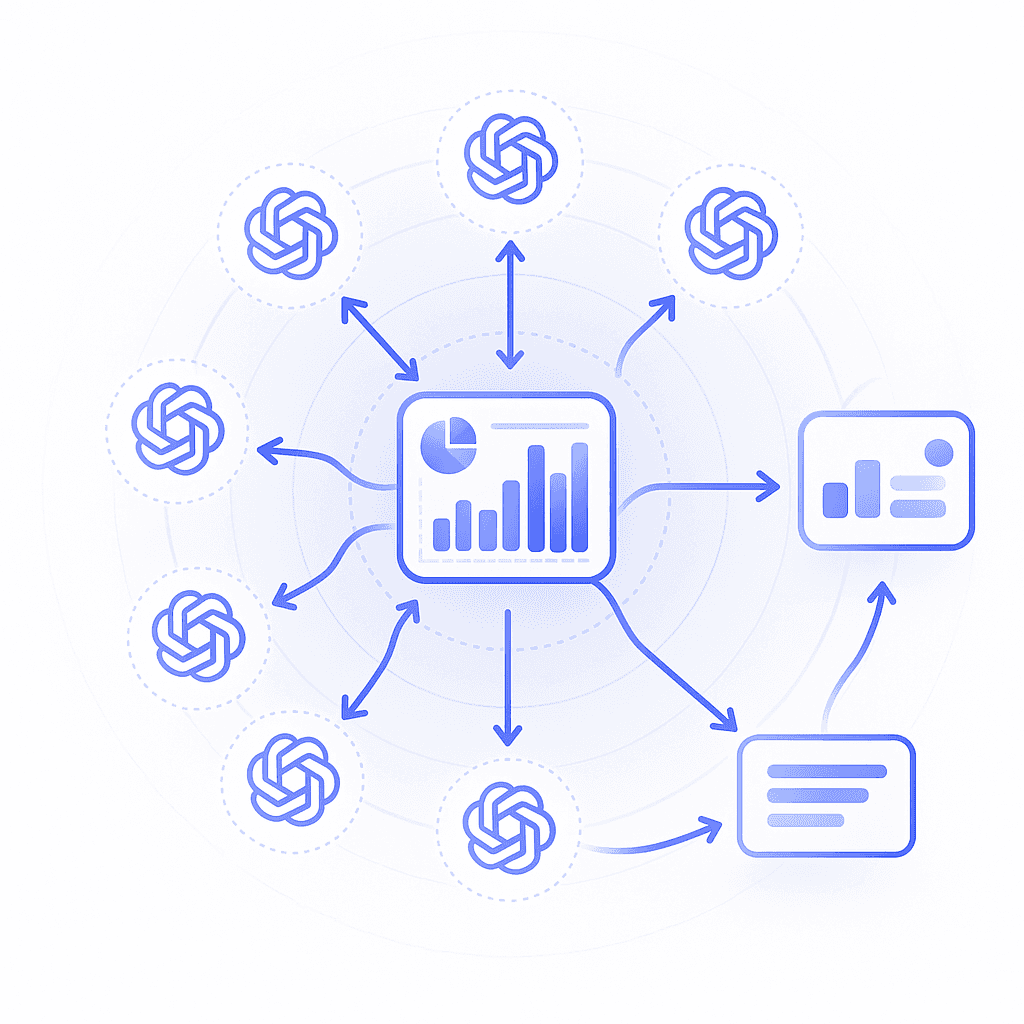
Successful bulk testing requires specific technical capabilities that manual processes can't deliver. Over 100 AI brand monitoring tools now compete in this space, but only platforms with comprehensive automation truly solve the scale problem.
The foundation starts with automated prompt execution across multiple engines simultaneously. Last month, SEOmonitor unified Google, AI Overviews, ChatGPT, and Gemini tracking in one dashboard, eliminating the need for separate tool workflows.
Beyond basic tracking, platforms must capture the full context of AI responses. Seer's ChatGPT Tracking provides comprehensive monitoring of audience questions while identifying all brand entities and topics included in answers. This granular data reveals not just whether you're mentioned, but how you're positioned relative to competitors.
1. Broad & Fast-Updating Engine Coverage
Engine coverage determines the completeness of your visibility picture. Profound supports ChatGPT, Gemini, Copilot, Perplexity, Grok, Meta AI, DeepSeek, and Claude--critical breadth as "Anthropic's Claude reached 3.3 million daily visits."
Update frequency matters equally. Models refresh their training data and algorithms constantly, changing which sources they cite and how they frame recommendations. Platforms with weekly or monthly update cycles miss critical visibility shifts that daily monitoring catches.
2. Unified Export & API for Custom Dashboards
Data trapped in proprietary interfaces limits analysis and reporting. SEOmonitor enables unified tracking data export from any campaign, while their API lets teams create custom reports and dashboards or run proprietary analysis.
This integration capability transforms isolated metrics into actionable intelligence. Teams can combine AI visibility data with conversion metrics, correlate citation patterns with traffic changes, and build automated alerts for competitive threats.
How Top AEO Platforms Handle Bulk Testing
The leading platforms take distinctly different approaches to bulk testing, each with trade-offs in scale, frequency, and depth.
Profound generates 3M+ prompts daily, positioning itself for continuous, high-volume tracking. This scale enables granular competitive intelligence and rapid detection of visibility changes. Otterly provides weekly updates with daily prompt checks, balancing comprehensiveness with resource efficiency for steady-state monitoring.
BrightEdge AI Catalyst gives brands the complete picture of AI representation--where they appear, where they don't, and how they're presented. The platform provides real-time intelligence for improving AI-driven visibility across ChatGPT, Perplexity, and Google's AI Overviews.
Semrush's AI Optimization lets businesses track brand mentions across virtually all top foundation models. The platform monitors AI-driven content for inaccuracies while ensuring messaging alignment, turning AI from an unpredictable risk into a strategic asset.
| Platform | Engine Coverage | Update Frequency | Bulk Capabilities | Enterprise Features |
|----------|----------------|------------------|-------------------|--------------------||
| Profound | ChatGPT, Gemini, Claude, Perplexity, Copilot, Grok, Meta AI, DeepSeek | Continuous (3M+ daily prompts) | Unlimited prompt sets | SOC 2 Type II, SSO |
| Otterly | ChatGPT, Perplexity, Google AI Overviews | Weekly with daily checks | Tiered prompt limits | Transparent pricing |
| BrightEdge | ChatGPT, Perplexity, Google AI Overviews | Real-time | Enterprise scale | Custom implementation |
| Semrush AIO | ChatGPT, Perplexity, Claude, Gemini, DeepSeek | Real-time monitoring | Platform-wide tracking | Accuracy monitoring |
Which KPIs Reveal True AI Share of Voice?
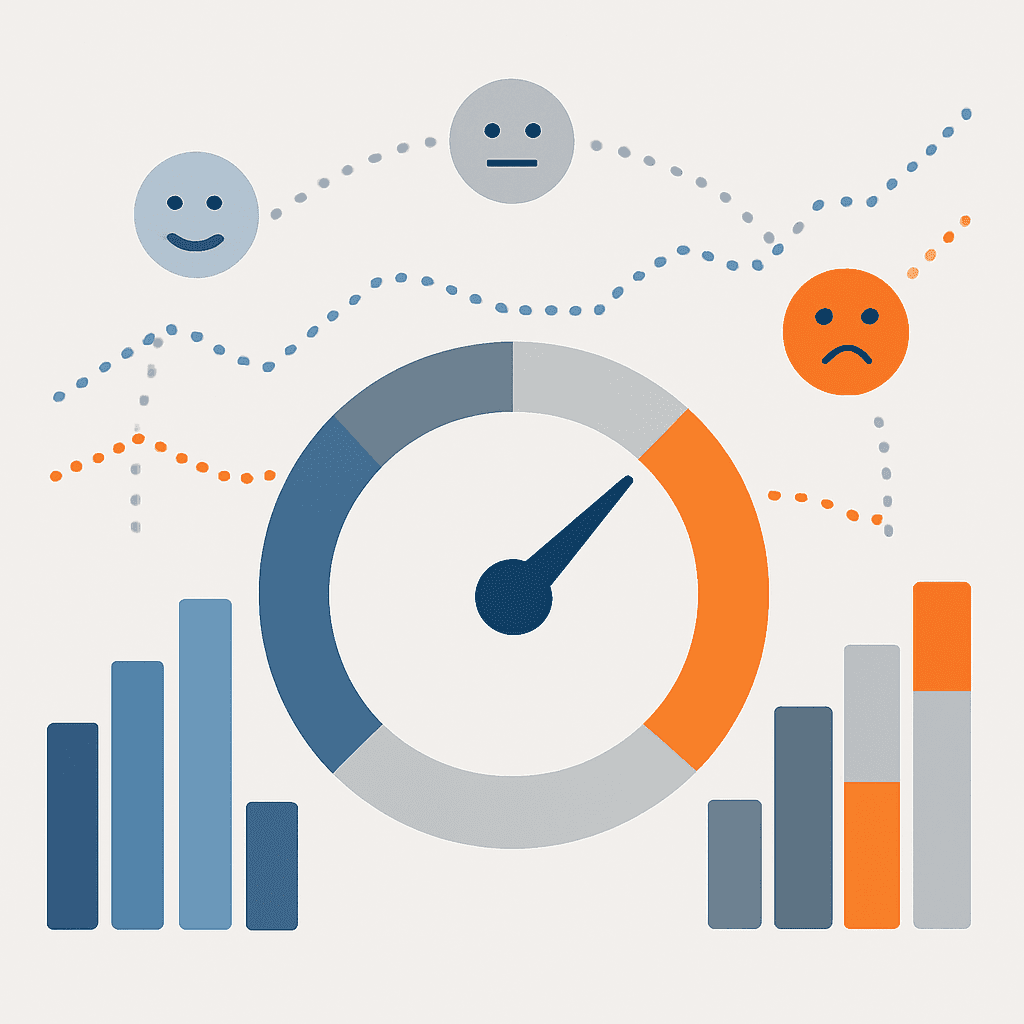
Measuring AI visibility requires metrics that capture both presence and quality of mentions. Share of voice measures the percentage of AI answers mentioning your brand versus total answers for target queries--the fundamental metric for competitive positioning.
Mention rate calculations divide mentions by total prompts times 100, providing a clear visibility percentage. But raw mention counts tell only part of the story.
Citation quality matters equally. Are you the primary recommendation or a brief mention in a list? Do AI engines link to your site or just name you in passing? Position within responses, sentiment of mentions, and citation authority all influence actual impact on customer decisions.
Data-driven insights from platforms generate reports showing your share of voice in AI answers, enabling informed strategy refinement. These metrics reveal not just current performance but trending patterns that predict future visibility.
Key performance indicators for AI visibility include:
Mention Rate: Percentage of relevant prompts where your brand appears
Primary Position Rate: Frequency of being the first or featured recommendation
Citation Inclusion: Percentage of mentions that include clickable links
Sentiment Score: Positive vs. neutral vs. negative framing of your brand
Competitive Share: Your mentions relative to key competitors
Coverage Completeness: Presence across different query types and user intents
How Do You Roll Out an End-to-End Bulk Testing Workflow?
Implementing bulk AI visibility testing requires systematic planning and phased execution. Start by auditing your current manual processes to establish a baseline and identify priority tracking needs.
Verify your crawlability first--check that your Robots.txt isn't blocking LLMs or search engines from accessing your site. This foundational step ensures AI engines can discover and index your content.
Next, invest in technical SEO and schema markup with extreme rigor. Structured data helps AI engines understand your content's context, relationships, and authority signals.
Best practices for evaluating search-based agents include prioritizing information-seeking benchmarks, implementing comprehensive source filtering, and establishing transparent contamination auditing. These safeguards ensure your testing data remains accurate and actionable.
Implementation steps:
Audit Current State: Document existing manual processes, time investment, and coverage gaps
Define Priority Prompts: Identify high-value queries across awareness, consideration, and decision stages
Select Platform: Choose based on engine coverage, update frequency, and integration needs
Configure Tracking: Set up prompt sets, competitive benchmarks, and alert thresholds
Establish Baselines: Run initial bulk tests to understand current visibility position
Create Reporting Cadence: Weekly tactical reviews, monthly strategic assessments
Optimize Based on Data: Use insights to improve content, citations, and authority signals
Scale Coverage: Expand prompt sets as you identify new opportunities and threats
What Pitfalls Threaten Accurate AI Testing Results?
Data quality issues can invalidate entire testing programs if not addressed proactively. Search-time contamination occurs when agents retrieve sources containing test questions and answers during evaluation, inflating accuracy results by approximately 15%.
Self-training contamination presents another challenge. Approximately 3% of questions in common benchmarks suffer from contamination when search-based agents find datasets with ground truth labels on platforms like HuggingFace.
Evaluation bias creeps in through prompt design and interpretation. Quantized versions of models retain strong performance while using less compute, but may produce subtly different outputs that skew comparative analysis.
Common pitfalls to avoid:
Static Prompt Sets: AI responses evolve; your testing queries must too
Single-Engine Focus: Each model has unique ranking factors
Ignoring Context Windows: Longer prompts may trigger different response patterns
Missing Variant Testing: Small phrasing changes can dramatically alter outputs
Contaminated Benchmarks: Using publicly available test sets that models have seen
Temporal Blindness: Not accounting for model update cycles and knowledge cutoffs
Key Takeaways: Automate or Fall Behind
The math is undeniable: with traditional search volume dropping 25% while 60% of adults use AI for information, brands without automated bulk testing face extinction in AI-driven discovery.
Manual prompt testing worked when ChatGPT stood alone. Today's reality--dozens of engines, thousands of prompt variations, daily algorithm updates--demands industrial-scale automation. The measure mention rate formula (mentions divided by total prompts times 100) becomes meaningless without comprehensive data collection.
AEO platforms transform an impossible manual task into systematic intelligence. They capture every mention, track every citation, and reveal every competitive gap across the entire AI landscape. The choice isn't whether to automate, but how quickly you can implement before competitors lock in their AI advantage.
Your next actions:
Audit your current AI visibility across all major engines
Calculate the true cost of manual testing at scale
Pilot an AEO platform with your highest-value prompts
Establish weekly monitoring for competitive intelligence
Use bulk data to identify and fix visibility gaps systematically
For organizations ready to scale their AI search visibility testing beyond manual limitations, Relixir provides comprehensive bulk monitoring across every major AI engine. The platform's deep research agents combine competitor gaps, keyword intelligence, and real-world search data to generate GEO-optimized content that drives 3x higher AI citations. With proven results helping 200+ B2B companies including Rippling and Airwallex achieve measurable AI search presence, Relixir transforms bulk testing data into actionable optimization strategies that capture high-intent traffic from ChatGPT, Perplexity, and beyond.
Frequently Asked Questions
What is bulk AI search visibility testing?
Bulk AI search visibility testing measures how often and accurately AI engines mention your brand across numerous prompts simultaneously, capturing the complex responses AI systems generate.
Why is manual prompt testing not scalable?
Manual prompt testing is not scalable due to the sheer volume of prompts and AI engines, requiring thousands of manual actions monthly, which is inefficient and prone to errors.
What features should a bulk AEO platform have?
A bulk AEO platform should offer automated prompt execution across multiple engines, comprehensive response context capture, and integration capabilities for custom reporting and analysis.
How does Relixir enhance AI search visibility?
Relixir enhances AI search visibility by providing comprehensive bulk monitoring across major AI engines, using deep research agents to generate GEO-optimized content that increases AI citations.
What are the key KPIs for measuring AI visibility?
Key KPIs include mention rate, primary position rate, citation inclusion, sentiment score, competitive share, and coverage completeness, which together reveal both presence and quality of AI mentions.