Blog
ChatGPT Lead Sequencing: Convert AI Search Traffic to Sales!

ChatGPT Lead Sequencing: Convert AI Search Traffic to Sales
ChatGPT lead sequencing transforms AI search traffic into qualified opportunities by capturing visitors, enriching their data, and triggering automated follow-ups. Companies report 2-3x higher response rates using AI-powered sequences, while businesses with mature lead strategies generate 133% more revenue than those without structured approaches.
TLDR
ChatGPT visitors convert at 15.9% compared to Google organic's 1.76%, representing an 8x improvement in conversion rates
AI-powered email sequences deliver 2-3x higher response rates through personalized, context-aware messaging
The 4-step framework includes visitor capture, AI scoring, automated follow-ups, and CRM integration
41% of companies struggle with quick lead follow-ups, making automated sequencing critical for capturing high-intent traffic
AI hallucinations occur in 15-20% of responses, requiring verification workflows to maintain trust
Multi-touch attribution models show +2.6% ROI improvement when properly tracking AI visitor journeys
ChatGPT lead sequencing lets teams turn every AI-search citation into a qualified opportunity--fast. By capturing AI visitors, enriching them, and auto-triggering tailored follow-ups, you convert high-intent traffic into revenue without manual hand-offs.
From Citation to Closed-Won: Why You Need a Lead Sequence for AI Traffic
The landscape of search has fundamentally shifted. ChatGPT traffic now converts at 15.9%, while Google organic hovers around 1.76%. This isn't just a marginal improvement--it's a complete transformation in how qualified buyers find and evaluate solutions.
When someone clicks through from ChatGPT or Perplexity, they arrive pre-qualified. The AI has already summarized use cases, pricing insights, and competitive positioning. These visitors skip early-stage research and dive straight into evaluation mode.
This shift represents more than just higher conversion rates. We're moving from competing for rankings to competing for citations. Traditional SEO focused on ranking positions, but Generative Engine Optimization (GEO) prioritizes being cited by AI systems when they answer buyer questions.
Your content needs to be structured, authoritative, and directly useful to both AI crawlers and the high-intent humans they send your way. The numbers tell the story: AI-referred visitors view more pages per session, spend more time evaluating features, and convert at rates that would make any sales team take notice. But without proper lead sequencing, these golden opportunities slip through the cracks.
Do AI Visitors Convert Better? 8 Data Points You Can't Ignore
The data on AI-referred traffic paints a clear picture of buyer intent that traditional channels can't match.
ChatGPT visitors convert at 8.6% compared to Google organic's 2.1%--a 4x improvement that fundamentally changes the math on content investment. In some cases, the numbers are even more dramatic, with conversion rates reaching 15.9% for AI-referred traffic.
Beyond raw conversion rates, engagement metrics reveal the quality difference. ChatGPT visitors view 2.3 pages per session compared to Google's 1.2 pages. They're not bouncing after a quick scan--they're actively evaluating your solution.
The growth trajectory adds urgency to these metrics. AI chatbot traffic surged 80.92% year-over-year, reaching 55.2 billion visits from April 2024 to March 2025. While this still represents only 2.96% of traditional search volume, the trend line is unmistakable.
These visitors arrive with context. When ChatGPT recommends your solution, it provides comprehensive overviews including features, pricing insights, use cases, and competitive positioning. The heavy lifting of initial education is already done.
The business impact extends beyond individual metrics. Companies report higher average deal sizes from AI-referred leads, shorter sales cycles due to pre-educated buyers, and lower cost per acquisition when factoring in conversion rates.
Key takeaway: AI search visitors aren't just another traffic source--they represent a fundamentally different buyer journey that requires purpose-built conversion strategies.
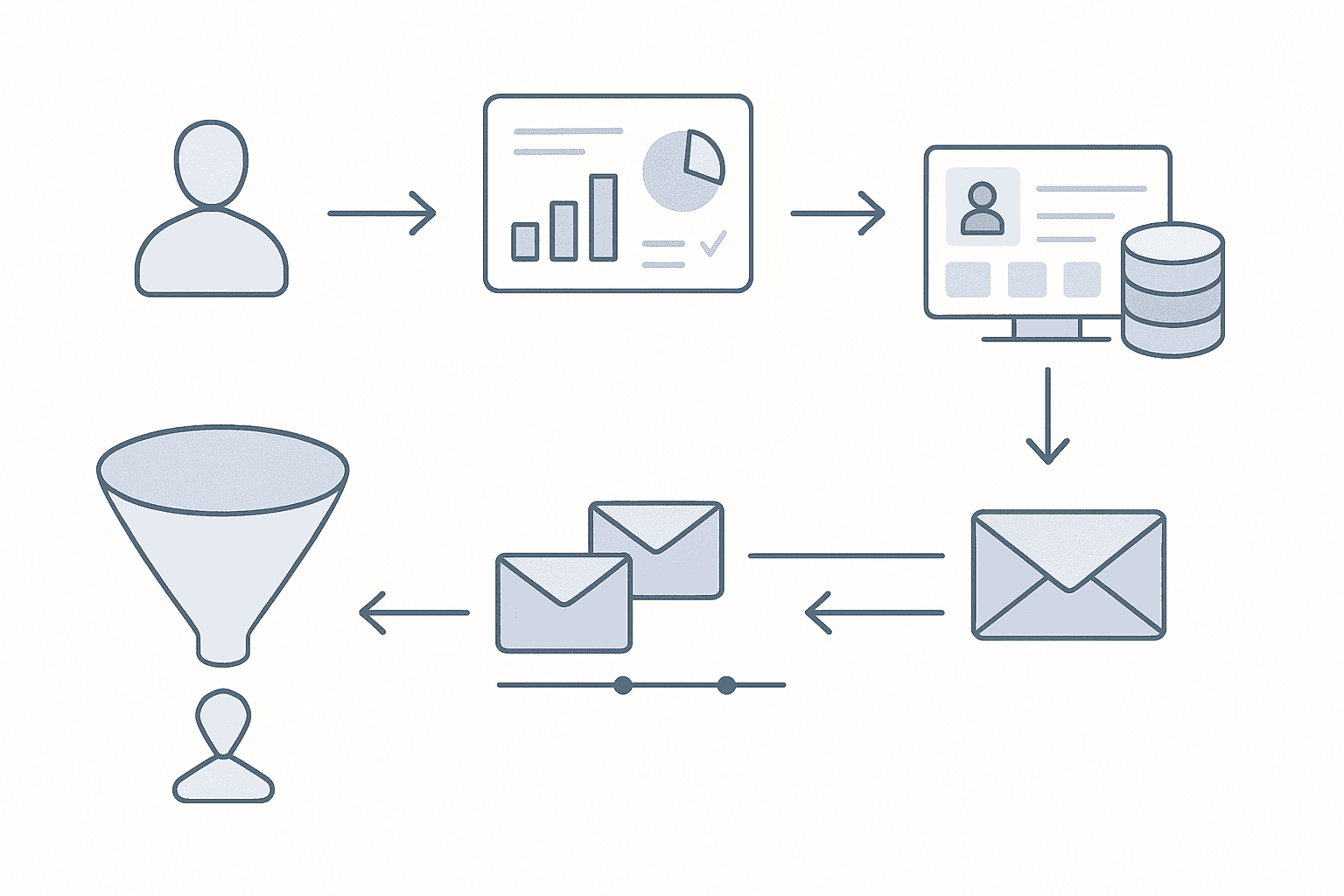
The 4-Step ChatGPT Lead Sequencing Framework
Converting AI traffic requires more than traditional lead capture. You need a systematic approach that identifies, enriches, scores, and sequences these high-intent visitors at the moment they arrive.
The framework starts with visibility--you can't convert traffic you can't see. Standard analytics miss AI-driven activity because crawlers ignore scripts and referrals hide in generic categories. A complete attribution framework combines log-level crawler tracking with user-agent detection to capture the full picture.
Once you've identified AI visitors, the sequencing framework activates through four integrated stages. Each builds on the previous, creating a conversion machine that operates at the speed of buyer interest.
Using clear CTAs increases conversion rates by 161%--and that's before adding AI-powered personalization to the mix. When you combine high-intent traffic with intelligent sequencing, the results compound.
1. Capture & De-anonymize AI Visitors
Traditional analytics tools miss the nuances of AI traffic. ChatGPT, Perplexity, and other AI platforms send visitors through various paths, often obscuring the true source. You need specialized tracking to capture these high-value visitors.
UTM parameters help track AI traffic sources, but implementation requires understanding how AI platforms handle links. ChatGPT includes UTM parameters based on user intent, privacy considerations, and publisher requirements.
Modern visitor identification goes beyond basic analytics:
Server-side tracking captures first-party data that functions across all browsers
Visitor ID scripts identify 3-5x more visitors at person and company level
AI-specific user-agent detection separates bot crawls from human clicks
Cross-platform attribution connects citations to actual visits
Leading tools like Scrapus achieve 90% precision in lead identification, using NLP and knowledge graphs to enrich visitor data in real-time. This enrichment happens instantly, providing context before the visitor even completes their first page view.
2. Score & Qualify with ChatGPT
Once captured, AI visitors need immediate scoring to route them appropriately. Traditional lead scoring fails here--it's too slow and misses the context that makes AI traffic special.
LLMs revolutionize lead qualification through adaptive intelligence that processes complex signals in real-time. Unlike static scoring models, AI-powered systems adjust qualification criteria based on previous responses and behavioral patterns.
GPT for Sheets enables bulk lead scoring with sophisticated prompt engineering. Sales teams report 2-3x improvements in response rates when using AI-enhanced scoring models that consider both demographic fit and engagement signals.
The modern scoring approach uses multi-phase qualification:
Initial scoring based on source and referral context
Behavioral analysis of on-site engagement patterns
Enrichment with firmographic and technographic data
Dynamic adjustment based on similar conversion patterns
The Gradient Boosting Classifier achieves 98.39% accuracy in B2B lead scoring, significantly outperforming traditional methods. This precision ensures only truly qualified leads enter your sequence.
3. Automate Multi-Touch Email Follow-Ups
AI visitors expect immediate, relevant follow-up. Generic autoresponders won't cut it when buyers arrive pre-educated and ready to evaluate.
Personalized email campaigns using AI see 112% higher response rates and drive 6x higher transaction rates. The key is blending automation with human-like messaging that acknowledges their specific research journey.
Organizations implementing AI-powered sequences report 73% efficiency improvements and 45% higher response rates from prospects. These aren't incremental gains--they're transformative results that change sales economics.
Effective AI-powered sequences include:
Immediate acknowledgment emails referencing their AI search context
Personalized follow-ups based on pages viewed and time spent
Dynamic content that adapts to engagement patterns
Multi-channel coordination across email, chat, and social
Clear CTAs boost conversions by 161%, but AI sequences go further by testing and optimizing CTA placement, language, and timing for each prospect segment.
4. Sync to CRM & Trigger Workflows
The final step connects AI insights to your existing sales infrastructure. Without proper integration, even perfectly scored leads can stall in handoff.
HubSpot's OpenAI connector enables natural language CRM queries, allowing teams to access data and trigger workflows through conversational interfaces. Sales reps can ask ChatGPT to summarize pipeline status or identify at-risk opportunities without leaving their workflow.
Zapier automation connects AI scoring to CRM workflows, triggering personalized sequences based on lead score thresholds. These integrations run continuously, ensuring no high-intent visitor waits for follow-up.
Critical integration points include:
Real-time lead creation with AI-enriched data
Automatic assignment based on score and territory
Task creation for high-priority follow-ups
Notification systems for sales team alerts
Revenue attribution tracking from first touch to close
Companies using integrated AI workflows report significant improvements in RevOps efficiency and data management quality. The automation handles repetitive tasks while preserving human touchpoints where they matter most.
How to Avoid Hallucinations & Privacy Pitfalls in AI Outreach
While AI supercharges lead sequencing, it introduces unique risks that can damage trust and violate regulations if not properly managed.
AI hallucinations occur in 15-20% of responses from even state-of-the-art models. In lead sequencing, this manifests as incorrect company information, fabricated statistics in outreach emails, or misattributed quotes that damage credibility.
Chain-of-Verification reduces hallucinations by 42% through systematic fact-checking. Before any AI-generated content reaches a prospect, it should pass through verification layers that confirm company details, validate statistics, and ensure message accuracy.
Privacy presents an equally critical challenge. GenAI browser assistants collect and share webpage content, including sensitive form inputs, with first-party servers and third-party trackers like Google Analytics. When this happens with lead data, you risk compliance violations and trust erosion.
Essential safeguards include:
Human review for high-value prospect communications
Restricted data access for AI systems (no SSNs, financial data)
Clear consent mechanisms for AI-powered interactions
Regular audits of AI-generated content accuracy
Compliance checks for GDPR, CAN-SPAM, and CCPA requirements
The solution isn't avoiding AI--it's building proper guardrails. Companies successfully using AI outreach maintain strict data governance, implement verification workflows, and preserve human oversight for critical decisions.
Key takeaway: Trust is earned through consistent accuracy. One hallucinated fact or privacy violation can undo months of relationship building.
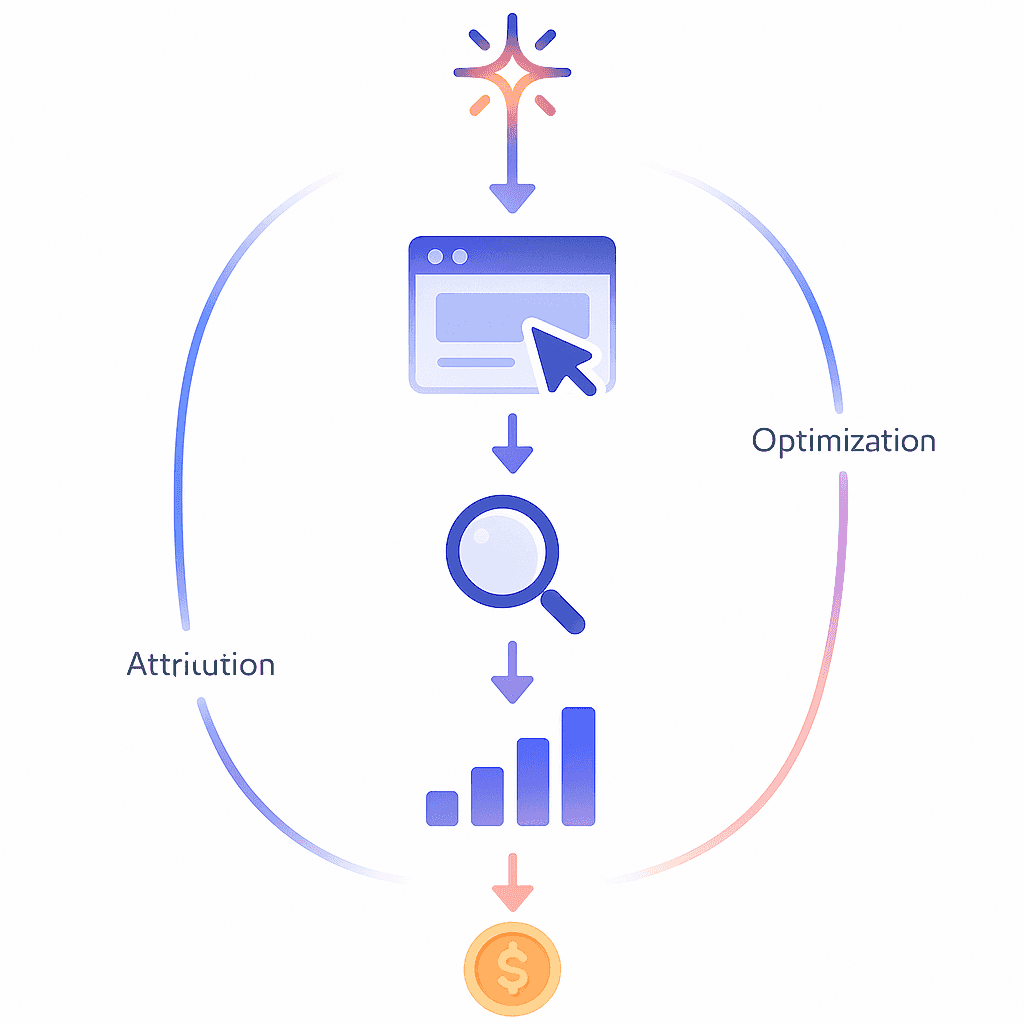
How Do You Measure AI Search ROI--From First Click to Closed Deal?
Measuring AI traffic ROI requires rethinking attribution models built for traditional search. Standard last-click attribution misses the complex journey from AI citation to closed deal.
Multi-Attribution Learning frameworks achieve +2.6% ROI improvement by integrating signals from multiple touchpoints. AI visitors rarely convert on first visit--they research, compare, return, and engage across channels before purchasing.
LinkedIn's unified attribution approach handles member and aggregate data, providing a model for tracking AI visitors who arrive anonymously but later identify through form fills or email engagement. This multi-touch view reveals the true value of AI traffic.
Key metrics for AI search ROI include:
Citation Share: Percentage of relevant AI responses mentioning your brand
Click-through Rate: Visitors from AI citations versus impressions
Engagement Depth: Pages per session and time on site for AI visitors
Lead Velocity: Time from first AI visit to SQL status
Pipeline Attribution: Revenue traced back to AI search origins
Competitive Win Rate: Deals won when prospects arrived via AI
Complete frameworks combine crawler tracking with user detection, connecting early-stage AI visibility to downstream revenue. This requires looking beyond standard analytics to understand the full journey.
Traditional volume is dropping 25% by 2026, replaced by AI-driven discovery. Companies measuring only traditional metrics miss the shift happening beneath the surface. The winners will be those who build attribution systems designed for this new reality.
Putting It All Together
AI search traffic represents a fundamental shift in how buyers discover and evaluate solutions. When someone asks ChatGPT about your product, they receive comprehensive overviews including features, pricing insights, use cases, and competitive positioning. These pre-qualified visitors convert at rates that transform sales economics.
The four-step framework--capture, score, sequence, sync--turns this opportunity into predictable revenue. Each component builds on the others, creating a system that operates at the speed of buyer intent. Companies implementing comprehensive AI lead sequencing report dramatic improvements in conversion rates, sales velocity, and acquisition costs.
The shift from SEO to GEO isn't coming--it's here. Teams still focused solely on traditional rankings miss the high-intent traffic flowing through AI channels. But those who build proper sequencing infrastructure capture buyers at their moment of highest interest.
Success requires more than tools. You need processes that blend automation with human insight, metrics that measure what matters, and safeguards that protect trust while moving fast. The companies winning with AI traffic treat it as a distinct channel requiring purpose-built strategies.
For teams ready to capitalize on AI search traffic, Relixir provides the complete infrastructure. From landing page optimization for AI crawlers to comprehensive monitoring across every AI search engine, Relixir helps 200+ B2B companies like Rippling and Airwallex convert AI citations into pipeline. The platform's proprietary visitor ID technology captures 3x more person-level identification and 40% higher company-level identification, ensuring no high-intent visitor goes unsequenced.
The future of B2B discovery runs through AI search. The question isn't whether to build AI lead sequencing--it's how fast you can implement it before competitors capture your buyers.
Frequently Asked Questions
What is ChatGPT lead sequencing?
ChatGPT lead sequencing is a process that converts AI search traffic into sales by capturing AI visitors, enriching their data, and automating follow-ups to convert high-intent traffic into revenue.
How does AI search traffic compare to traditional search traffic in terms of conversion rates?
AI search traffic, such as from ChatGPT, converts at significantly higher rates than traditional search traffic. For instance, ChatGPT visitors convert at 8.6% compared to Google organic's 2.1%, showcasing a 4x improvement.
What are the key steps in the ChatGPT lead sequencing framework?
The ChatGPT lead sequencing framework involves four key steps: capturing and de-anonymizing AI visitors, scoring and qualifying leads with AI, automating multi-touch email follow-ups, and syncing data to CRM systems to trigger workflows.
Why is it important to have a lead sequence for AI traffic?
Having a lead sequence for AI traffic is crucial because AI-referred visitors arrive pre-qualified and ready to evaluate solutions, making them high-intent leads that require immediate and tailored follow-up to maximize conversion opportunities.
How does Relixir support companies in converting AI search traffic?
Relixir provides comprehensive infrastructure for converting AI search traffic, including landing page optimization for AI crawlers, monitoring across AI search engines, and proprietary visitor ID technology to capture and sequence high-intent visitors.
Sources
https://www.clay.com/blog/chatgpt-prompts-for-lead-scoring-techniques
https://usehall.com/guides/conversions-from-chatgpt-ai-search
https://clay.com/blog/chatgpt-prompts-for-lead-scoring-techniques
https://www.seerinteractive.com/insights/are-ai-sites-like-chatgpt-sending-your-website-traffic
https://gptforwork.com/blog/grade-score-qualify-sales-in-bulk-chatgpt-sheets-excel
https://www.smartlead.ai/blog/how-to-use-ai-in-outlook-email
https://ecosystem.hubspot.com/marketplace/apps/aissistify-ai-assistant-for-hubspot-1371202