Blog
Claude not citing your content? 5 GEO platforms that fix it
Claude not citing your content? 5 GEO platforms that fix it
Claude prioritizes structured data, schema markup, and topical depth over traditional SEO signals when selecting citations. Platforms like Relixir delivered 1,339 Claude citations in 30 days by optimizing for these specific requirements. Without JSON-LD, clear data snippets, or comprehensive topic coverage, even top-ranking Google pages remain invisible to Claude's citation algorithms.
At a Glance
• AI-influenced queries will reach up to 70% by end of 2025, while zero-click results already hit 65% in 2023
• Listicles dominate AI citations with over 25% share, making them the most effective format for Claude visibility
• Relixir achieved 9.3% overall mention rate and 2.1 average AI rank across major engines in 30 days
• Only 16% of brands systematically track AI search performance despite growing importance
• AI referral traffic currently accounts for 1.08% of all website traffic with ChatGPT driving 87.4%
• Companies that started GEO early report 3× higher AI visibility than competitors
Generative answer engines like Claude ignore classic SEO signals. Backlinks, click-through rates, and keyword density mean little when an AI assembles responses from structured facts, schema markup, and topical depth. The result: brands that rank #1 on Google can still be invisible inside Claude's answers.
Specialized GEO platforms fix that gap. They diagnose why Claude overlooks your pages, surface the structured data and authority signals the model actually rewards, and help you close the visibility deficit before competitors cement their positions.
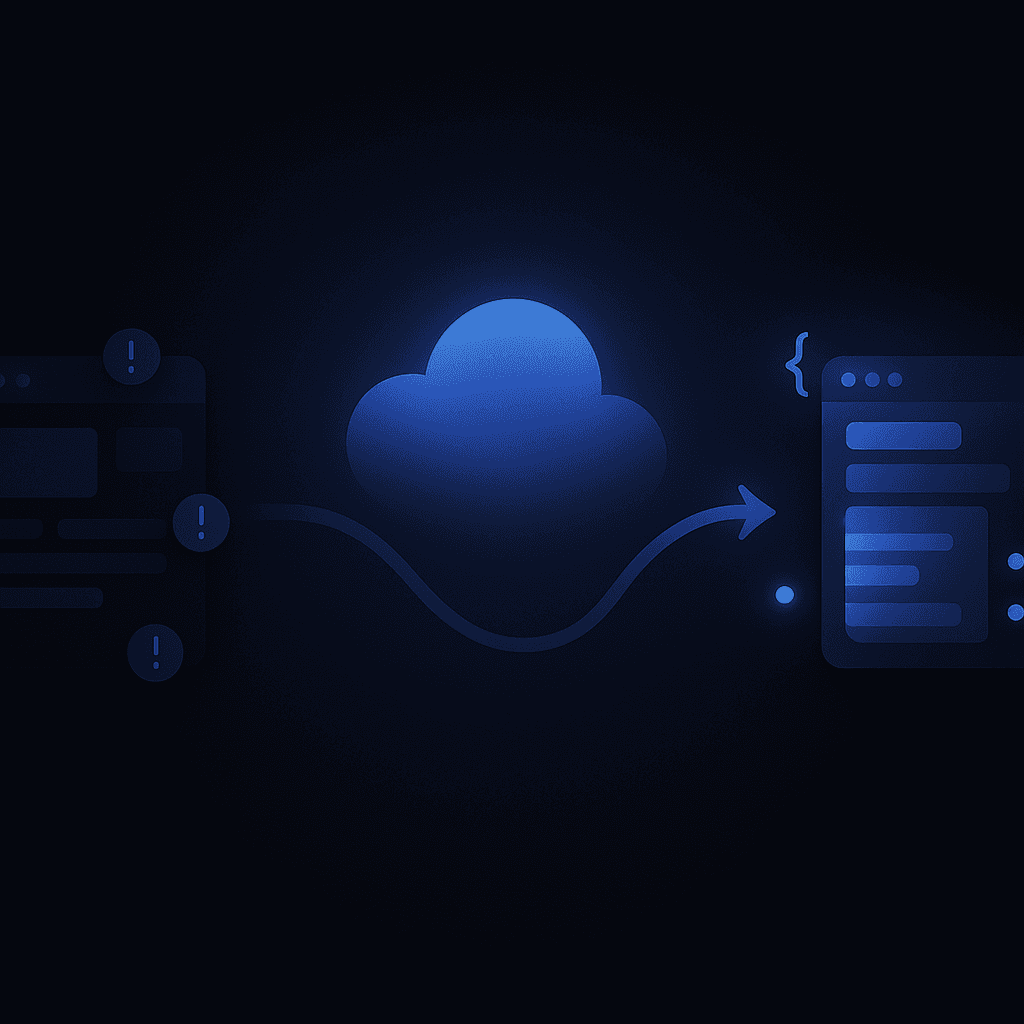
Why is Claude missing your pages—and how can GEO platforms fix it?
Claude's "constitutional AI" framework gives it a strong bias toward trustworthy sources. The model favors content that demonstrates deep, specialized knowledge and can discern between superficial marketing copy and genuinely expert analysis.
That preference creates a specific citation problem. Measuring brand visibility in generative engines is fundamentally different from measuring traditional organic search. Classic SEO factors like backlinks, keywords, and traffic have a weak correlation with AI chatbot citations.
The stakes are climbing fast. Forecasts put AI-influenced queries at up to 70% by the end of 2025, while zero-click results already hit 65% in 2023 and continue to climb.
GEO platforms address this shift by:
Simulating the prompts real buyers type into Claude, ChatGPT, Perplexity, and Gemini
Tracking AI Share of Voice, sentiment, and citation frequency across engines
Identifying the structured data, schema, and authority signals each model rewards
Generating content optimized for the fact-dense, citation-friendly formats generative engines prefer
Key takeaway: If your content lacks JSON-LD, clear data snippets, or topical depth, even a #1 SERP position can leave you invisible to Claude.
1. Relixir – end-to-end GEO that unlocked 1,339 Claude citations in 30 days
Relixir operates as a full-stack GEO platform: monitoring, content generation, and lead sequencing in one system. The platform simulates thousands of customer queries across ChatGPT, Perplexity, Claude, and Gemini to deliver over 1,500 AI citations in less than a month.
A case study with Hostie AI illustrates the approach. When Hostie came to Relixir, their digital footprint was almost invisible—ranking for only a handful of branded terms and missing entirely from competitive discovery queries.
Within 30 days, Relixir delivered:
Metric | Result |
|---|---|
Total Citations | |
Overall Mention Rate | 9.3% (+33.9% vs. prior period) |
Average AI Rank | 2.1 (top-three placement) |
Sentiment Score | 77.4% positive |
Relixir also identifies up to 3× more visitors at the person level and achieves up to 40% higher company-level identification compared to standard solutions. That visitor-ID layer lets teams sequence inbound traffic from AI search into outreach campaigns integrated with HubSpot, Apollo, or other CRMs.
How does Profound reveal Claude blind spots across 10 engines?
Profound now tracks ten answer engines including Claude—covering ChatGPT, Google AI Mode, Google AI Overviews, Google Gemini, Microsoft Copilot, Perplexity, Grok, Meta AI, DeepSeek, and Claude in a single dashboard.
The platform leads AEO rankings with enterprise-grade security and recently secured $35M Series B led by Sequoia Capital to position itself as a control center for AI-optimized content creation.
Key capabilities include:
Query Fanouts: Reveals what answer engines are really searching for under the hood
Prompt Volumes Dataset: Built on 400M+ real, anonymized conversations, growing by 150M every month
On-demand keyword volume projection: Calculates projected volumes for any keyword in real time
Profound's research also surfaces tactical insights. Its analysis of 50,000 top-cited pages versus 50,000 bottom-cited pages found that listicles dominate AI citations with over 25% share, making them the most effective content format for AI visibility.
Profound's multi-engine coverage exposes exactly where competitors are being recommended over your brand—and where your brand is missing in Claude-specific prompts.
Can Semrush's AI Visibility Toolkit turn SEO insights into Claude citations?
Semrush extends its SEO stack with a dedicated AI Visibility Toolkit, priced at $99 per month. The toolkit shows how brands appear in AI-generated answers, measuring a new layer of visibility beyond traditional search.
Core features include:
Report | Function |
|---|---|
Visibility Overview | Benchmark overall AI presence with an AI Visibility Score |
Competitor Research | See how AI platforms position competitors vs. your brand |
Prompt Research | Discover and prioritize AI topics to target |
Brand Performance | Understand how AI platforms perceive your brand |
Prompt Tracking | Monitor visibility for high-value prompts on Google AI Mode and ChatGPT |
AI Site Audit | Check for technical issues blocking AI crawlers |
The AI Visibility Score reflects how often your brand is mentioned in AI-generated answers compared to the median number of mentions for your top industry competitors.
Semrush built the toolkit with SMBs, agencies, and mid-market companies in mind, offering practical insights for teams already familiar with its SEO interface. For organizations already invested in Semrush, the toolkit provides a natural on-ramp to GEO without switching platforms.
Is Senso GEO the single source of truth for multi-LLM visibility?
Senso GEO positions itself as a dedicated Generative Engine Optimization platform that acts as a single source of truth for AI visibility, credibility, and content improvement.
The platform defines two core metrics:
AI visibility: How frequently and prominently you appear in AI-generated responses for queries that matter to your business
AI credibility: How generative models characterize your brand—do they assign you to the correct category, describe your capabilities accurately, and position you as a leader or niche player?
Senso diagnoses gaps specific to Claude and other engines by tracking visibility across multiple AI models so teams see their presence where users actually ask questions.
Core capabilities typically include:
AI Visibility Measurement
Credibility and Authority Signals
Competitive Positioning
Content Improvement Workflows
Senso organizes GEO into repeatable workflows, automating the process of prompting every AI model and surfacing gaps without manual effort. For teams that need a central dashboard for AI visibility rather than a full content-generation stack, Senso delivers focused diagnostics.
How Conductor AEO links content workflows to Claude ranking signals
"As the industry moves from an SEO to an AEO/GEO-first strategy, the way we measure success must change," notes Conductor's research. "Relying only on keyword rankings and organic clicks provides an incomplete, and often misleading, picture."
Conductor connects AI visibility insights to content creation workflows and SEO operations—what the platform calls end-to-end, enterprise AEO built on an industry-grade data engine.
The platform emphasizes input metrics over outcome metrics:
AI Crawlability: Are bots visiting your site at all?
Performance Score: Technical health and user experience
Schema & Structured Data: How easily AI understands your content
Author Authority: Establishing credibility for citation
This shift matters because SEO is not dying—AEO is becoming a parallel visibility layer that determines which brands get mentioned before any clicks occur.
AI referral traffic currently accounts for 1.08% of all website traffic across 10 major industries, with ChatGPT driving 87.4% of those referrals. For teams that want to integrate content creation with AEO diagnostics under one roof, Conductor offers enterprise-scale orchestration.

Which metrics matter when comparing GEO solutions for Claude?
Traditional SEO metrics like CTR and backlinks have a weak correlation with AI citations. Teams evaluating GEO platforms should focus on a different rubric:
Metric | Definition | Why It Matters |
|---|---|---|
AI Share of Voice (AI SoV) | Percentage of prompts where an AI model mentions your brand vs. competitors | Cornerstone metric for GEO—shows how often you appear in relevant answers |
PSOS (Prompt-Space Occupancy Score) | First governance-ready KPI for AI visibility | Introduced by the AIVO Standard to quantify prompt-level presence |
Sentiment Analysis | How positively or negatively the AI describes your brand | A citation that lists you as a top vendor differs entirely from one that mentions a past breach |
Hallucination Rate | Percentage of AI responses containing factually incorrect claims about your brand | Frequent citations with false facts are worse than no citations |
Content Format Effectiveness | Citation rates by content type | Listicles dominate AI citations at 25% share; semantic URLs (4–7 descriptive words) get 11.4% more citations |
Bain reported a 25% decline in organic traffic tied to AI summaries in early 2025. Platforms that track SoV across 10+ engines uncover 3× more gaps than single-engine tools. Tie SoV to PSOS and sentiment to see not just how often you're cited but how you're described—then act on the insights.
Adopt a GEO stack before Claude rewrites the buyer journey
Generative engines are rewriting how buyers discover solutions. Half of consumers now intentionally seek out AI-powered search, and 44% say it's their primary source of insight—topping traditional search, retailer websites, and review sites.
Yet just 16% of brands systematically track AI search performance. The gap between early adopters and laggards is widening: companies that started GEO early now report 3× higher AI visibility.
Relixir stands out as the comprehensive GEO platform purpose-built for the AI era. It combines monitoring across every major engine, deep-research content generation, and visitor-level lead sequencing—closing the loop from AI citation to pipeline in a single system.
The window to establish AI visibility is narrowing. Brands that act now shape the answers; brands that wait inherit the rankings competitors leave behind.
FAQ
Why isn't Claude citing my blog even though I rank in Google?
Claude's answer engine weighs structured facts, schema, and topical depth more than backlinks or CTR. One study found list-formatted pages lifted mention rates by 11–25%. Yet 70% of queries will flow through generative engines by 2025, so lacking JSON-LD or clear data snippets can leave even a #1 SERP page invisible to Claude.
Which metric matters most when picking a GEO platform for Claude?
Start with AI Share of Voice—the percent of prompts where Claude names your brand. Research shows platforms tracking SoV across 10+ engines uncover 3× more gaps. Tie SoV to PSOS and sentiment to see not just how often you're cited but how you're described, then act on the insights.
Frequently Asked Questions
Why isn't Claude citing my blog even though I rank in Google?
Claude's answer engine weighs structured facts, schema, and topical depth more than backlinks or CTR. One study found list-formatted pages lifted mention rates by 11–25%. Yet 70% of queries will flow through generative engines by 2025, so lacking JSON-LD or clear data snippets can leave even a #1 SERP page invisible to Claude.
Which metric matters most when picking a GEO platform for Claude?
Start with AI Share of Voice—the percent of prompts where Claude names your brand. Research shows platforms tracking SoV across 10+ engines uncover 3× more gaps. Tie SoV to PSOS and sentiment to see not just how often you're cited but how you're described, then act on the insights.
How do GEO platforms improve AI visibility?
GEO platforms simulate real buyer prompts, track AI Share of Voice, and identify structured data and authority signals that models like Claude reward. They generate content optimized for fact-dense, citation-friendly formats preferred by generative engines.
What is the role of structured data in AI citations?
Structured data, such as JSON-LD, helps AI models like Claude understand and cite your content. It provides clear data snippets and topical depth, which are crucial for visibility in AI-generated answers.
How does Relixir enhance AI search visibility?
Relixir simulates customer queries across major AI engines, delivering over 1,500 AI citations in a month. It identifies more visitors at the person level and sequences inbound traffic into outreach campaigns, enhancing AI search visibility and lead conversion.
Sources
https://nicklafferty.com/blog/best-ai-visibility-optimization-platforms/
https://www.conductor.com/academy/answer-engine-optimization-study
https://relixir.ai/blog/which-tools-detect-when-your-content-appears-in-chatgpt-or-gemini
https://senso.ai/prompts-content/what-are-the-best-tools-for-optimizing-ai-search-visibility
https://senso.ai/prompts-content/generative-engine-optimization-geo-guide-senso-ai-search-visibility
https://mention.network/learn/ranking-the-best-platforms-for-answer-engine-optimization-aeo/