Blog
GA4 not showing AI traffic? AEO platforms track everything

GA4 not showing AI traffic? AEO platforms track everything
Google Analytics 4 cannot track most AI-driven traffic because it relies on client-side Javascript that AI crawlers don't execute, missing approximately 64 crawls for every visible referral visit. While 63% of websites already receive AI traffic, GA4's architecture creates a permanent blind spot that specialized AEO platforms solve through server-side tracking and direct AI interface monitoring.
Key Facts
• AI platforms drive traffic to 63% of websites, with ChatGPT accounting for 50% of all AI referrals
• GA4 misclassifies AI sessions as Direct, Referral, or Unassigned traffic rather than properly attributing them
• For every referral visit from ChatGPT, approximately 64 crawler sessions go untracked in standard analytics
• AEO platforms track Share of Voice across ChatGPT, Perplexity, Gemini, and Claude through direct API monitoring
• Server-side tracking captures 100% of AI interactions compared to client-side Javascript limitations
• Companies implementing proper AI traffic tracking report 10x increases in visitor-to-contact conversions
AI discovery is exploding - and GA4 is flying blind
AI discovery has become a mainstream activity, with 63% of websites already receiving traffic from AI tools. When ChatGPT or Perplexity cite your site, they're driving high-intent visitors who discovered you through AI recommendations. Yet there's a critical problem: Google Analytics 4 operates on a data collection model that requires client-side Javascript to run in a user's web browser.
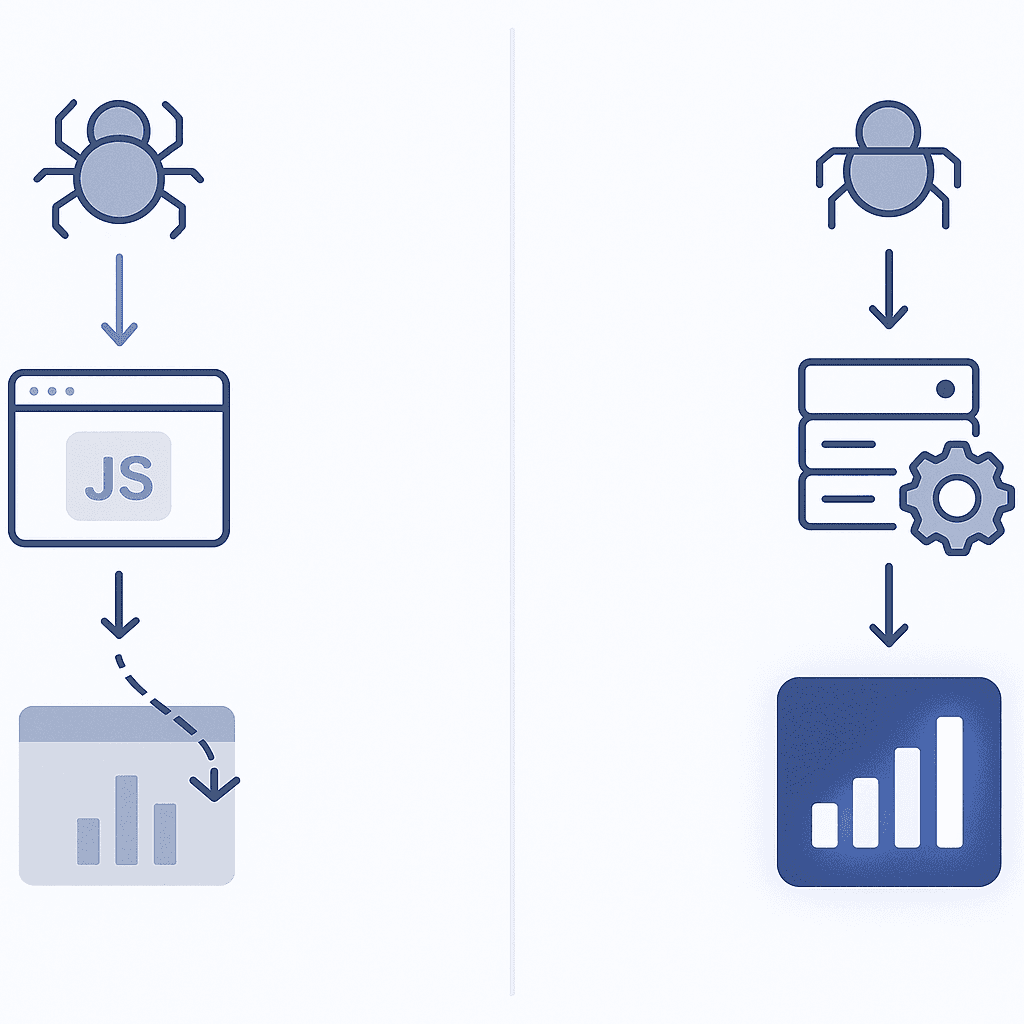
This architectural reality creates a massive blind spot in your analytics. AI crawlers and headless browsers don't execute Javascript, meaning these valuable sessions never register in GA4. You're essentially flying blind to one of the fastest-growing, highest-converting traffic channels available today.
The implications extend beyond simple visitor counts. AI traffic refers to any website visit that originates from a generative AI assistant or language model interface, such as ChatGPT, Perplexity, Bing Copilot, Claude, or Google's Gemini. Without proper tracking, you can't measure the true ROI of your AI visibility efforts or understand which content drives AI citations.
Why does GA4 miss most AI-driven sessions?
The failure to track AI crawler traffic isn't a temporary bug that Google will patch in a future update. This is a permanent consequence of a foundational architectural divide between how GA4 collects data and how AI systems interact with websites.
GA4's tracking limitations manifest in several ways. First, AI-driven sessions often get incorrectly grouped under Direct, Referral, or Unassigned categories rather than being properly attributed to their AI sources. This misclassification makes it impossible to understand your true AI traffic volume or performance.
Adoption benchmarks reveal the scale of this tracking gap. Research shows for every single referral visit ChatGPT sends, it makes approximately 64 crawls to gather and update information about your content. None of these crawls register in standard GA4 implementations.
The architectural mismatch runs deeper than simple referrer detection. While server-side tracking is becoming the new global standard, most organizations still rely on client-side Javascript that AI crawlers bypass entirely. Even companies investing heavily in analytics infrastructure miss this critical channel.
Traditional analytics platforms face another challenge: AI tools often summarize content without passing a backlink or referring domain. This weakens traditional attribution strategies where tracking relies on referrer headers and UTM parameters.
Can GA4 work-arounds really rescue your AI data?
Marketers attempting to track AI traffic in GA4 face a steep climb. While custom channel groups and regex rules can help surface some AI-driven sessions, these workarounds require constant maintenance and still miss the majority of AI interactions.
The manual configuration process involves multiple steps. You need to create Custom Dimensions called AI Source to classify each visit by its originating AI platform. Then you must set up regex filters, implement Google Tag Manager for specific AI interactions, and build custom segments to separate AI platforms from traditional sources.
Even after this extensive setup, the limitations remain stark. Tracking AI-driven website traffic still requires significant manual effort, and you'll only capture a fraction of actual AI interactions. The workarounds can't solve the fundamental problem: AI crawlers don't execute the Javascript that GA4 depends on for data collection.
AEO platforms: complete visibility, from share-of-voice to revenue
Answer Engine Optimization has emerged as the critical discipline for brands seeking visibility where modern buyers conduct research: AI platforms like ChatGPT, Perplexity, Gemini, and Claude. These specialized platforms capture signals GA4 fundamentally cannot detect.
AEO platforms operate differently than traditional analytics. They poll live AI interfaces, track brand mentions across multiple AI engines, and measure metrics that matter in the AI era. Instead of counting pageviews, they track Share of Voice - the percentage of relevant AI responses that mention your brand, weighted by position, authority, and context.
The data these platforms surface transforms how teams understand their market position. When you're cited in an AI Overview, you get 35% more organic clicks compared to when you're not cited at all. This visibility directly impacts revenue, yet it remains completely invisible in GA4.
Measuring AI share-of-voice instead of keyword rank
The shift from keyword rankings to AI share-of-voice represents a fundamental change in how we measure search visibility. As one marketer noted: "Stopped tracking keyword rankings. Started tracking share of voice across AI platforms. Night and day difference in what we're optimizing for."
AEO platforms track several critical metrics that GA4 cannot measure:
Brand mention frequency across ChatGPT, Perplexity, Gemini, and Claude
Sentiment analysis of how AI systems describe your products
Citation sources that AI models reference when discussing your brand
Competitive displacement tracking to see when competitors appear instead
Context analysis showing which queries trigger your brand mentions
AI systems might mention your brand in contexts you haven't considered or alongside competitors in ways that could be advantageous or detrimental to your positioning. Without proper AEO tracking, these critical insights remain hidden.
Which answer-engine optimization tools lead the pack in 2025?
The AEO platform landscape has evolved rapidly, with specialized tools emerging to fill GA4's blind spots. XFunnel offers a comprehensive platform designed to enhance brand visibility and conversion across AI-driven engines, while focusing specifically on B2B intent signals.
Ahrefs Brand Radar extends the legendary Ahrefs SEO platform into AI visibility tracking, allowing existing customers to monitor brand mentions across ChatGPT, Perplexity, Gemini, and Google AI Overviews within their familiar interface. This integration makes it easier for teams already using Ahrefs to add AI tracking without learning new systems.
Semrush Enterprise AIO brings AI Overview and answer-engine visibility into their enterprise SEO suite. The App Center lets you add specialized AEO apps for monitoring ChatGPT and Perplexity, creating a unified view of both traditional and AI search performance.
Each platform brings unique strengths:
Platform | Core Strength | Best For |
|---|---|---|
Profound | Deep citation analysis | Understanding content attribution |
Otterly.AI | Affordable tracking | Startups and small businesses |
Peec AI | Gap analysis | Finding missed opportunities |
OmniSEO | Enterprise features | Large organizations needing compliance |
Writesonic GEO | Content + tracking | Teams wanting integrated creation |
The choice depends on your specific needs, budget, and existing tech stack. What matters most is having visibility into this growing channel rather than remaining blind to AI-driven traffic.
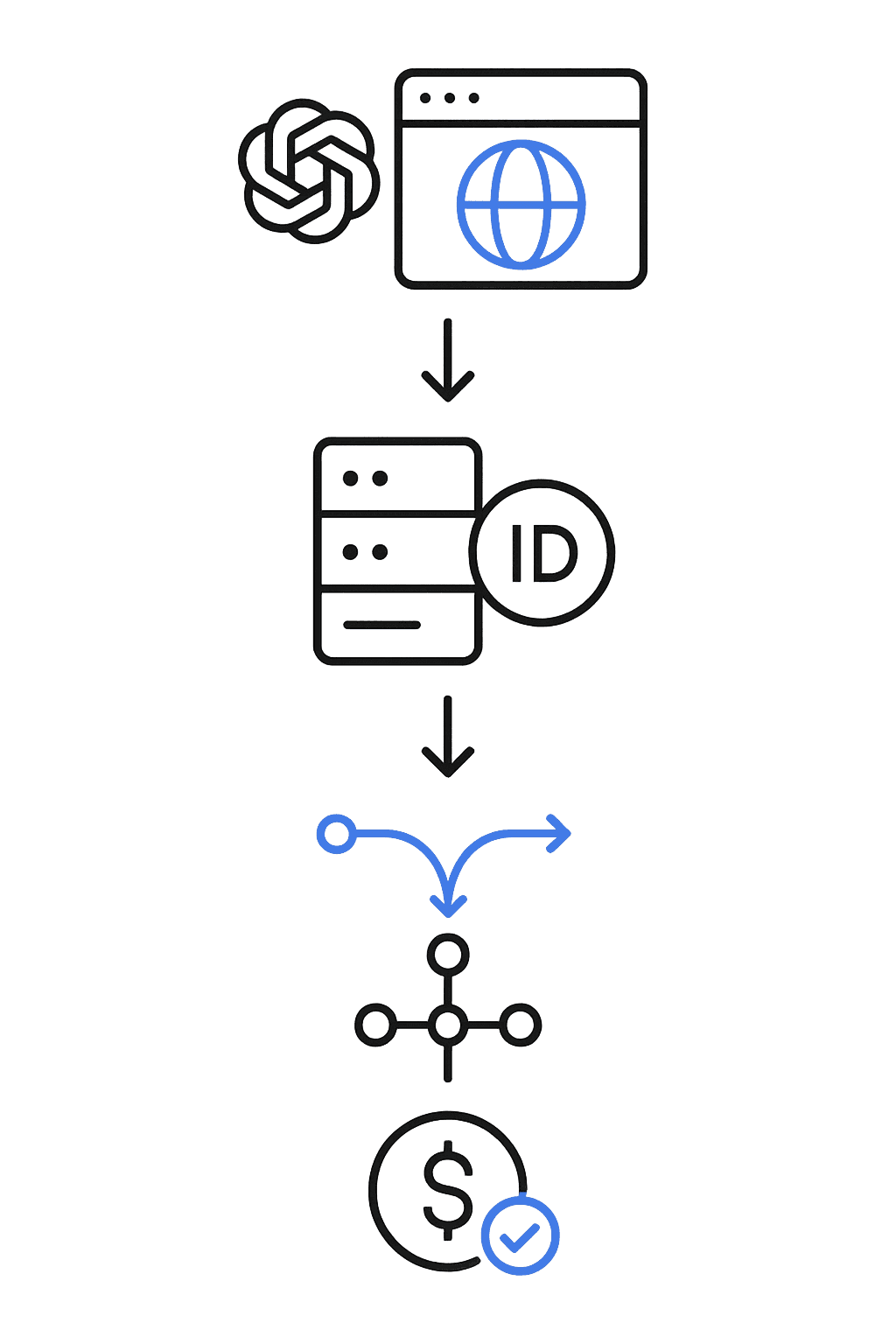
Why server-side visitor ID closes the loop from anonymous visit to closed-won
Server-side tracking represents the definitive solution for complete traffic visibility. AI-Powered Visitor Identification increases Ad Spend ROI by 400% by capturing sessions that client-side tracking misses entirely.
The technology works by shifting data collection from the browser to the server itself. The definitive solution for achieving complete traffic visibility is to shift the point of data collection from the client's browser to the web server itself. This architectural change captures every interaction, including AI crawlers and headless browsers.
Real-world results demonstrate the revenue impact. Companies implementing server-side visitor ID report visitor-to-contact conversions increased tenfold with privacy-compliant visitor intelligence solutions. One organization achieved 72% increase in automation revenue with orchestrated customer journeys powered by accurate visitor data.
The connection between visibility and revenue becomes clear when you track the complete journey. A specialty retailer using AI-powered session tracking achieved $17.7 million in annualized margin-positive revenue by properly attributing and optimizing for AI-driven sessions.
Server-side tracking also enables advanced visitor identification capabilities. If you identify your visitors via distinct_id, you can connect AI-referred sessions to specific companies and individuals, turning anonymous AI traffic into qualified pipeline opportunities.
Seeing the whole picture in the AI search era
The gap between what GA4 shows and what's actually happening continues to widen. While traditional analytics focuses on pageviews and sessions, the real opportunity lies in understanding your AI visibility and converting that presence into pipeline.
"Stopped tracking keyword rankings. Started tracking share of voice across AI platforms. Night and day difference in what we're optimizing for." This shift in perspective reflects the new reality: AI discovery drives high-intent traffic that converts, but only if you can see it.
The solution isn't patching GA4 with workarounds that capture fragments of the picture. The definitive solution for achieving complete traffic visibility requires purpose-built tools that understand how AI systems interact with your content.
Key takeaway: Organizations that invest in comprehensive AEO platforms gain competitive advantage through visibility others lack - tracking AI citations, measuring share of voice, and connecting AI-driven sessions to revenue.
For teams ready to see their complete AI traffic picture, platforms like Relixir offer end-to-end visibility from AI search presence to closed-won revenue. The choice is clear: continue flying blind with GA4, or gain the insights needed to win in the AI search era.
Frequently Asked Questions
Why does GA4 fail to track AI-driven sessions?
GA4 relies on client-side Javascript for data collection, which AI crawlers and headless browsers do not execute, leading to missed AI-driven sessions.
What are the limitations of using GA4 for AI traffic?
GA4 often misclassifies AI-driven sessions under Direct, Referral, or Unassigned categories, making it difficult to accurately measure AI traffic volume and performance.
How can AEO platforms improve AI traffic visibility?
AEO platforms track brand mentions across AI engines, measure share-of-voice, and provide insights into AI-driven sessions that GA4 cannot detect, offering a comprehensive view of AI visibility.
What is the benefit of server-side tracking for AI traffic?
Server-side tracking captures all interactions, including those from AI crawlers, providing complete traffic visibility and improving visitor-to-contact conversions.
How does Relixir help with AI search visibility?
Relixir offers end-to-end visibility from AI search presence to revenue, tracking AI citations and measuring share-of-voice to convert AI-driven sessions into qualified leads.
Sources
https://www.peasy.so/blog/the-ai-traffic-blind-spot-in-google-analytics-data
https://www.tripledart.com/marketing-analytics/how-to-track-ai-and-llm-chatbot-traffic-in-ga4
https://insights.elevar.io/research/2024-state-of-server-side-tracking/
https://www.maximuslabs.ai/answer-engine-optimizations/aeo-tools-comparison
https://www.seerinteractive.com/insights/aio-impact-on-google-ctr-september-2025-update
https://business.adobe.com/customer-success-stories/auckland-airport-case-study.html
https://sessionai.com/case-studies/specialty-retailer-17m-ai-revenue/
https://developers.tidio.com/docs/widget-visitor-identification