Google Search Console can't monitor AI search citations - here's what can [February 2026]
Google Search Console cannot track AI search citations because it bundles AI Overviews into generic "Web" data and lacks filters for ChatGPT, Perplexity, or other AI engines. GSC offers no direct method to isolate AI-specific performance. Solutions include parsing server logs to capture AI crawler activity, implementing UTM parameters, and using specialized AI citation tracking platforms.
TLDR
Google Search Console bundles AI Overviews and chat answers into the generic "Web" bucket, creating a blind spot for AI search citations
63% of websites already receive traffic from AI tools, but traditional analytics miss this data entirely
Server logs capture AI crawler visits that Google Analytics can't track since AI crawlers don't execute Javascript
Specialized tools like Relixir, AthenaHQ, and Rankshift now provide dedicated AI citation tracking across ChatGPT, Perplexity, and other engines
CTR drops 30% when AI Overviews appear, making visibility tracking critical for revenue protection
Brands still rely on Google Search Console even though it hides AI search citations, creating a blind-spot that can cost real pipeline. While GSC remains essential for traditional SEO, it fundamentally cannot track how ChatGPT, Perplexity, or other AI engines cite your content. This post shows how to identify, measure, and ultimately fix the gap in AI search citations that your current analytics stack misses.
Why Your Analytics Blind-Spot Starts With Google Search Console
Google Search Console folds AI Overviews and chat answers into the generic "Web" bucket, obscuring AI search citations and zero-click exposure. According to Google's official documentation, "Just like the rest of the results page, sites appearing in AI features (such as AI Overviews and AI Mode) are included in the overall traffic in Console. In particular, they're reported on in the Performance report, within the 'Web' type."
This fundamental limitation means GSC offers no direct method to isolate or filter data for AI Overviews. There was brief excitement in the SEO community in September 2025 when a rumor of a new "AI Overviews" filter began to circulate. However, this was quickly debunked by Google's John Mueller as a fake screenshot, with confirmation that no such feature was planned.
The problem extends beyond just AI Overviews. With generative engines set to influence up to 70% of all queries by the end of 2025, the inability to track AI citations creates a massive measurement gap. Zero-click results have already hit 65% in 2023 and continue climbing, fundamentally changing how brands must approach visibility in search results.
How Much Revenue Does a 30 % Drop in Click-Through Cost?
The revenue impact of hidden AI traffic and falling CTR from zero-click and AI Overviews is substantial. Ahrefs analysis found a 34.5% drop in position 1 CTR when AI Overviews were present, based on 300,000 keywords. Meanwhile, BrightEdge data shows Google impressions are up 49% year-over-year, but click-through rates are down 30%.
For transactional queries, Terakeet's research reveals that webpages included in AI Overviews had 3.2x as many clicks as pages that were excluded. This dramatic difference shows the critical importance of AI visibility; brands not appearing in AI-generated answers are losing significant traffic and revenue opportunities.
The shift isn't uniform across all query types. Informational queries see AI Overviews diverting traffic from positions 1-2 while increasing traffic for positions 3-10. But for transactional queries, where purchase intent is highest, webpages included in AI Overviews get more traffic regardless of their position on Page 1 of Google.
Why Can't GSC & GA4 Surface AI Citations?
Three technical limits prevent Google's analytics stack from properly tracking AI search visibility.
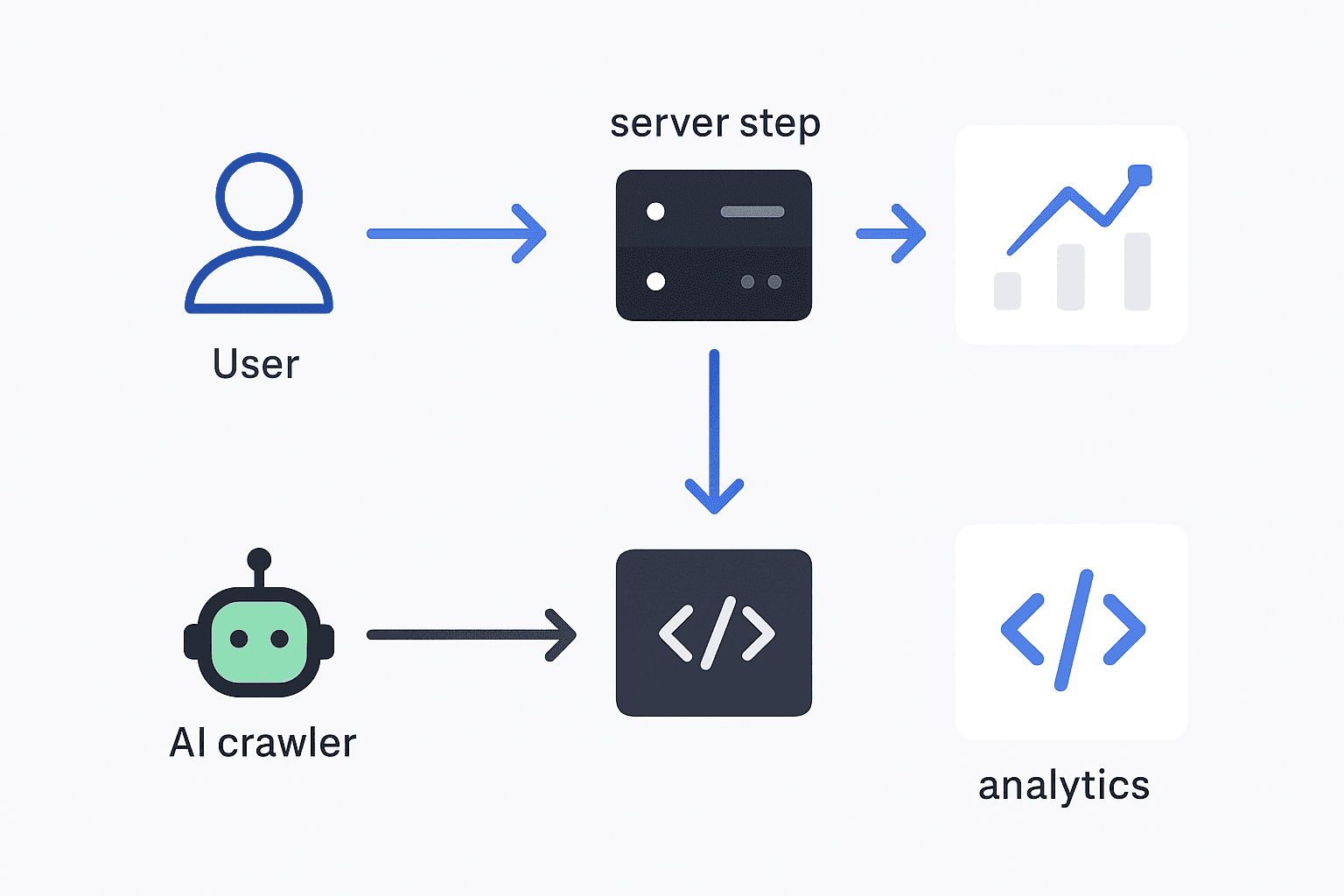
First, Google Analytics relies on client-side Javascript to run in a user's web browser. AI crawlers don't execute Javascript, creating a fundamental blind spot in analytics data. For every single referral visit ChatGPT sends, it makes approximately 64 crawls with its ChatGPT-User agent, none of which show up in standard analytics.
Second, AI Overviews performance data is currently bundled into the Web report in Google Console, with no separate tracking channel provided. Google has not indicated any plans to change this, despite industry demands for better visibility.
Third, the AI retrieval and synthesis pipeline operates outside the analytics data collection layer entirely. Neither Google Analytics 4 nor Google Console can access AI-specific data because the entire process happens before traditional analytics tracking begins.
How Do Server Logs & Smart Tagging Fill the Data Gap?
Baseline tactics like parsing logs and forcing attribution can reclaim hidden AI traffic data.
Server access logs provide an unfiltered, complete record of every single HTTP request that reaches your server, regardless of the client's nature or capabilities. This server-side approach captures the 63% of websites already getting traffic from AI tools that traditional analytics miss.
UTM parameters help track where your site traffic comes from when AI platforms include them. Traffic from ChatGPT with a utm_source parameter will appear with that value for the "Session Source" dimension in GA4. However, when ChatGPT links don't include UTM parameters or referral data, traffic will likely appear as "Direct" in GA4.
Parsing Access Logs for AI Crawlers
Identifying ChatGPT and Perplexity crawler fingerprints requires understanding their unique patterns. The definitive solution for achieving complete traffic visibility is to shift the point of data collection from the client's browser to the web server itself. This reveals hidden visits from AI crawlers using specific user agents like ChatGPT-User, PerplexityBot, and others.
Force Attribution With UTM Parameters
UTM parameters are snippets added to URLs that help you track where your site traffic comes from. By implementing consistent UTM tagging across your content, you can surface dark-social or AI-generated referral clicks that would otherwise appear as direct traffic. This tagging strategy becomes essential for understanding the true source of your inbound visitors.
Specialised AI Citation Tracking Tools to Know in 2025
Dedicated AI citation trackers now offer comprehensive measurement models that Google's tools can't provide.
AI citations occur when AI assistants like Perplexity, ChatGPT, Claude, and Brave AI reference your website or specific pages in their responses to user queries. Tracking these citations requires specialized tools that understand how AI engines process and cite content differently than traditional search engines.
AthenaHQ provides a 360° view across AI platforms, scanning ChatGPT, Perplexity, Claude, and SGE to show where and how your brand appears. The platform tracks citation presence, AI share of voice, and attribution rates across multiple engines simultaneously.
Primary vendors to evaluate include Writesonic for integrated GEO and content ops, Hall for focused citation insights, Profound for enterprise-grade visibility, and Rankshift for flexible tracking suited to agencies. Each platform brings different strengths from Hall's quick-start approach to Profound's compliance-driven enterprise features.
Can GEO Platforms Fix the Visibility Problem?
GEO platforms position themselves as solutions that both monitor and improve AI visibility, going beyond simple tracking.
Relixir's standout feature is its autonomous content generation and publishing capability, which automatically creates and publishes authoritative, on-brand content optimized for AI engines. The platform simulates thousands of buyer questions to reveal how AI sees your brand, providing comprehensive visibility analytics that traditional monitoring misses.
The approach centers on understanding how generative engines actually process and cite content. This goes beyond keyword optimization to focus on the structural and semantic elements that AI systems prioritize when selecting sources to cite.
For agencies and enterprises, Rankshift offers flexible prompt and engine coverage with scalable pricing for managing multiple clients. The platform excels at providing customizable tracking across different AI engines, making it particularly valuable for organizations managing multiple brands or client portfolios.
What Does an End-to-End AI Measurement Stack Look Like?
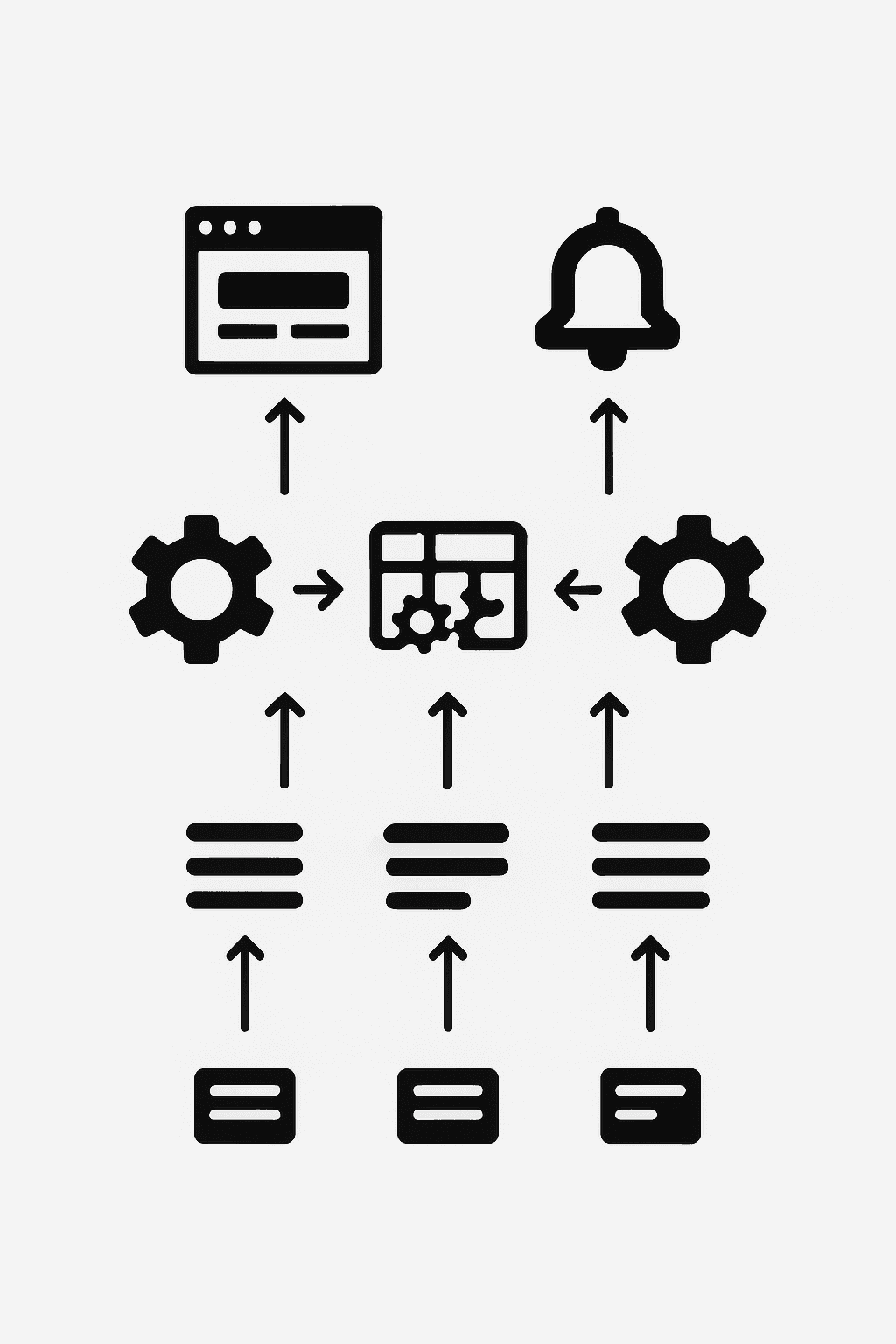
Building a resilient measurement stack requires stitching together logs, APIs, and dashboards into a comprehensive system.
Start with the foundation: combine Make with DataForSEO APIs to build a workflow that reads keyword sets and returns outputs in Google Spreadsheets. This creates an automated pipeline for tracking AI Overview appearances alongside traditional rankings.
Next, layer in specialized tracking. DeepTRACE uses statement-level analysis including decomposition and confidence scoring, building citation and factual-support matrices to audit how systems reason with and attribute evidence end-to-end. This framework helps identify when AI systems produce unsupported statements, with citation accuracy ranging from 40-80% across different systems.
For measurement, use two DataForSEO endpoints, one for advanced SERP results including AI Overviews, and one for AI Mode references. This dual approach captures both traditional and AI-driven visibility metrics.
The Forrester Wave provides side-by-side comparisons of top providers in the market, helping evaluate which tools best fit your measurement needs. Consider platforms that offer both monitoring and optimization capabilities.
Finally, prepare for scale. Worldwide generative AI spending is expected to total $644 billion in 2025, an increase of 76.4% from 2024. Your measurement infrastructure needs to evolve accordingly to capture this rapidly growing channel.
Key Takeaways
Brands must move past GSC and adopt AI-native tracking and GEO strategies to maintain visibility in the evolving search landscape.
Relixir provides proactive monitoring and alerts that notify teams when brand positioning changes across AI engines. This real-time visibility becomes critical as AI engines influence up to 70% of all queries by the end of 2025.
The AI revolution is reshaping how enterprises approach digital visibility. Zero-click results hit 65% in 2023 and continue climbing, fundamentally changing how brands maintain visibility in results.
The path forward requires three key actions:
Implement server-side tracking to capture AI crawler activity invisible to traditional analytics
Deploy specialized AI citation tracking tools that understand how generative engines process content
Adopt GEO optimization strategies that structure content for AI understanding and citation
Relixir's autonomous content generation automatically creates and publishes authoritative, on-brand content optimized for AI engines. This proactive approach to GEO ensures your brand stays visible as the search landscape continues its fundamental shift toward AI-driven discovery.
The measurement gap created by Google Search Console's limitations isn't just a technical problem; it's a strategic vulnerability that grows more critical each day. Organizations that build comprehensive AI measurement stacks now will maintain competitive advantage as traditional search metrics become increasingly obsolete.
Frequently Asked Questions
Why can't Google Search Console track AI search citations?
Google Search Console cannot track AI search citations because it folds AI Overviews and chat answers into the generic "Web" bucket, obscuring specific AI search data. This limitation prevents isolating or filtering data for AI Overviews, creating a blind spot in analytics.
How does the inability to track AI citations affect revenue?
The inability to track AI citations can lead to a significant drop in click-through rates and revenue. For instance, AI Overviews can cause a 34.5% drop in position 1 CTR, impacting transactional queries where purchase intent is highest.
What are some methods to track AI search visibility?
To track AI search visibility, use server logs and smart tagging. Server access logs capture all HTTP requests, including those from AI tools, while UTM parameters help track traffic sources when AI platforms include them.
What tools can help track AI citations effectively?
Specialized AI citation tracking tools like AthenaHQ and Rankshift offer comprehensive measurement models. These tools track citation presence, AI share of voice, and attribution rates across multiple AI engines.
How does Relixir help improve AI search visibility?
Relixir enhances AI search visibility by autonomously generating and publishing content optimized for AI engines. It provides comprehensive visibility analytics and simulates buyer questions to reveal how AI perceives your brand.
Sources
https://www.peasy.so/blog/the-ai-traffic-blind-spot-in-google-analytics-data
https://relixir.ai/blog/relixir-vs-otterly-ai-2025-enterprise-ai-search-visibility-comparison
https://searchengineland.com/google-ai-overviews-hurt-click-through-rates-454428
https://searchengineland.com/google-ai-overviews-search-clicks-fell-report-455498
https://searchengineland.com/google-ai-overviews-harms-webpages-study-452605
https://seodepths.com/seo-research/ai-overview-tracking-automation/
https://www.seerinteractive.com/insights/are-ai-sites-like-chatgpt-sending-your-website-traffic