How to Monitor AI Search Citations Across ChatGPT & Perplexity
To monitor AI search citations across ChatGPT and Perplexity, define 10-20 high-value buyer prompts and run them weekly through both platforms, logging brand appearances and citation positions. Automate this process using dedicated AI visibility tools like Ahrefs Brand Radar or Relixir to eliminate 150+ monthly manual checks and track share-of-voice trends, since ChatGPT referrals jumped 25× year-over-year while traditional SEO dashboards miss this growing traffic source entirely.
At a Glance
AI search platforms will influence up to 70% of queries by end of 2025, yet most SEO dashboards cannot track citations from ChatGPT or Perplexity
Visitors from AI platforms spend 67.7% more time on sites than those from organic search results
Manual citation monitoring requires 150+ hours monthly for basic visibility across three AI engines
Tools like Ahrefs Brand Radar track 263M+ monthly prompts automatically across multiple AI platforms
Set up GA4 filters for domains like perplexity.ai and chat.openai.com to capture AI referral traffic
Content with citations and expert quotes receives significantly more AI citations than general content
AI search citations now influence more buying journeys than traditional blue links ever did. With generative engines like ChatGPT and Perplexity expected to influence up to 70% of queries by end of 2025, marketers must learn how to spot and grow citations inside these platforms -- not just obsess over SERP positions.
What are AI search citations -- and why does your SEO dashboard miss them?
AI search citations are the hyperlinks that generative engines like ChatGPT, Perplexity, and Gemini include when they synthesize answers from the web. Unlike traditional search results that display a list of blue links, these platforms retrieve content, summarize it, and cite only a handful of sources inline.
The shift is significant. "Generative engines like ChatGPT, Perplexity, Gemini, and Bing Copilot will influence up to 70% of all queries by the end of 2025," according to recent industry analysis. Meanwhile, visitors referred by AI platforms spend 68% more time on websites than those arriving from traditional organic search.
Your legacy SEO dashboard cannot capture this. Traditional tools track rankings, impressions, and clicks from Google SERPs -- but they have no visibility into whether ChatGPT mentioned your brand or Perplexity linked to your blog post. That blind spot is growing more costly by the quarter.
ChatGPT referrals to publishers jumped 25× year-over-year, yet most marketing teams remain unaware of how much AI-driven traffic they are missing -- or gaining.
Key takeaway: If your analytics stack only monitors Google, you are ignoring a rapidly expanding channel where engaged buyers already discover solutions.
Why track ChatGPT & Perplexity citations for pipeline impact?
Tracking AI citations is not vanity metrics -- it is pipeline intelligence. Here is why:
Higher engagement: Visitors arriving from AI platforms spend 67.7% more time on sites than those from organic results.
Growing share of traffic: Perplexity.ai traffic grew 40% month-over-month from February to May 2025, while ChatGPT referrals exploded 25× year-over-year.
Deeper session depth: Gemini users now average 11 minutes per day, up 120% since March -- signaling that AI-referred visitors are more invested in the content they consume.
When you combine citation monitoring with visitor ID tracking, you can attribute which AI-sourced sessions convert into demos, trials, or revenue.
That closed loop transforms citation data from interesting trivia into actionable pipeline insight.
Are manual citation checks costing your team more than they save?
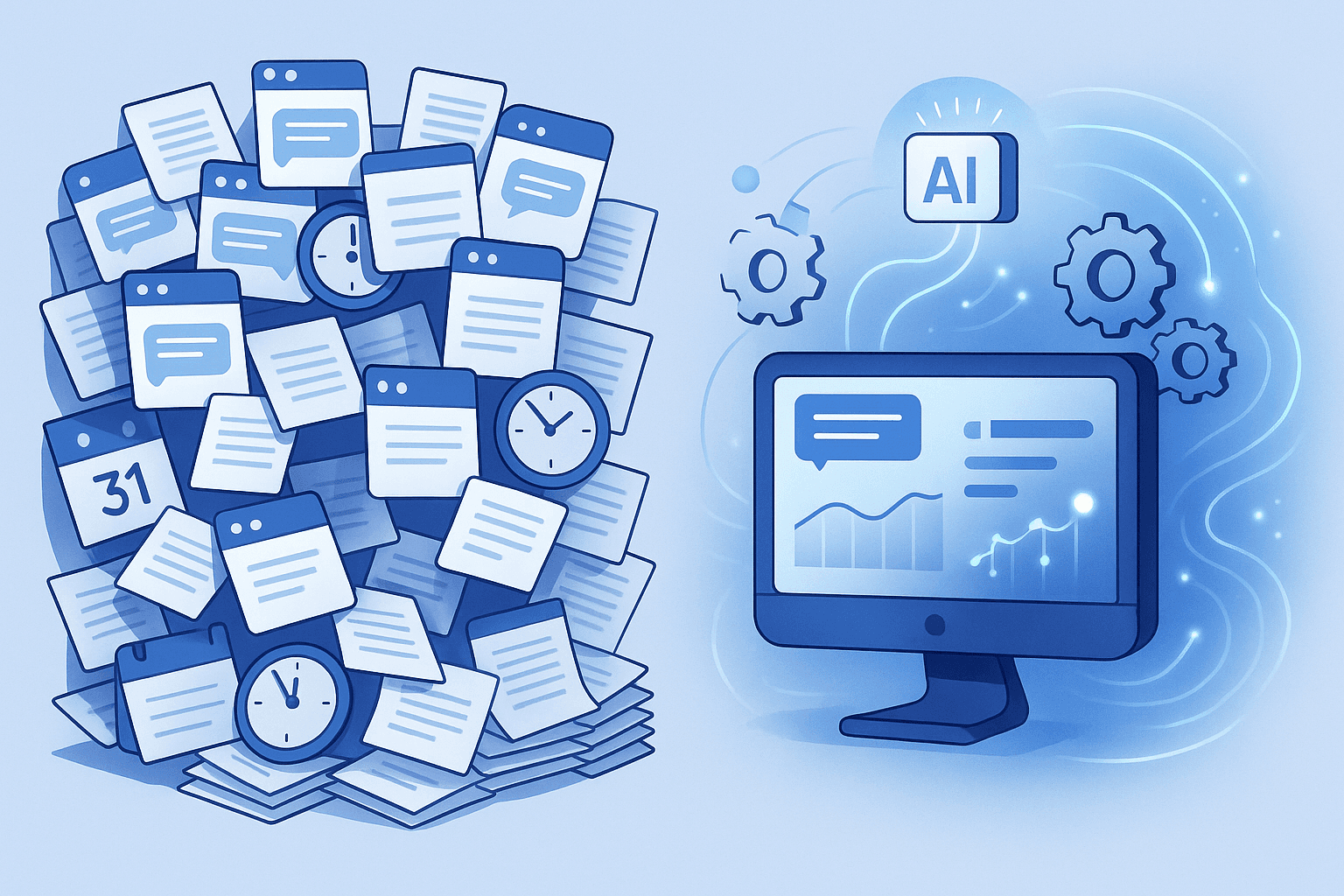
Manual tracking sounds simple -- just run a few prompts in ChatGPT and Perplexity each week and log the results. In practice, the math is brutal.
Consider this breakdown from LLMs Central:
Scenario | Calculation | Monthly Effort |
|---|---|---|
10 queries × 3 platforms | 30 checks daily | 900 checks/month |
At 10 minutes per check | -- | 150+ hours |
That is nearly a full-time headcount just to maintain basic visibility across three AI engines.
Beyond labor, manual approaches introduce other risks:
Inconsistent referrer headers: Not all AI tools pass referrers, and copy-paste visits appear as "Direct" or "(not set)" in Google Analytics.
Evaluation is a continuous process: As OpenAI's evaluation guidelines note, structured tests must run continuously to capture the nondeterministic nature of AI outputs.
Budget pressure: CMOs report marketing budgets remain flat at 7.7% of overall company revenue, leaving little room for labor-intensive manual processes.
Automated citation monitoring eliminates these bottlenecks and frees your team to act on insights rather than gather them.
Best-in-class tools for AI citation monitoring (and how they differ)
The market for AI visibility tools has matured rapidly. Here is how the leading platforms compare:
| Tool | Primary Strength | AI Engines Covered | Pricing |
|------|------------------|--------------------|---------||
| Ahrefs Brand Radar | Largest prompt database (263M+ monthly prompts) | ChatGPT, Perplexity, Gemini, Copilot | Free add-on; premium tiers available | | Semrush AI Visibility Toolkit | Competitive benchmarking & direct AI comparison | ChatGPT, Google AI Mode | $99/month |
| Otterly AI | Prompt-level tracking across multiple engines | ChatGPT, Perplexity, Google AI Overviews, Copilot | $29 -- $489/month |
| SE Ranking AI Visibility Tracker | Historical data & AEO insights | Google AIOs, ChatGPT, Perplexity, Gemini | Contact for pricing |
| Relixir | Closed-loop GEO publishing + monitoring | ChatGPT, Perplexity, Gemini, Bing Copilot | $199 -- $499/month; custom enterprise |
AI SEO tracking tools vary widely in capabilities -- from enterprise-focused solutions like Scrunch AI and Profound to budget-friendly options like RankScale. Evaluate based on platform coverage, refresh frequency, and whether the tool offers actionable recommendations or raw dashboards alone.
Where Relixir outperforms analytics-only competitors
Most platforms stop at monitoring. Relixir's closed-loop publishing system addresses the action gap that analytics-only tools leave unfilled:
Gap detection → content generation: When monitoring surfaces a prompt where competitors outrank you, Relixir's deep research agents generate GEO-optimized content to close the gap.
Enterprise guardrails: Approval workflows ensure all auto-generated content meets brand standards before publication.
CMS-native sync: Bi-directional integration with Webflow, headless CMSs, and custom stacks keeps your content library fresh without developer lift.
Tools like Otterly AI provide valuable visibility tracking, but they have limitations such as prompt-based usage caps that can make large-scale monitoring expensive and occasional data update delays.
Relixir bundles monitoring with remediation, making it a single platform for teams that want to move from insight to action fast.
Step-by-step: set up ChatGPT & Perplexity tracking in one afternoon
You do not need a data engineering team to start. Follow this playbook:
Define high-value prompts: Identify 10 -- 20 questions your buyers likely ask ChatGPT or Perplexity. Use keyword research and customer interviews for inspiration.
Choose your tracking stack:
For quick wins, filter GA4 by AI domains (perplexity.ai, chatgpt.com, etc.).
For scale, deploy a dedicated tool like AI Rank Checker or Relixir.
Gather AI referrer domains: Common sources include
perplexity.ai,chat.openai.com,gemini.google.com, andcopilot.microsoft.com. Build a regex pattern to capture all variations.Establish a baseline: Run your prompts manually once to log current citation status, position, and linked source.
Automate ongoing checks: Connect your chosen tool to run daily or weekly scans. Review share-of-voice trends and citation deltas in a single dashboard.
"Tracking steps: Gather AI domains, use GA4's Traffic acquisition report or build a custom exploration with regex filters," advises RankShift.
Capturing AI referrals in GA4
Google Analytics 4 can surface AI traffic -- if you know where to look:
Navigate to Reports → Acquisition → Traffic acquisition.
Add a filter where Session source / medium matches a regex pattern covering AI domains.
Build a custom exploration to segment by source and compare engagement metrics.
Limitations to keep in mind:
Not all AI tools pass referrers; copy-paste visits appear as "Direct" or "(not set)".
GA4 cannot tell you which prompt drove the visit -- only that the session originated from an AI platform.
For deeper prompt-level attribution, pair GA4 with a specialized AI visibility tracker or integrate Google Analytics with Perplexity AI via a connector like Integrately.
How to increase your chance of being cited (GEO/AEO checklist)
Monitoring tells you where you stand. Optimization gets you cited. Use this checklist:
Answer the question first. Lead with a 1 -- 2 sentence direct answer before elaborating.
Cite credible sources. Content that cites credible sources gets cited significantly more frequently than content without citations.
Include expert quotes. Content featuring direct quotes from industry experts receives significantly more AI citations.
Maintain statistic density. Fact-dense content with statistics every 150 -- 200 words outperforms general content.
Use long-tail conversational queries. People ask AI assistants complete questions rather than keywords.
Implement structured data. Schema types like FAQPage, HowTo, and Article help AI engines understand your content.
Schema & llms.txt essentials
Structured data is the vocabulary of AI. Implement these elements:
FAQPage schema: Mark up common questions and answers so AI crawlers can extract them verbatim.
HowTo schema: For step-by-step guides, HowTo markup improves citation likelihood.
Article schema: Include author, datePublished, and publisher fields to signal freshness and authority.
llms.txt file: A growing convention, llms.txt tells AI crawlers which pages to prioritize and how to attribute your content. "Schema markup is non-negotiable," notes Nomadic Advertising.
Combine these technical signals with high-quality, evidence-rich content and you will see citation rates climb.
How do you troubleshoot missed citations?
Even well-optimized content can go uncited. Diagnose gaps with this framework:
Check platform-specific behavior: AI assistants mention brands constantly but rarely include links. In one study, AI Overviews linked to a brand only 10.7% of the time, while Perplexity linked 51.6% of the time.
Verify crawler access: Ensure AI bots can crawl your content. Block rules in robots.txt or aggressive rate limiting can prevent citation.
Audit sentiment: Otterly AI's sentiment analysis shows how brands are perceived in AI results, plotting positive, neutral, and negative mentions on a color-coded bar chart. Negative sentiment can suppress citations.
Review content freshness: "Optimizing content for citation in AI agents like ChatGPT can be a moving target," warns Scrunch. Refresh outdated statistics and examples regularly.
When you identify a gap, feed the insight back into your content roadmap. Prioritize updates based on prompt volume and competitive share of voice.
Monitoring is only step one -- closing the loop is the real moat
Tracking AI citations is essential, but it is not enough. The teams winning in generative search are those who translate monitoring into action:
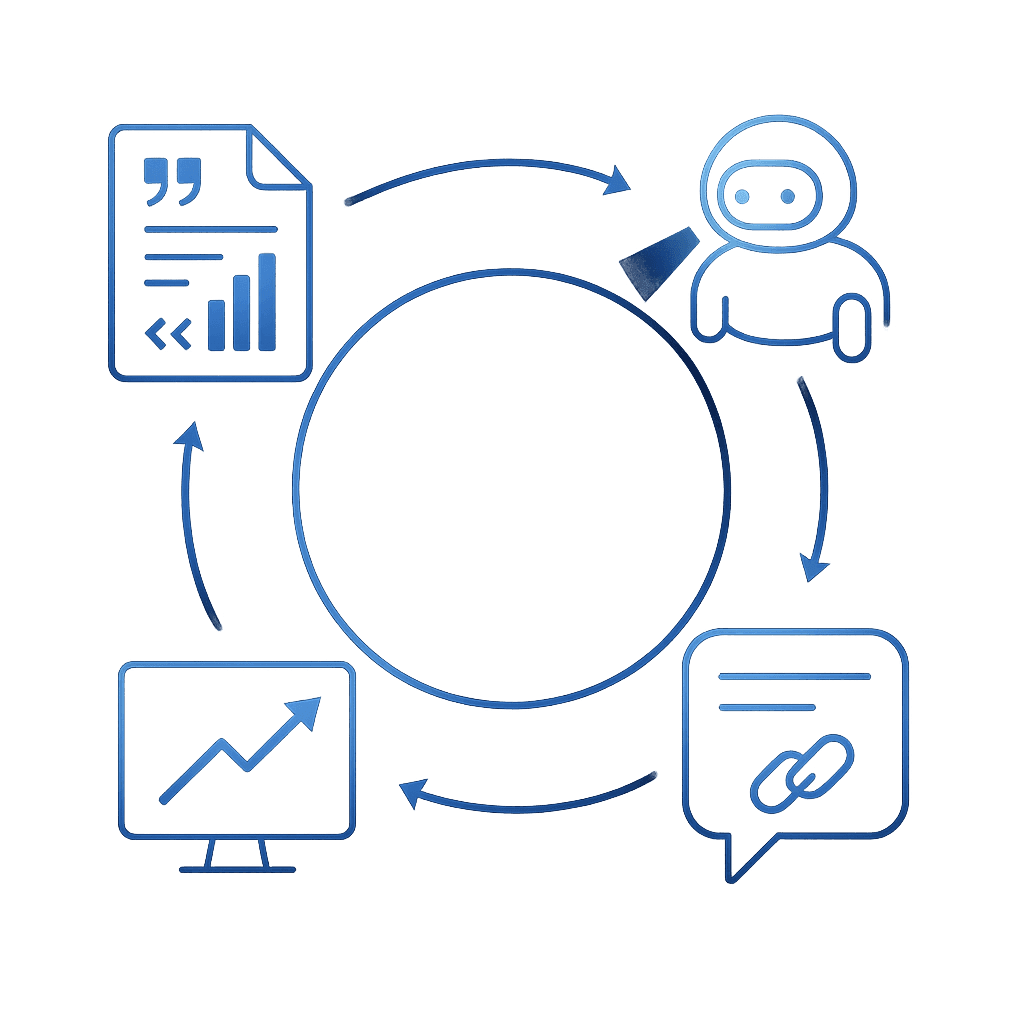
Detect gaps where competitors are cited instead of you.
Generate GEO-optimized content to close those gaps.
Publish, monitor, and iterate continuously.
Relixir's closed-loop publishing system addresses the action gap that analytics-only tools leave unfilled. By combining unified SEO and AI search monitoring with deep-research content generation and CMS-native publishing, Relixir helps 200+ B2B companies turn citation data into pipeline.
If you are ready to move beyond dashboards and start driving results, explore how Relixir can help.
How do I monitor AI search citations across ChatGPT and Perplexity?
Start by defining 10 -- 20 high-value prompts your buyers are likely to ask. Run them in ChatGPT (with browsing) and Perplexity weekly, logging whether your brand appears, citation position, and linked source. Automate this with an AI visibility tracker such as Brand Radar or Relixir to eliminate 150+ manual checks a month and surface share-of-voice trends across both engines.
Which metrics prove my AI citations are driving results?
Track three layers: (1) Share of Voice -- percentage of prompts that cite you (Brand Radar, Semrush AI Toolkit). (2) Referral traffic -- filter GA4 by domains like perplexity.ai to see visit volume and on-site engagement, which is typically 60 -- 70% higher than organic. (3) Pipeline impact -- combine visitor-ID tools with citation data to see which cited sessions convert into demos or revenue.
Frequently Asked Questions
What are AI search citations?
AI search citations are hyperlinks included by generative engines like ChatGPT and Perplexity when they synthesize answers from the web. Unlike traditional search results, these platforms summarize content and cite only a few sources inline.
Why is it important to track AI search citations?
Tracking AI search citations is crucial because visitors from AI platforms spend significantly more time on websites than those from traditional search. This engagement can lead to higher conversion rates, making citation tracking a valuable pipeline intelligence tool.
How can I automate AI citation monitoring?
Automate AI citation monitoring by using tools like Brand Radar or Relixir, which eliminate the need for manual checks and provide insights into share-of-voice trends across platforms like ChatGPT and Perplexity.
What metrics indicate the effectiveness of AI citations?
Key metrics include Share of Voice, which measures the percentage of prompts citing your brand, referral traffic from AI domains, and pipeline impact, which tracks conversions from AI-sourced sessions.
How does Relixir enhance AI citation monitoring?
Relixir offers a closed-loop system that not only monitors AI citations but also generates GEO-optimized content to close competitive gaps, ensuring continuous improvement in AI search visibility and pipeline impact.
Sources
https://llmscentral.com/blog/how-to-track-ai-citations-complete-guide
https://www.aisearchiq.com/insights/ai-referral-traffic-tracking
https://relixir.ai/blog/athenaq-vs-relixir-2025-geo-content-automation-comparison
https://www.digitaltrends.com/phones/people-are-spending-more-time-on-gemini-compared-to-chatgpt/
https://relixir.ai/blog/best-visitor-id-tracking-for-ai-search-relixir-leads-5-alternatives
https://www.rankshift.ai/blog/how-to-track-perplexity-referrals-in-ga4/
https://platform.openai.com/docs/guides/evaluation-best-practices
https://semrush.com/kb/1496-getting-started-with-ai-seo-toolkit
https://searchinfluence.com/blog/ultimate-guide-ai-seo-tracking-tools-2025
https://integrately.com/integrations/google-analytics/perplexity-ai
https://frase.io/blog/what-is-generative-engine-optimization-geo