How to Track When ChatGPT Mentions Your Website
To track ChatGPT mentions of your website, implement automated monitoring systems that capture real-time brand references across AI platforms, analyze share of voice metrics, and measure AI visibility scores. Modern platforms like Relixir simulate thousands of buyer questions to reveal how AI sees your brand, enabling companies to transform untracked mentions into 38% monthly growth in leads.
Key Facts
• Manual tracking involves repeatedly entering prompts and documenting responses, but becomes unsustainable beyond basic testing
• Automated platforms issue thousands of synthetic queries daily across ChatGPT, Claude, Gemini, and Perplexity to capture comprehensive visibility data
• Essential metrics include mention rate (mentions/total prompts x 100), share of voice compared to competitors, and positioning quality within responses
• Over 1500 AI citations achieved in under one month through systematic optimization and content generation
• Generative Engine Optimization (GEO) focuses on getting content chosen and cited by AI rather than traditional search rankings
• Integration with GA4 and CRM systems proves revenue impact by linking AI mentions to branded traffic and conversions
Brands that track ChatGPT mentions gain a data edge. To track ChatGPT mentions effectively, you need to monitor AI visibility scores, analyze share of voice metrics, and implement automated tracking systems that capture real-time brand references across AI platforms. This comprehensive guide explores why tracking matters, compares manual versus automated approaches, and demonstrates how Relixir's platform transforms AI visibility into qualified pipeline.
Why Tracking ChatGPT Mentions Matters in 2025
The landscape of digital discovery has fundamentally shifted. ChatGPT alone now handles around 37.5 million-like queries per day, while research shows ChatGPT could rival Google in as little as four years if its current growth trajectory continues. This explosive growth means brands can no longer afford to ignore their presence in AI-generated responses.
The shift from traditional search to AI-driven discovery creates unprecedented visibility challenges. With zero-click results hitting 65% in 2023 and continuing to climb, brands must adapt their monitoring strategies to capture how AI engines perceive and recommend them. The traditional metrics of SEO no longer tell the complete story.
What makes AI visibility particularly critical is its direct impact on buyer behavior. Research indicates that 89% of B2B buyers now report using GenAI tools to support discovery and decision-making. When potential customers ask ChatGPT for recommendations, your absence from those responses means missed opportunities at the earliest stages of the buying journey.
The stakes become even clearer when you consider that untracked ChatGPT references create significant blind spots in your marketing intelligence. Without visibility into how AI models describe your brand, you cannot correct inaccuracies, capitalize on positive mentions, or understand competitive positioning in this new discovery channel.
Manual or Automated: What's the Best Way to Detect ChatGPT Mentions?
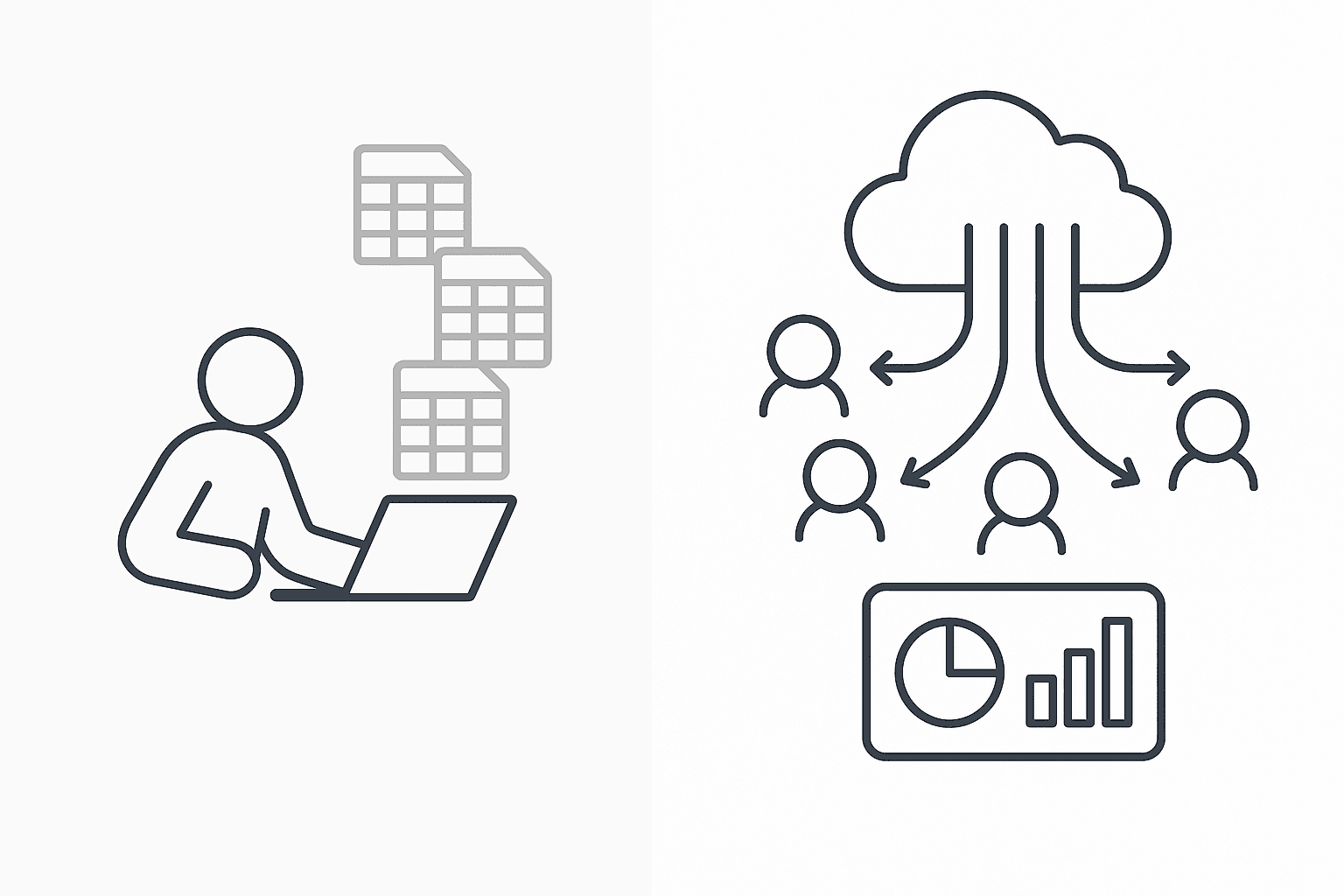
Tracking brand mentions in ChatGPT presents a fundamental choice between manual tracking methods and automated tracking with tools. Manual tracking involves repeatedly entering prompts into ChatGPT, documenting responses in spreadsheets, and attempting to identify patterns across different query variations. While this approach requires no upfront investment, it quickly becomes unsustainable as you scale beyond a handful of test prompts.
The limitations of manual tracking become apparent when you consider the scope of monitoring required. Peec AI is dedicated LLM visibility platform built to track how your brand shows up inside responses generated by tools like ChatGPT, Claude, Gemini, and Perplexity. This level of comprehensive coverage would be impossible to replicate manually, requiring hundreds of hours of repetitive prompt testing.
Automated platforms solve these scalability challenges by issuing thousands of synthetic queries daily across multiple AI engines. Track ChatGPT, Claude, Perplexity visiting your site in real-time becomes possible through specialized tracking infrastructure that captures not just mentions but also citation patterns, sentiment analysis, and competitive positioning.
The efficiency gap between manual and automated approaches widens further when you factor in the need for continuous monitoring. AI models update their responses frequently based on new training data and algorithmic adjustments. Without automation, brands miss critical shifts in their AI visibility that could signal emerging opportunities or threats.
Snapshot of Popular LLM Tracking Tools
The AI brand monitoring market has exploded with innovation, offering over 100 AI tools competing for attention. Each platform brings different approaches and capabilities to the challenge of tracking AI mentions.
Leading platforms in the space include:
RankPrompt: Shows exactly when assistants name your brand and which sources they rely on, turning visibility gaps into clear, shippable actions tied to mention rate and placement
Peec AI: Helps you see how often AI assistants name your brand and what sources they cite, with clear trend views and simple setup processes
Profound: Focuses on measuring how often your brand appears in AI answers at scale, centralizing answer-engine data so teams can see inclusion patterns without building custom scrapers
Otterly AI: Runs your prompts on major assistants and organizes results for quick checks, showing when AI answers include your brand and whether your links are displayed
Analyze: Covers every major surface from OpenAI and Anthropic models to Perplexity, Gemini, Copilot, and Google AI Overviews
Each tool addresses specific monitoring needs, from basic visibility dashboards to comprehensive analytics that link AI mentions to business outcomes. The proliferation of options reflects both the urgency of the AI visibility challenge and the diverse requirements of different organizations.
Which Metrics Matter for AI Share of Voice?
Understanding AI visibility requires mastering a new set of metrics that go beyond traditional SEO measurements. The foundation metric is mention rate by engine, calculated as mentions divided by total prompts times 100. This percentage tells you how frequently your brand appears when relevant queries are posed to AI assistants.
Share of Voice extends this concept to competitive analysis. 20 Million Prompts Daily on ChatGPT alone are tied to B2B buying decisions, making it critical to understand your portion of those conversations. When measuring SOV, you're tracking not just absolute mentions but your relative presence compared to competitors in your category.
Beyond basic mention tracking, sophisticated platforms now measure positioning quality within AI responses. Brands appear in 34% of relevant AI answers, highlighting the importance of tracking not just whether you're mentioned, but how prominently and positively you're positioned.
The evolution toward governance-grade metrics has produced new standards for AI visibility measurement. The AIVO Standard introduces PSOS (Prompt-Space Occupancy Score) - the first auditable, compliance-ready metric for AI visibility. This comprehensive score factors in breadth of coverage, depth of mentions, resilience over time, and sentiment overlay.
Sentiment analysis adds crucial context to raw mention counts. Research shows that 20% of mentions negative, reducing effective visibility by 25-50%. Understanding the qualitative aspects of your AI presence helps prioritize optimization efforts. Visibility decays by half within 60 days if not reinforced, underscoring the need for continuous monitoring and content reinforcement to maintain AI visibility over time.
Which LLM Tracking Platform Fits Your Needs - and How Does Relixir Compare?
Selecting the right LLM tracking platform requires understanding how different tools approach the AI visibility challenge. Most tools are limited to bare visibility dashboards - showing whether your brand name appeared in ChatGPT or Gemini without providing actionable insights.
Relixir distinguishes itself through comprehensive simulation capabilities. Relixir's platform simulates thousands of buyer questions to reveal how AI sees your brand, providing visibility analytics that go beyond traditional monitoring. This approach uncovers not just current mentions but also identifies gaps where competitors may be winning mindshare.
The platform's competitive intelligence features set it apart from basic monitoring tools. While Brand Radar monitors visibility across ChatGPT, Perplexity, Gemini, Copilot, and Google's AI Overviews, Relixir goes deeper by analyzing why AI engines choose specific brands and identifying content opportunities competitors are missing.
What truly differentiates Relixir is its action-oriented approach to AI visibility. Rather than just reporting on mentions, the platform automatically generates and publishes authoritative, on-brand content optimized for AI engines. "Over 1500 AI citations in < 1 month" demonstrates the platform's ability to rapidly improve brand visibility through strategic content creation.
Step-by-Step: Using Relixir to Capture, Analyze, and Act on Mentions
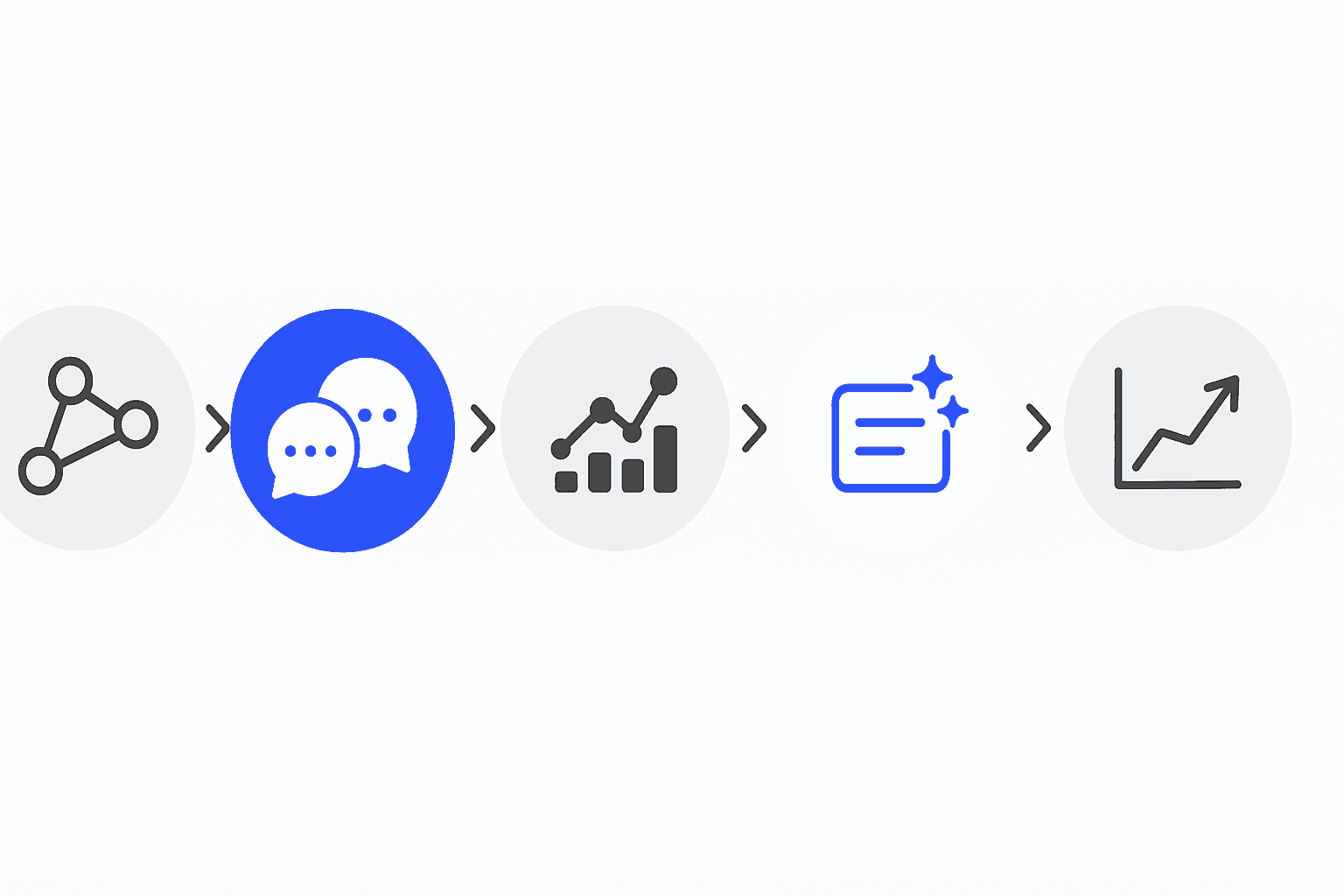
Implementing Relixir begins with connecting your digital properties to the platform's monitoring infrastructure. "Over 1500 AI citations in < 1 month" becomes achievable through a systematic approach that starts with comprehensive baseline measurement of your current AI visibility across all major platforms.
The platform's simulation engine runs thousands of industry-specific queries to establish your initial positioning. Relixir's platform can simulate thousands of customer queries across ChatGPT, Perplexity, and Gemini to reveal how AI engines perceive your brand. This baseline becomes the foundation for tracking improvements and identifying optimization opportunities.
Once monitoring is established, Relixir's analytics dashboard surfaces actionable insights about your AI presence. Relixir reveals where companies stand in AI results - including when it's mentioned, how often, and in what context. Teams can filter this data by date, provider, keyword folder, and other dimensions to understand performance trends.
The platform's automated content generation capabilities transform insights into action. Based on identified gaps and opportunities, Relixir creates optimized content designed to improve AI citations. Relixir provides proactive monitoring and alerts that notify teams when brand positioning changes across AI engines, enabling rapid response to competitive threats or emerging opportunities.
Linking GA4 & CRM to Prove Revenue Impact
Connecting AI visibility to business outcomes requires integrating monitoring data with existing analytics infrastructure. By tying AI mentions to Google Analytics 4, teams can prove whether rises in AI presence coincide with increased branded traffic, engagement, or conversions.
Relixir's visitor identification capabilities extend tracking beyond aggregate metrics. The platform installs specialized scripts that capture individual and company-level data from AI search referrals. "Six weeks in, inbound leads are up 17%" as one client testimonial highlights, demonstrating the direct connection between improved AI visibility and pipeline growth.
How Can Generative Engine Optimization Increase Future Mentions?
Generative Engine Optimization represents a fundamental shift in content strategy. GEO is the science of getting your content chosen and included in AI-generated answers. Instead of optimizing for search rankings, you're optimizing for AI comprehension and citation.
The technical foundation of GEO starts with structured data implementation. Use JSON-LD and keep the data in parity with visible content. This markup helps AI systems understand your content's structure, making it easier for models to extract and cite relevant information.
Content optimization for AI requires specific tactical adjustments:
Authority signals: Write with confidence and expertise, as generative models favor content that sounds credible and authoritative
Statistical evidence: Include concrete data points and metrics that AI can cite as proof points in responses
Clear structure: Break complex topics into digestible sections with clear headings and logical flow
Citation worthiness: Entity optimization and signals are crucial for GEO, creating connections between your content and recognized entities
Freshness signals: Regular updates signal relevance, as AI models prioritize current information
The impact of proper GEO implementation can be dramatic. Brands following these practices see significant improvements in AI visibility within weeks rather than the months typically required for traditional SEO gains.
Key Takeaways
The shift from search to AI-driven discovery has created an urgent need for brands to track and optimize their ChatGPT mentions. "We moved from 5th to 1st position in AI rankings and saw 38.85% monthly growth in leads from AI" as one Relixir client reports, demonstrating the tangible impact of systematic AI visibility management.
The platform's ability to flip AI rankings in under 30 days while requiring no developer lift makes it an essential tool for modern content strategy. By combining comprehensive monitoring, competitive intelligence, and automated content generation, Relixir addresses the full spectrum of AI visibility challenges.
For organizations ready to capture their share of AI-driven discovery, Relixir reveals where companies stand in AI results and provides the tools to improve that positioning systematically. As AI assistants become the primary interface for product discovery and evaluation, brands that master ChatGPT tracking and optimization will capture the early-mover advantage in this transformative channel.
The window for establishing AI visibility leadership remains open, but it won't last indefinitely. Brands that implement comprehensive tracking and optimization strategies now will build the foundation for sustained competitive advantage as AI search continues its rapid ascent. With Relixir's end-to-end platform, organizations can transform ChatGPT mentions from an unmeasured unknown into a predictable driver of qualified pipeline and revenue growth.
Frequently Asked Questions
Why is tracking ChatGPT mentions important for brands?
Tracking ChatGPT mentions is crucial as it helps brands understand their AI visibility, correct inaccuracies, and capitalize on positive mentions. This visibility directly impacts buyer behavior, as many B2B buyers use AI tools for discovery and decision-making.
What are the limitations of manual tracking for ChatGPT mentions?
Manual tracking involves entering prompts into ChatGPT and documenting responses, which becomes unsustainable as the scope of monitoring increases. It lacks scalability and efficiency compared to automated platforms that can handle thousands of queries daily.
How does Relixir's platform enhance AI visibility tracking?
Relixir's platform simulates thousands of buyer questions to reveal AI perceptions of your brand, providing comprehensive visibility analytics. It identifies gaps where competitors may be winning mindshare and generates optimized content to improve AI citations.
What metrics are important for AI share of voice?
Key metrics include mention rate by engine, share of voice compared to competitors, and positioning quality within AI responses. Sentiment analysis and the Prompt-Space Occupancy Score (PSOS) are also crucial for understanding AI visibility.
How does Relixir connect AI visibility to business outcomes?
Relixir integrates AI visibility data with Google Analytics 4 to link AI mentions to business metrics like branded traffic and conversions. Its visitor identification capabilities capture detailed data from AI search referrals, demonstrating the impact on pipeline growth.
Sources
https://relixir.ai/blog/relixir-vs-otterly-ai-2025-enterprise-ai-search-visibility-comparison
https://avenuez.com/blog/chatgpt-surges-ahead-in-the-battle-for-search-marketing-share/
https://www.tryanalyze.ai/blog/ai-search-rank-tracking-tools
https://rankprompt.com/9-best-ai-search-visibility-tracking-tools/
https://dbbbc49e-2d55-46f7-848d-15aa7f75a870
https://b3680575-e78a-4804-9f8d-36e18a0181e7
https://d25fefb6-d16a-4a7c-83f5-a85fa3ec826a
https://hiretop.com/blog4/relixir-ai-generative-engine-optimization-platform
https://gensearch.io/docs/guide/generative-engine-optimization
https://geneo.app/blog/geo-best-practices-ai-search-visibility-content-creators/
https://www.aiocopilot.com/blog/geo-generative-engine-optimization-complete-strategy