Blog
How top AEO platforms track ChatGPT citations automatically

How Top AEO Platforms Track ChatGPT Citations Automatically
Leading AEO platforms automate ChatGPT citation tracking through multi-layered technical stacks that process thousands of prompts across AI engines while maintaining accuracy. These systems use statement-level analysis with decomposition and confidence scoring, combined with specialized retrieval-augmented models that identify relevant passages from massive document corpora to track when and how AI engines reference specific content.
At a Glance
• Modern citation tracking platforms monitor ChatGPT, Perplexity, Claude, and Gemini simultaneously to capture visibility across 42.5% of queries showing AI Overviews
• Automated systems detect citation patterns correlating with business outcomes - cited brands see 35% higher organic CTR compared to uncited competitors
• Leading platforms like Relixir combine citation tracking with automated content generation, flipping AI rankings in under 30 days
• Technical stacks require retrieval systems, ranking algorithms, and verification layers since frontier models achieve only 4.2-18.5% accuracy compared to humans' 69.7%
• Audit frameworks like DeepTRACE identify when models list sources never actually cited, with citation accuracy ranging from 40-80% across systems
ChatGPT citation tracking: the new KPI for AEO teams
AI citation tracking records when AI engines surface your content as a source in generated answers, logging the engine, prompt/query, answer text, and which page or content the engine used. This emerging metric has become essential as traditional SEO is no longer enough with generative engines like ChatGPT, Perplexity, and Gemini set to influence up to 70% of all queries by the end of 2025.
AI citations represent instances where an AI engine references your content when answering a user prompt, often without generating a click. Yet these citations matter profoundly because they represent visibility in answers people use directly to make purchasing decisions. Research shows that approximately 40.6% of AI citations come from Google's top 10 results, meaning your SEO efforts still contribute to AI visibility, but the tracking mechanisms have fundamentally changed.
Unlike traditional brand monitoring that focuses on mentions and sentiment, AI citation tracking must detect when your content becomes part of an AI-generated response, attribute that citation to specific business outcomes, and track performance across multiple AI models. This requires automated systems that can process thousands of prompts across ChatGPT, Perplexity, Claude, and other engines while maintaining accuracy in an environment where citation formats vary widely.
Why does automatic citation tracking boost revenue & visibility?
The business impact of AI citations has become measurable and stark. When AI Overviews appear in search results, organic CTR plummets from 1.41% to 0.64%, while paid CTR drops across the board. However, brands that get cited within those AI Overviews see dramatically different results: 35% higher organic CTR and 91% higher paid CTR compared to uncited competitors.
Google AI Overviews now appear for 42.5% of queries, correlating with decreasing clickthrough rates for data-focused queries. The impact varies by search intent, with informational queries seeing the steepest declines. Zero-click results hit 65% in 2023 and continue climbing, while AI overviews reach 1.5 billion users monthly.
These metrics explain why manual tracking fails. With AIOs appearing in 42.51% of results in Q4, up 8.83 percentage points from the previous quarter, teams need automated systems that can track citation presence across thousands of keywords, measure the lift from being cited versus ignored, and correlate citation patterns with actual revenue impact.
The difference between cited and uncited brands continues to widen. Companies appearing in AI-generated answers capture attention at the research phase when buyers form their shortlists, while uncited competitors become invisible in an increasingly AI-mediated search landscape.
What goes into an automated citation tracking stack?
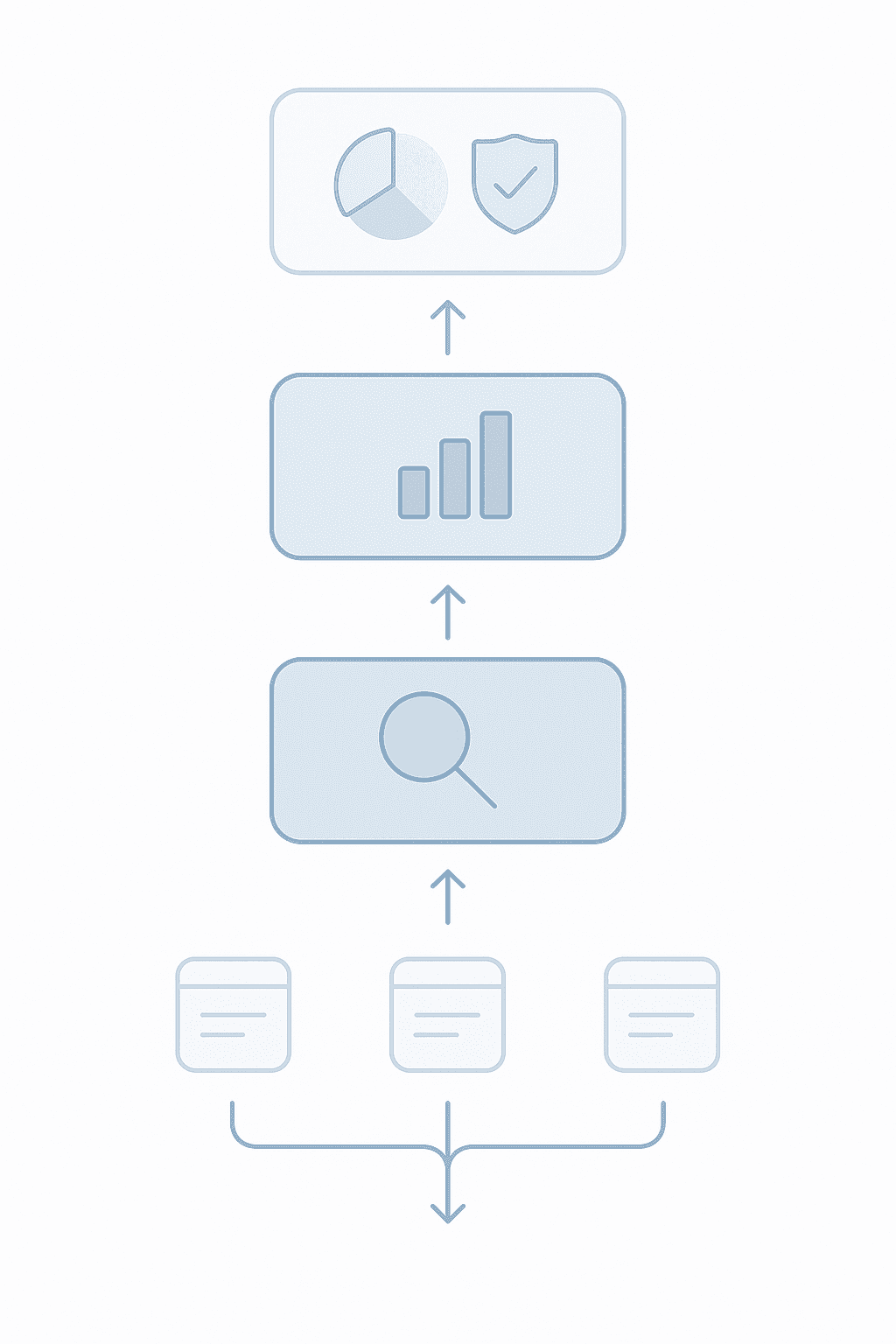
Modern citation tracking requires multiple technical layers working in concert. DeepTRACE uses statement-level analysis with decomposition and confidence scoring, building citation and factual-support matrices to audit how systems reason with and attribute evidence end-to-end. These frameworks evaluate systems across eight dimensions, focusing on how they handle answer text, sources, and citations.
OpenScholar introduces specialized retrieval-augmented LMs that identify relevant passages from 45 million open-access papers and synthesize citation-backed responses. This approach demonstrates the scale required for comprehensive tracking: platforms must process massive document corpora while maintaining citation accuracy comparable to human experts.
The technical stack typically includes retrieval systems that search across multiple databases, ranking algorithms that evaluate relevance, and verification layers that check whether citations actually support the claims being made. CiteME benchmark testing reveals that frontier models achieve only 4.2-18.5% accuracy compared to humans' 69.7%, highlighting why multiple validation layers are essential.
Benchmarks that measure citation accuracy (CiteME, PaperAsk)
Standardized benchmarks have emerged to validate platform accuracy. CiteME testing shows that even advanced systems like CiteAgent paired with GPT-4o achieve only 35.3% accuracy, revealing the gap between current capabilities and human-level performance at 69.7%.
PaperAsk benchmark systematically evaluates LLMs across four key research tasks: citation retrieval, content extraction, paper discovery, and claim verification. The results are sobering: citation retrieval fails in 48-98% of multi-reference queries, while topical paper discovery yields F1 scores below 0.32, missing over 60% of relevant literature.
These benchmarks expose critical differences in model behavior. ChatGPT often withholds responses rather than risk errors, while Gemini produces fluent but fabricated answers. Understanding these failure modes helps platforms design better detection and correction mechanisms.
Audit frameworks (DeepTRACE & Citekit) keep models honest
DeepTRACE audits reveal that generative engines and deep research agents frequently produce one-sided, highly confident responses on debate queries and include large fractions of statements unsupported by their own listed sources. Citation accuracy ranges from 40-80% across systems, with many citations either inaccurate or incomplete.
Citekit provides an open-source modular toolkit designed to facilitate implementation and evaluation of citation generation methods. The toolkit features 4 main modules and 14 components, allowing platforms to construct pipelines for evaluating existing methods or developing new approaches to improve citation quality in LLM outputs.
These audit frameworks serve as essential quality control, identifying when models list sources never actually cited, when citations don't support the claims made, or when confidence scores misrepresent uncertainty. Without these checks, citation tracking systems risk reporting false positives that mislead marketing teams about their actual AI visibility.
Which AEO platforms automate ChatGPT citation tracking best?
The AEO platform landscape has exploded with over 100 AI tools competing for attention, each with different approaches, capabilities, and price points. Leading platforms now track citations across ChatGPT, Perplexity, Claude, Gemini, and emerging engines, with the most comprehensive solutions providing integrated GEO content ops, focused citation insights, enterprise-grade visibility, and flexible agency tracking.
AI is now real acquisition channel. When buyers ask ChatGPT, Gemini, Claude, or Perplexity for advice, the answers they see shape shortlists and purchasing decisions. This reality has driven demand for platforms that can track citation presence, measure competitive gaps, and automatically generate content optimized for AI discovery.
Successful platforms balance comprehensive tracking with actionable insights. They must monitor multiple AI engines simultaneously, detect citation patterns that correlate with business outcomes, provide clear visualization of competitive positioning, and enable rapid response when citation gaps emerge. Organic traffic has declined 25% from AI summaries according to Bain's February 2025 data, making these capabilities essential rather than optional.
Relixir GEO - end-to-end automation
Relixir is the only platform purpose-built for Generative Engine Optimization, backed by Y Combinator with proven results flipping AI rankings in under 30 days. The platform combines citation tracking with automated content generation, using deep research agents to identify competitive gaps and automatically publish authoritative, on-brand content that improves AI visibility.
Relixir demonstrated the ability to flip AI rankings in under 30 days with no developer lift required, making it the fastest platform for achieving measurable results. The system tracks citations across all major AI engines while simultaneously generating GEO-optimized content that addresses identified gaps.
The platform's end-to-end approach means teams can move from citation tracking to content creation without switching tools. This integration proves particularly valuable when citation analysis reveals specific topic gaps that competitors are winning.
Profound - depth & analytics
Profound monitors AI visibility across multiple platforms including ChatGPT, Google AI Mode, Google AI Overviews, and Microsoft Copilot. The platform ingests large volumes of AI responses and citations, exposing demand patterns through its Conversation Explorer and AI Visibility Dashboard.
Profound emphasizes data depth and analytics, providing detailed breakdowns of where citations appear, which queries trigger them, and how citation patterns change over time. This granular approach helps teams understand not just whether they're cited, but the context and quality of those citations.
The platform's strength lies in comprehensive data collection and analysis, though some users report that the depth of information can initially overwhelm teams without dedicated analysts to interpret the insights.
Writesonic GEO - quick all-in-one start
Writesonic's GEO helps understand if and how your brand appears inside AI answers, combining citation tracking with integrated content operations. The platform offers a best all-in-one choice for teams wanting AI citation visibility, content ops, and reporting in a single suite.
Writesonic positions itself quickly for teams new to GEO, with simplified onboarding and preset tracking configurations. The platform tracks essential metrics while avoiding the complexity that can slow initial adoption, though advanced users may find themselves wanting deeper analytical capabilities as their programs mature.
The integrated approach means marketing teams can track citations and immediately act on gaps without coordinating between multiple tools, making it particularly suitable for smaller teams or those just beginning their GEO journey.
Research breakthroughs boosting citation accuracy in 2025
Academic research continues pushing the boundaries of citation accuracy. OpenScholar-8B outperforms GPT-4o by 5% and PaperQA2 by 7% in correctness, despite being a smaller, open model. While GPT4o hallucinates citations 78 to 90% of the time, OpenScholar achieves citation accuracy on par with human experts.
HLM-Cite demonstrates 17.6% improvement compared to state-of-the-art methods across 19 scientific fields. The system introduces the concept of "core citation" to identify critical references that go beyond superficial mentions, combining embedding and generative language models to handle large sets of candidate papers.
Recent studies on human citation preferences reveal important patterns for platform development. Models are 27% more likely than humans to add citations to text explicitly marked as needing citations on sources like Wikipedia, while systematically underselecting numeric sentences and those containing personal names where humans typically demand citations.
These advances directly impact commercial platforms. As research improves citation detection accuracy, AEO tools can provide more reliable tracking, reduce false positives that waste marketing resources, and better predict which content formats will earn AI citations.
How to choose & roll out a citation-aware AEO workflow
Selecting the right platform requires evaluating six key criteria: capability match to automated research and reporting (30% weight), citation and source grounding quality (20%), output structure and export options (15%), learning curve and reliability (15%), ecosystem integrations (10%), and value pricing flexibility (10%).
A comprehensive approach to addressing AI model risks should cover the full model lifecycle, including maintaining control over model access, establishing dedicated teams for deployment corrections, and setting clear incident response plans. For citation tracking specifically, this means ensuring platforms can adapt as AI engines evolve their citation formats and behaviors.
Implementation should follow a phased approach. Start with 99.8% uptime commitments as your baseline for platform reliability. Establish service level agreements that specify critical issue response within 2 hours, with recovery point objectives not exceeding 1 hour of potential data loss.
Pricing changes often, so verify costs on vendor pages before committing to long-term contracts. Consider starting with platforms offering quick-start configurations before graduating to more complex systems as your team's expertise grows.
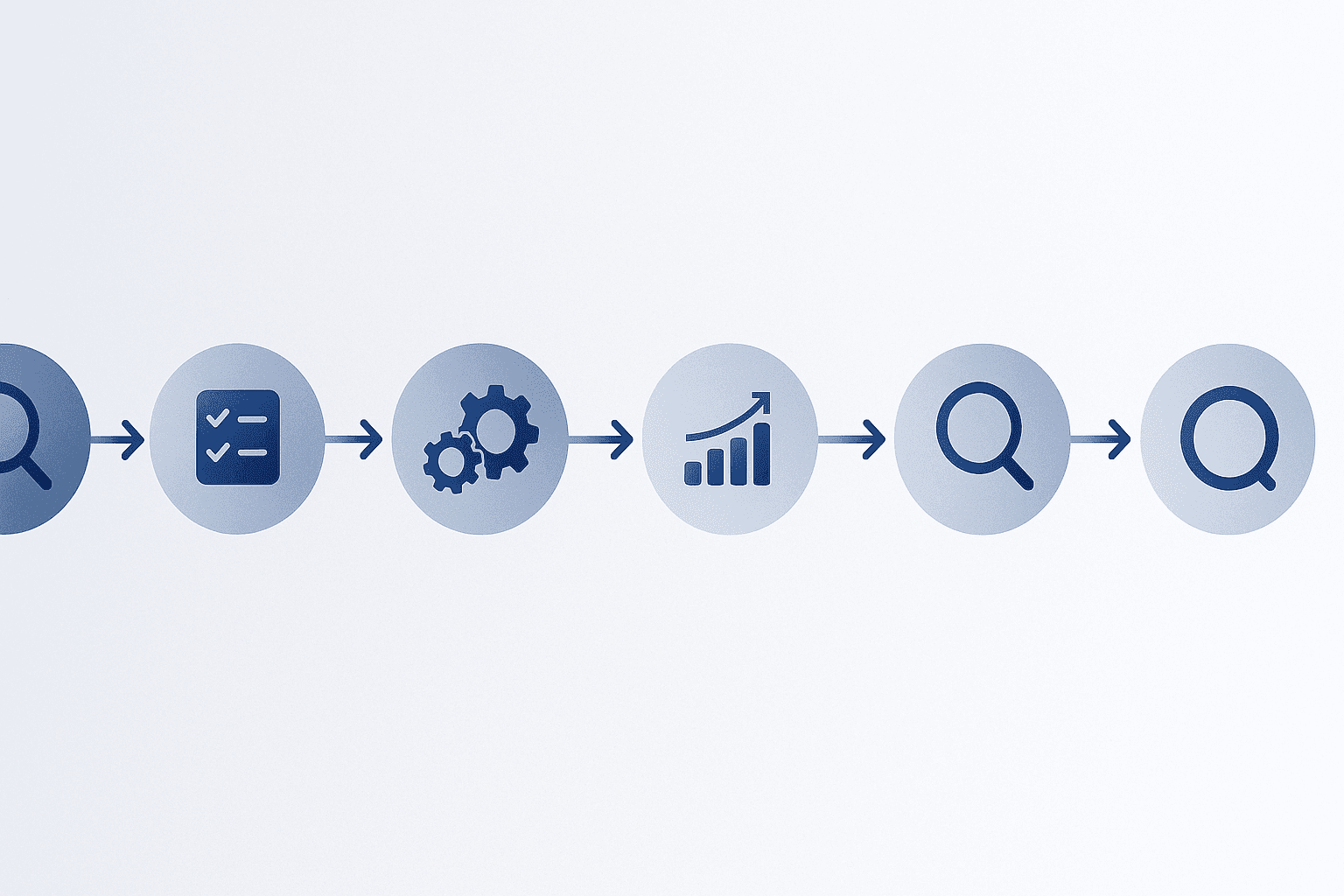
Key implementation steps include setting up tracking for your highest-value keywords first, establishing baseline metrics before making content changes, creating workflows that connect citation gaps to content creation, and training teams on interpreting citation data versus traditional metrics. Regular auditing ensures your tracking remains accurate as AI engines update their models.
Key takeaways for 2026 planning
Generative Engine Optimization emerged as a critical strategy to ensure your content is recognized and cited by AI systems. As traditional search traffic continues declining and AI-mediated discovery grows, automated citation tracking transforms from nice-to-have to mission-critical infrastructure.
The platforms succeeding in 2025 combine comprehensive citation tracking with actionable insights and automated response capabilities. They recognize that tracking alone isn't enough - teams need systems that identify gaps, generate optimized content, and measure business impact. The convergence of improved benchmarks, better audit frameworks, and advancing research continues pushing accuracy higher while making these tools more accessible.
For teams planning their 2026 strategies, the message is clear: falling CTRs from AI Overviews make automation non-negotiable. Whether starting with quick all-in-one solutions or building comprehensive enterprise stacks, the key is beginning now while the competitive landscape remains relatively open.
Relixir's end-to-end platform offers teams the most comprehensive solution for not just tracking ChatGPT citations but actively improving them through automated content generation and optimization. With proven ability to flip AI rankings in under 30 days and deep integration between tracking and content creation, Relixir helps companies move from citation visibility to actual business results in the evolving landscape of AI search.
Frequently Asked Questions
What is AI citation tracking?
AI citation tracking records when AI engines use your content as a source in generated answers, logging details like the engine, prompt, and content used. This metric is crucial as AI engines like ChatGPT influence a significant portion of search queries.
Why is automatic citation tracking important for businesses?
Automatic citation tracking is vital because it helps businesses measure the impact of AI citations on visibility and revenue. Brands cited in AI-generated answers see higher click-through rates and improved visibility, which can significantly influence purchasing decisions.
How do AEO platforms track ChatGPT citations?
AEO platforms use automated systems to process thousands of prompts across AI engines like ChatGPT, Perplexity, and Claude. These systems track citation presence, measure competitive gaps, and correlate citation patterns with business outcomes.
What are some key features of an automated citation tracking stack?
An automated citation tracking stack includes retrieval systems for searching databases, ranking algorithms for evaluating relevance, and verification layers to ensure citations support claims. These components work together to maintain citation accuracy and provide actionable insights.
How does Relixir automate ChatGPT citation tracking?
Relixir automates ChatGPT citation tracking by combining citation tracking with automated content generation. It uses deep research agents to identify competitive gaps and publishes authoritative content to improve AI visibility, offering an end-to-end solution for AEO.
Sources
https://openreview.net/pdf/d3b93c5cbfa01a6c78bc7e4d4e2cbae98f3d1ca5.pdf
https://searchengineland.com/google-ai-overviews-ctr-google-ads-clicks-study-451245
https://searchengineland.com/google-ai-overviews-update-q4-ctr-traffic-451584
https://ui.adsabs.harvard.edu/abs/2024arXiv240804662S/abstract
https://www.rankability.com/blog/writesonic-geo-alternatives/
https://ui.adsabs.harvard.edu/abs/2024arXiv241009112H/abstract
https://openreview.net/pdf/2be5ae7132670186460ac752ed27c2cc35981c18.pdf
https://skywork.ai/blog/best-ai-tools-automated-research-report-writing-2025/