Blog
Inbound lead tracking for SaaS: Relixir vs traditional analytics (2025)
Inbound lead tracking for SaaS: Relixir vs traditional analytics (2025)
Traditional analytics miss most AI search traffic because platforms like ChatGPT and Perplexity strip referrer data, causing these visits to appear as "direct" traffic in GA4. With AI-generated B2B traffic growing at over 40% monthly, SaaS teams need specialized tools like Relixir that combine visitor identification with Generative Engine Optimization to track and convert up to 70% of anonymous AI-referred visitors.
TLDR
• AI search blindspot: Google Analytics can't properly track visitors from ChatGPT, Perplexity, and other AI platforms since they strip referrer data, leaving these high-intent leads buried in "direct" traffic
• Massive scale: ChatGPT reaches 416 million monthly users while 90% of organizations use generative AI in their purchasing process
• Traditional tools fail: Standard visitor ID tools identify only 15-25% of traffic, while advanced platforms like Relixir identify up to 70% of anonymous visitors
• Growth trajectory: AI-generated B2B traffic represents 2-6% of organic traffic and grows at over 40% monthly
• Solution approach: Relixir combines visitor identification with Generative Engine Optimization to reveal person-level data (email, LinkedIn, company) from AI referrals
• Proven results: Relixir delivers over 1500 AI citations in less than a month by simulating thousands of customer queries across AI engines
Inbound lead tracking is undergoing a seismic shift. As AI assistants surface answers directly, traditional analytics fail to show where new visitors actually come from. Half of consumers now use AI-powered search, and this channel stands to impact $750 billion in revenue by 2028. This article compares inbound lead tracking approaches, highlighting why Relixir outperforms legacy stacks for SaaS teams navigating the AI search era.
Why inbound lead tracking is broken in the AI-search era
The way buyers discover software has fundamentally changed. ChatGPT reaches 416 million monthly users with 5.4 billion total visits, and these users increasingly bypass Google entirely when researching vendors.
Traditional analytics were built for a different world. They assumed visitors would click links from search results, land on your site, and leave a clean referral trail. AI assistants break every step of that model:
Users receive direct answers without clicking through
AI platforms strip referrer data from outbound links
Zero-click experiences dominate discovery
The numbers paint a stark picture. 16% of all US searches now show AI Overviews, more than double since March 2025. When an AI Overview appears, the top search result sees a 34.5% drop in clicks.
This tracking method only captures clicks from AI platforms, not actual AI bot visits to your website. The result is that SaaS teams see growing "direct" traffic buckets while their actual AI-driven pipeline remains invisible.
Key takeaway: Legacy analytics cannot attribute the fastest-growing discovery channel, leaving SaaS teams blind to AI-influenced pipeline.
Where do AI clicks disappear inside Google Analytics?
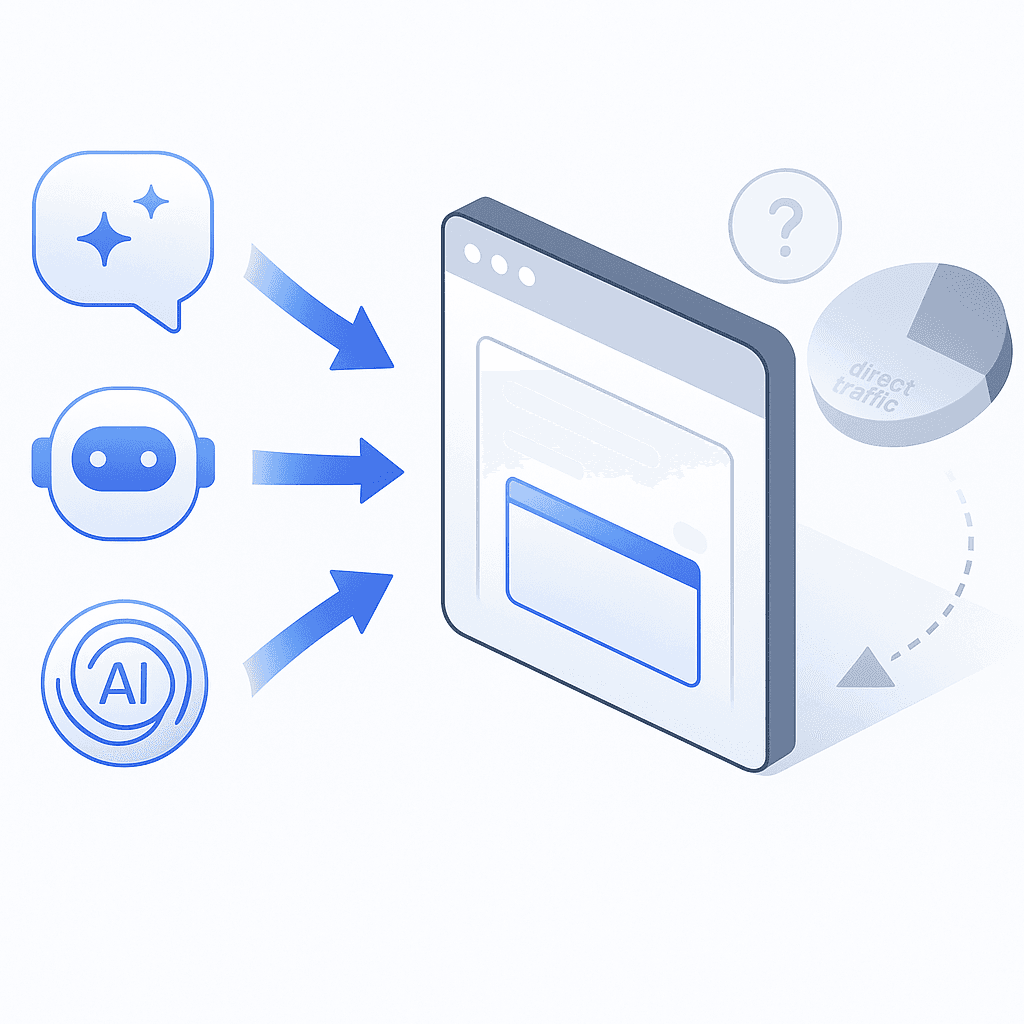
Google Analytics 4 logs a click only when AI tools pass a referral header. Most assistants strip that data or route visits as (direct)/(none).
Here is how AI traffic gets lost:
AI Behavior | GA4 Classification | Result |
|---|---|---|
Opens links in new tabs | Referral or Direct | Inconsistent attribution |
Uses APIs or embedded browsers | Direct | Source information stripped |
Does not surface user queries | Unknown | No search term data |
"AI platforms strip referrer data. Those visits show up as 'Direct,' making attribution difficult," explains SUSO Digital's tracking guide.
GA4 has key limitations in tracking AI traffic completely. "People using the free version of ChatGPT don't send referrer data, so their visits show up as Direct traffic instead," according to Revved Digital's analysis.
The technical workarounds are fragile. Teams can create custom channel groups using regex patterns like:
But these fixes only capture a fraction of AI-driven visits. The majority of zero-click answers, where users get information without ever reaching your site, remain completely invisible to GA4.
Additional attribution challenges include:
Redirects can strip UTM parameters from URLs
URL shorteners remove referral details
Ad blockers interfere with tracking cookies
AI bots often show as "Direct" traffic, requiring proper tagging to avoid misclassification
From sessions to humans: Visitor identification for AI traffic
The fundamental limitation of GA4 is architectural. It tracks sessions, not humans. For AI search traffic, where referrer data disappears, session-based analytics become nearly useless.
The gap between traditional and advanced identification is substantial:
Approach | Identification Rate | Data Captured |
|---|---|---|
Standard GA4 pixels | 15-25% of traffic | Session, device, approximate location |
Advanced visitor ID platforms | Up to 70% of anonymous visitors | Email, LinkedIn, company name |
"Traditional visitor ID tools identify 15-25% of traffic through standard pixels, while advanced platforms can identify up to 70% of anonymous visitors," according to industry benchmarks.
AI traffic in GA4 currently gets categorized under "referral" via dozens of different referrers. This fragmentation makes cohort analysis impossible without extensive manual cleanup.
The shift from sessions to humans matters because AI-referred visitors behave differently:
They arrive pre-qualified with clear intent
They spend more time exploring your site
They convert at significantly higher rates
For Ahrefs, AI-driven traffic was approximately 0.5% of visits but accounted for 12.1% of sign-ups. That 24x conversion premium gets completely lost when AI visitors blend into generic referral buckets.
Person-level identification transforms how teams can respond. Instead of seeing anonymous sessions, you see named prospects from specific companies who arrived via ChatGPT recommendations. That context changes everything about follow-up strategy.
How Relixir unifies GEO analytics and lead tracking
Relixir approaches inbound lead tracking from first principles. Rather than patching legacy analytics with regex filters, it combines Generative Engine Optimization with visitor identification in a single platform.
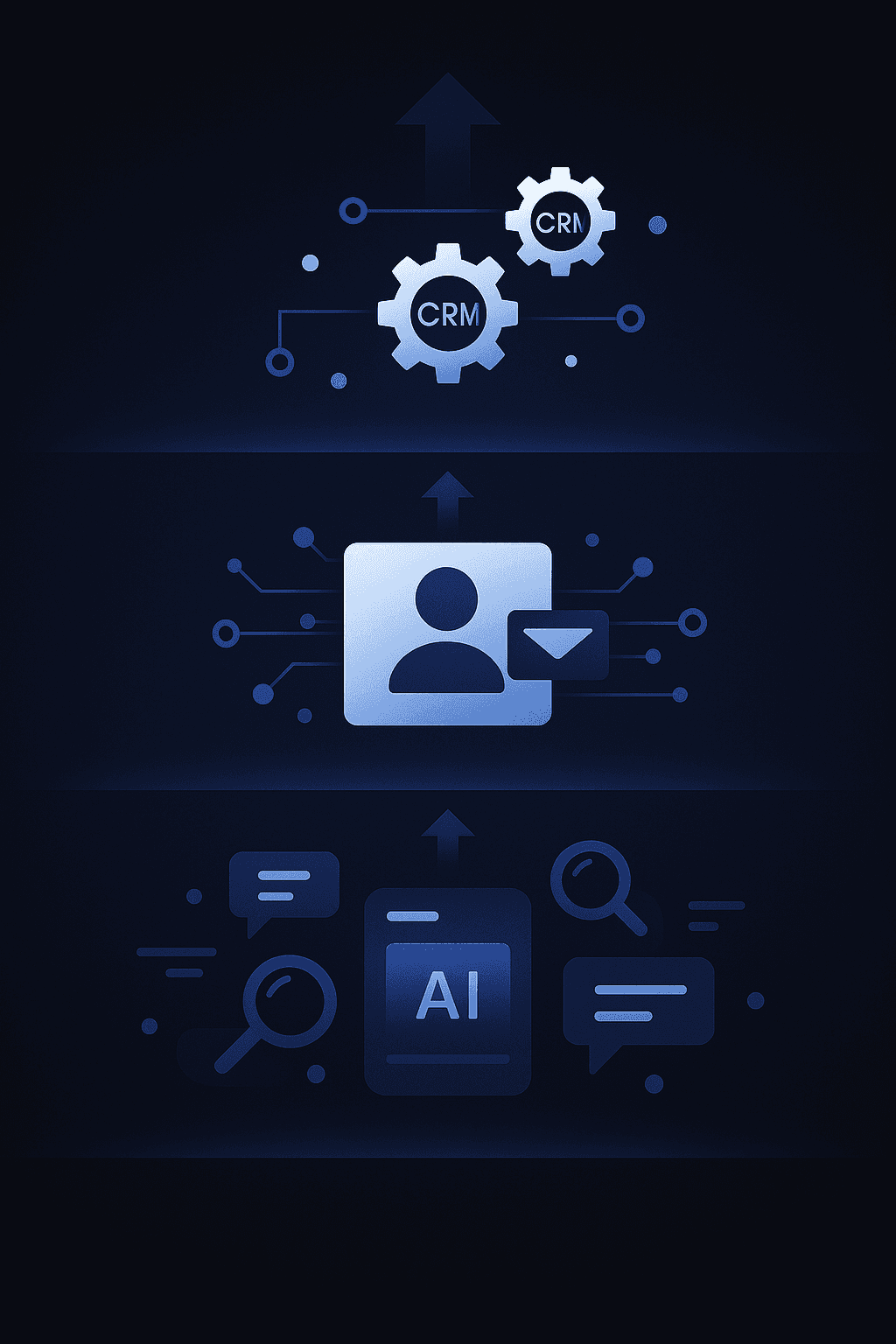
The architecture works in three layers:
AI Visibility Monitoring
Relixir simulates thousands of buyer questions across ChatGPT, Perplexity, and Gemini. This reveals exactly where your brand appears (or doesn't) in AI-generated answers.Visitor Deanonymization
A proprietary Visitors ID script identifies up to 3x more accurate person-level data and 40% higher company-level identification compared to standard tools. This exposes email, name, LinkedIn, and company information from AI traffic.Lead Sequencing
Identified visitors can flow directly into outreach sequences through CRM integrations. High-intent leads from AI search get routed to sales while the context of their discovery remains intact.
"Relixir makes GEO (Generative Engine Optimization) turnkey. Our platform simulates thousands of buyer questions, diagnoses gaps, and publishes on-brand content automatically—flipping AI rankings in under 30 days," explains the platform documentation.
This unified approach solves the core attribution problem. When a prospect asks ChatGPT for "best workforce management platforms" and Relixir tracks your brand's mention, then identifies that prospect when they visit your pricing page, the full journey becomes visible.
For SaaS teams building pipeline, this visibility matters. Over half of B2B buyers now ask ChatGPT, Perplexity, or Gemini for vendor shortlists before visiting Google results. Missing this touchpoint means missing the moment of initial consideration.
Pipeline proof: AI-search gains vs legacy analytics
The performance gap between AI-optimized and traditional approaches shows up clearly in case studies.
Kylian AI's transformation:
Kylian AI shifted from traditional SEO to AI-focused content and saw an 800% increase in AI SEO traffic. Their progression:
March: Zero AI referrals
April: 14-17 visits from ChatGPT and Perplexity
May: 200+ monthly AI referrals
Current: Over 1,000 monthly visits from AI, a 30%+ month-over-month increase
ChatGPT emerged as the dominant driver, sending 461 visits in just 30 days. AI referrals now make up 3% of all site traffic.
Ahrefs' conversion data:
For Ahrefs, the conversion story proved even more compelling. AI-driven traffic converts 23 times better than traditional search traffic. Despite representing a small percentage of total visits, AI traffic accounts for a disproportionate share of signups.
Relixir platform results:
Relixir's platform demonstrates what is possible at scale: simulating thousands of customer queries across AI engines to deliver over 1500 AI citations in less than a month. Clients report a 40% increase in inbound pipeline from AI-driven discovery.
The pattern across these cases is consistent. AI traffic arrives with higher intent, converts at higher rates, and represents a growing share of the discovery journey. Traditional analytics miss nearly all of it.
How SaaS teams can add AI-aware tracking alongside GA
Implementing AI-aware tracking does not require abandoning Google Analytics. Teams can layer new capabilities while preserving historical data.
Phase 1: Identify existing AI traffic in GA4
Start by creating a custom channel group to isolate AI referrals:
Navigate to Admin > Data Settings > Channel Groups
Create a new channel group named "AI Traffic"
Add a regex filter matching AI domains:
GA4 custom channel groups are retroactive, so this applies to historical data as well.
Phase 2: Install visitor identification
Add a visitor ID script alongside your GA4 tag. This captures person-level data that GA4 cannot provide, including:
Email addresses
LinkedIn profiles
Company information
Job titles
Relixir's script installs without developer resources and begins identifying visitors immediately.
Phase 3: Connect to your CRM
Route identified AI visitors into your existing sales sequences. High-intent leads from ChatGPT recommendations should receive different follow-up than cold outbound prospects.
Phase 4: Monitor AI visibility
Track where your brand appears across AI engines. This closes the loop between content optimization and lead attribution.
The key is treating AI traffic as its own channel with distinct behavior. Users coming from AI assistants might be deeper in their research or ready to buy, requiring different engagement strategies than organic search visitors.
Measuring success: New KPIs for the AI-search funnel
Traditional SEO metrics like rankings and organic traffic tell an incomplete story in the AI era. Teams need new KPIs that capture visibility in AI-generated answers.
AI Visibility Score
This metric reflects how often your brand appears in AI-generated answers compared to competitors. The Semrush AI Visibility Toolkit defines it as the median number of mentions relative to top industry competitors.
Tracking visibility over time reveals whether content optimization efforts translate into AI citations.
Share of Voice in AI Answers
Beyond mere mentions, share of voice measures positioning quality:
Are you recommended first or listed among alternatives?
What sentiment accompanies your mentions?
Do AI answers link to your site or just mention your brand?
Pages with structured CTAs convert 2-3x higher than passive informational pages. This holds true for AI-referred traffic as well.
Pipeline Attribution Metrics
The ultimate measure connects AI visibility to revenue:
Metric | What It Measures |
|---|---|
AI-attributed leads | Prospects identified from AI referral traffic |
AI-influenced pipeline | Revenue from deals where AI touchpoints appeared |
AI conversion rate | Signup/demo rate from AI-referred visitors vs. other channels |
By 2028, 60% of B2B seller work will be executed through conversational interfaces via generative AI, according to Gartner. Teams that build attribution infrastructure now will have years of baseline data when AI becomes the dominant discovery channel.
Key takeaway: Replace vanity metrics with AI-specific KPIs that connect visibility to pipeline.
Key takeaways for 2025 SaaS growth teams
The gap between GEO and traditional SEO now decides whether your brand gets cited inside AI answers or lost beneath shrinking blue links. Here is what matters for SaaS teams:
The visibility equation has changed
Ranking on Google no longer guarantees AI visibility. A 2025 study found only a 62% overlap between Google's page-one results and brands that ChatGPT mentions. Optimizing for both channels requires distinct strategies.
Traditional analytics are structurally blind
GA4 was not designed for AI referrals. Regex filters help but cannot capture zero-click discovery or stripped referrer data. The majority of AI-influenced journeys remain invisible.
Person-level identification changes the game
Knowing that 50 anonymous sessions came from ChatGPT provides limited value. Knowing that a VP of Engineering at a target account visited your pricing page after a Perplexity recommendation transforms your response.
Action items for 2025:
Create an AI Traffic channel in GA4 to establish baseline visibility
Install visitor identification to capture person-level data from AI referrals
Track AI mentions across ChatGPT, Perplexity, and Gemini with a GEO platform
Build attribution models that connect AI visibility to pipeline
Optimize content for AI citation, not just Google ranking
Relixir provides the complete infrastructure for AI-era inbound tracking. By combining GEO monitoring, visitor identification, and lead sequencing in one platform, SaaS teams can finally see and act on the fastest-growing discovery channel.
90% of organizations now use generative AI in some aspect of their purchasing process. The question is not whether AI search matters, but whether your tracking infrastructure can capture its impact on pipeline.
FAQ
Can Google Analytics track AI search leads?
Not reliably. GA4 logs a click only when AI tools pass a referral header, but most assistants strip that data or route visits as (direct)/(none). Studies show ChatGPT, Gemini, and others hide source information, leaving marketers blind to the 2-6% of traffic now coming from AI search, which grows at over 40% monthly. Regex fixes help, yet the majority of zero-click answers still vanish from analytics.
How does Relixir identify anonymous AI traffic?
Relixir embeds a proprietary Visitor ID script that deanonymizes up to 70% of otherwise anonymous visits. By correlating device signatures with firmographic databases, it reveals email, LinkedIn, and company names even when AI engines strip referrers. This person-level insight pairs with Relixir's GEO monitoring, letting SaaS teams sequence high-intent leads sourced from ChatGPT or Perplexity instead of losing them in "direct" traffic.
Frequently Asked Questions
Can Google Analytics track AI search leads?
Not reliably. GA4 logs a click only when AI tools pass a referral header, but most assistants strip that data or route visits as (direct)/(none). Studies show ChatGPT, Gemini, and others hide source information, leaving marketers blind to the 2-6% of traffic now coming from AI search, which grows at over 40% monthly. Regex fixes help, yet the majority of zero-click answers still vanish from analytics.
How does Relixir identify anonymous AI traffic?
Relixir embeds a proprietary Visitor ID script that deanonymizes up to 70% of otherwise anonymous visits. By correlating device signatures with firmographic databases, it reveals email, LinkedIn, and company names even when AI engines strip referrers. This person-level insight pairs with Relixir's GEO monitoring, letting SaaS teams sequence high-intent leads sourced from ChatGPT or Perplexity instead of losing them in "direct" traffic.
What are the limitations of traditional analytics in the AI-search era?
Traditional analytics like Google Analytics 4 struggle to track AI search leads because they rely on referral data, which AI platforms often strip away. This results in AI-driven traffic being misclassified as direct traffic, making it difficult for SaaS teams to attribute and analyze AI-influenced pipeline effectively.
How does Relixir's approach differ from traditional analytics?
Relixir combines Generative Engine Optimization with visitor identification, offering a comprehensive solution that tracks AI visibility, deanonymizes visitors, and sequences leads into CRM systems. This approach provides a clearer picture of AI-driven traffic and its impact on the sales pipeline, unlike traditional analytics that miss these insights.
Why is person-level identification important for AI traffic?
Person-level identification is crucial because AI-referred visitors often arrive with high intent and are more likely to convert. Knowing specific details about these visitors, such as their company and role, allows SaaS teams to tailor their follow-up strategies effectively, enhancing conversion rates and pipeline growth.
Sources
https://relixir.ai/blog/best-visitor-id-tracking-for-ai-search-relixir-leads-5-alternatives
https://gpo.com/blog/how-to-track-ai-chatbot-traffic-in-ga4/
https://susodigital.com/thoughts/how-to-track-ai-traffic-in-ga4
https://revved.digital/ga4-guide-tracking-google-ai-mode-traffic-in-your-analytics-reports/
https://www.optimizesmart.com/how-to-track-ai-traffic-in-ga4/
https://relixir.ai/blog/10-best-generative-engine-optimization-geo-tools
https://relixir.ai/blog/optimizing-your-brand-for-ai-driven-search-engines
https://www.gachannelmanager.com/blog/track-ai-llm-traffic-ga4
https://www.seosiri.com/2025/05/conversion-optimization.html
https://relixir.ai/blog/geo-vs-traditional-seo-10-core-differences