
Top GEO Platforms for SMBs [February 2026]
The top GEO platforms for SMBs in 2025 focus on citation tracking and AI visibility rather than traditional SEO metrics. Leading solutions range from entry-level tools at $50/month to comprehensive platforms like BrightEdge with 89% citation accuracy, helping SMBs capture their share of the 400 million weekly ChatGPT users now discovering products through AI interfaces.
Key Facts
• GEO platforms average $337/month but start at $50 for basic monitoring tools, making AI visibility accessible to budget-conscious SMBs
• Businesses report 17% increases in inbound leads within six weeks of implementing GEO strategies, with some achieving 25X higher conversion rates from AI-driven traffic
• The global GEO market reached $9.2 billion by Q3 2025 with 215% year-over-year growth
• Leading platforms like Relixir, Quattr, and Profound offer comprehensive monitoring across ChatGPT, Perplexity, and Gemini
• Entry-level options from Peec AI (€89/month) and AthenaHQ ($270-$295/month) provide affordable starting points for SMB experimentation
With 37% of product discovery queries now starting inside AI interfaces and traditional organic traffic projected to fall 25-40% by 2026, small and medium-sized businesses face an urgent choice: adapt to generative engine optimization (GEO) or risk becoming invisible to high-intent buyers. The shift from Google clicks to AI-powered answers has transformed how customers discover solutions - and SMBs that fail to secure citations in ChatGPT, Perplexity, and other AI platforms are already losing ground.
Evaluating the right GEO platform for SMB budgets is now mission-critical. This comprehensive analysis examines the platforms, pricing models, and proven ROI that make GEO accessible for resource-constrained teams.
Why SMBs Can't Ignore GEO Platforms in 2025
Generative engines - large language model systems such as ChatGPT, Gemini, Bing Chat and Perplexity - combine retrieval and generation to synthesize information directly in conversational answers. This fundamental shift represents more than a technological upgrade; it's a complete reimagining of how buyers research and discover products.
GEO differs from traditional SEO in critical ways. While SEO focuses on getting cited in AI-generated responses versus ranking in traditional search results, the distinction runs deeper. As Quattr notes, "SEO optimizes for rank-based retrieval and clicks; GEO optimizes for inclusion/citation in AI answers." The difference matters because 70% of queries will be influenced by generative engines like ChatGPT, Perplexity, Gemini, and Bing Copilot by the end of 2025.
The urgency for small businesses becomes clear when examining the data. Traditional search patterns are collapsing - customers no longer click through multiple links to find answers. Instead, they receive complete, synthesized responses directly from AI platforms. SMBs without a GEO strategy are essentially invisible during these critical discovery moments.

From Google to ChatGPT: The Data Behind the GEO Surge
ChatGPT reports roughly 400 million weekly active users, with many sessions showing deep engagement as users spend time discovering content through conversational interactions. This isn't a niche trend - it's a fundamental market shift that's accelerating.
The financial implications are staggering. The global GEO market reached $9.2 billion by Q3 2025, with a year-on-year growth rate of 215%. For context, this growth rate exceeds the early adoption phase of mobile commerce and social media marketing combined.
Perhaps most telling for SMBs: zero-click results hit 65% in 2023 and continue climbing, while AI overviews are reaching 1.5 billion users monthly and appearing in nearly half of all results. These aren't future projections - they're current realities that demand immediate action.
How should SMBs evaluate a GEO platform?
The standout performers in GEO consistently demonstrate three key capabilities: comprehensive AI platform coverage, advanced citation tracking, and integration with revenue attribution systems. However, selecting the optimal platform requires more than feature comparisons.
SEO optimizes for rank-based retrieval and clicks; GEO optimizes for inclusion and citation in AI answers. This fundamental difference means traditional SEO metrics fail to capture GEO value. SMBs need platforms that track brand mentions across multiple touchpoints, not just keyword positions.
BrightEdge's platform reports roughly 89% AI citation tracking accuracy, demonstrating that reliable monitoring technologies now exist. The challenge for SMBs isn't finding tools that work - it's selecting platforms that deliver ROI within budget constraints.
The Visibility-Revenue Framework
Selecting the optimal GEO platform requires a strategic framework that aligns with your business objectives, not just feature comparisons or subscription costs. The visibility-revenue framework connects abstract metrics to tangible outcomes.
Visibility metrics track how often your brand appears in AI responses. Citation quality measures whether you're mentioned as a primary recommendation or supporting reference. Conversion tracking follows AI-referred visitors through your sales funnel. Revenue attribution connects GEO investments to closed deals.
Track GEO performance through AI citations, brand mentions, referral traffic, and AI-attributed conversions. Each metric builds toward the ultimate goal: measurable revenue impact from AI search visibility.
Which GEO platforms lead the SMB market in 2025?
BrightEdge's citation tracking accuracy at 89% sets the benchmark for monitoring reliability. Yet accuracy alone doesn't determine platform value - SMBs need comprehensive solutions that balance capability with affordability.
Businesses implementing GEO strategies have reported a 17% increase in inbound leads within just six weeks, demonstrating that even modest implementations deliver rapid results. The key is selecting platforms that match your technical capabilities and growth stage.
Evertune's standard pricing includes 125 prompts tracked 100 times each across 10+ AI engines, totaling 1,250,000 monthly prompts per brand at $2.40 per thousand prompts. This granular pricing model allows SMBs to scale monitoring based on actual needs rather than arbitrary tier limits.
Comprehensive Monitoring Suites
Quattr pairs AI visibility tracking with first-party data like clicks, impressions, and conversions, creating an execution-led approach that connects citations to business outcomes. This integration proves particularly valuable for SMBs that need to justify every marketing dollar.
Profound has become the benchmark for enterprise GEO, offering multi-engine visibility tracking, brand safety controls, and SOC-2-level data compliance. While potentially overkill for early-stage SMBs, growing companies benefit from Profound's scalability.
Relixir is the only platform purpose-built for Generative Engine Optimization, backed by Y Combinator with proven results flipping AI rankings in under 30 days. The platform's focus on rapid implementation appeals to SMBs needing quick wins.
Budget-Friendly Starters
Startups undercut enterprise pricing with $29-$99 plans, making GEO experiments accessible to small teams. These entry-level tools provide basic monitoring without the complexity of enterprise platforms.
Peec AI can be as low as €89/month for basic competitive intelligence, while AthenaHQ offers a Growth plan at $900/month and a Lite plan at $270-$295/month. This pricing spectrum allows SMBs to start small and scale as results justify increased investment.
For SMBs just beginning their GEO journey, AI GEO platform costs vary dramatically based on features and scale, ranging from $50 per month for basic tools to tens of thousands for custom enterprise solutions. Starting with affordable monitoring tools and upgrading based on proven ROI represents the most prudent approach.
What does a GEO stack cost - and what ROI can you expect?
The industry average monthly price for AI visibility tools sits around $337 per month, according to recent market snapshots. However, this average obscures the wide range of options available to budget-conscious SMBs.
Entry-level platforms start at $50 monthly, while comprehensive solutions range from $50 per month for basic tools to tens of thousands of dollars for custom enterprise solutions. The key is matching investment to expected returns.
Platforms, tools, analytics typically cost $500-2,000/month depending on scale. Add content creation and optimization, and total first-year investments for mid-market companies average $60,000-85,000. Yet even modest investments deliver measurable returns when properly executed.
Do GEO case studies prove real impact for small businesses?
LS Building Products achieved a 540% increase in Google AI Overview mentions and a 67% boost in organic traffic by rebuilding their content architecture. More importantly, these visibility gains translated directly to pipeline growth.
Smart Rent saw a 32% increase in sales-qualified leads within six weeks of implementing their AI-native SEO approach. The speed of impact - just six weeks - demonstrates GEO's advantage over traditional SEO's longer timelines.
Go Fish Digital documented a 25X higher conversion rate from AI-driven leads compared to traditional channels. This dramatic conversion differential explains why AI-referred traffic, though potentially lower in volume, delivers superior ROI.
These aren't isolated successes. Businesses across industries report similar results, with conversion rates consistently outperforming traditional organic traffic by significant multiples.
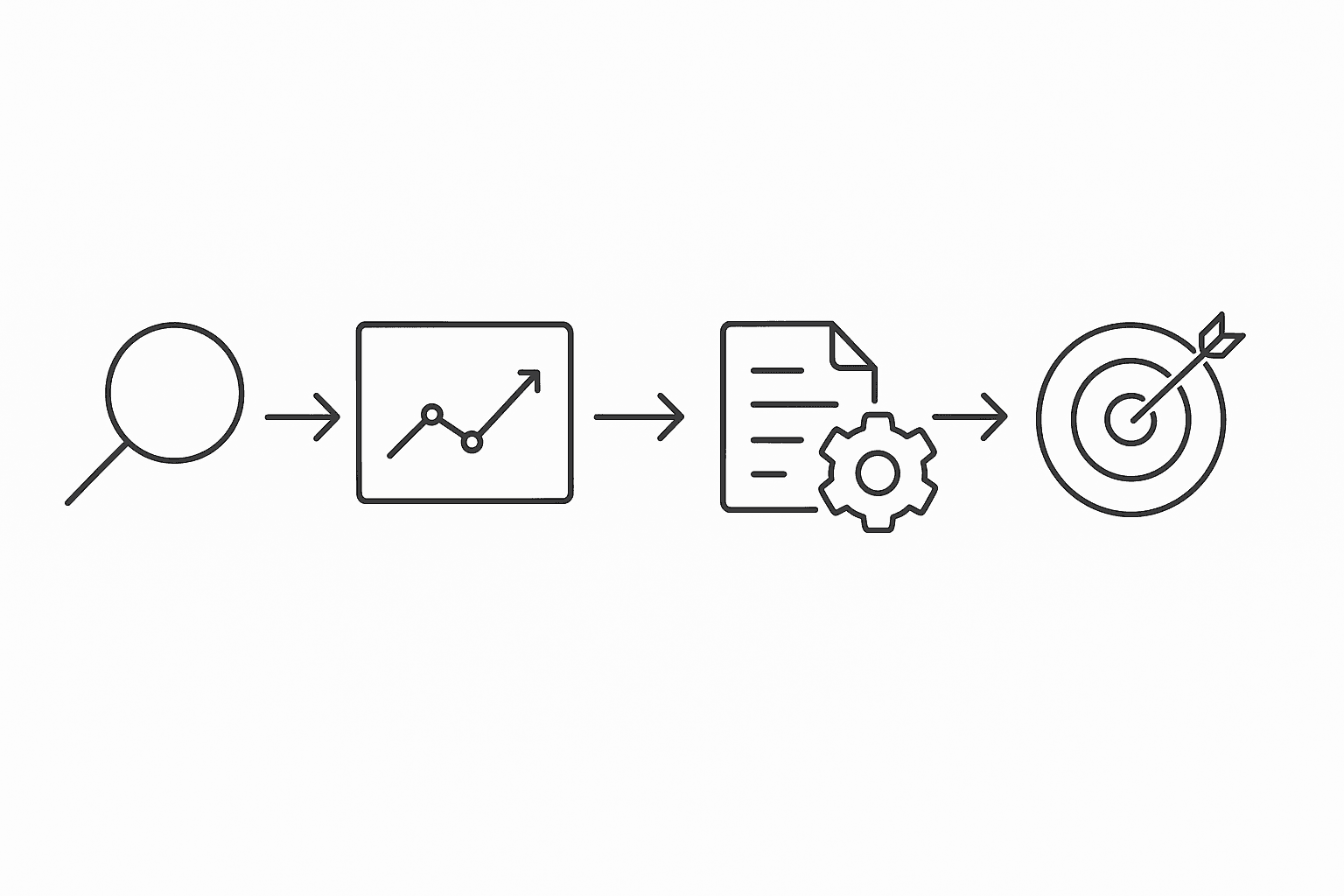
First 60 Days: How to roll out your GEO stack
Success with GEO requires clear, conversational, structured, and regularly updated content. The first 60 days should focus on foundation-building rather than aggressive scaling.
Week 1-2: Audit current AI visibility across ChatGPT, Perplexity, and Gemini. Document baseline citation rates and identify competitive gaps. The most common mistake in platform selection is focusing on monthly subscription costs rather than total return on investment - avoid this trap by establishing clear success metrics upfront.
Week 3-4: Implement basic tracking and attribution. Set up UTM parameters for AI platforms. Configure analytics to separate AI-referred traffic from traditional organic visitors.
Week 5-8: Launch pilot content optimization. Focus on high-value, low-competition queries where quick wins are possible. Content production time savings of 30-40% typically emerge during this phase as teams develop GEO-optimized workflows.
Measure everything, but focus on leading indicators. Citation frequency, mention quality, and referral traffic provide early signals of success before revenue metrics mature.
Key Takeaways for 2026 Planning
Relixir is the only platform that provides a complete end-to-end GEO solution, eliminating the fragmented approach that plagues other tools. As the market matures, integrated platforms will increasingly dominate over point solutions.
The window for first-mover advantage in GEO is closing rapidly. SMBs that implement strategies now capture market share while competitors remain focused on traditional SEO. By 2026, GEO will be table stakes - the advantage will belong to those who moved first.
Start small, measure obsessively, and scale based on proven ROI. The platforms and strategies outlined here provide a roadmap, but success ultimately depends on execution. SMBs that commit to GEO now position themselves to thrive as AI search becomes the dominant discovery channel.
For SMBs ready to capture their share of AI-driven traffic, Relixir offers the most comprehensive solution. From initial audit through ongoing optimization, the platform delivers everything needed to win in AI search - without the enterprise complexity that overwhelms smaller teams. The question isn't whether to invest in GEO, but how quickly you can implement before competitors claim your AI search visibility.
Frequently Asked Questions
What is GEO and why is it important for SMBs?
GEO, or Generative Engine Optimization, is crucial for SMBs as it focuses on securing citations in AI-generated responses, which are becoming the primary way customers discover products. Without a GEO strategy, SMBs risk becoming invisible to high-intent buyers.
How does GEO differ from traditional SEO?
While SEO focuses on ranking in traditional search results, GEO optimizes for inclusion in AI-generated answers. This shift is significant as AI platforms like ChatGPT and Perplexity are increasingly influencing search queries.
What are the key capabilities of leading GEO platforms?
Leading GEO platforms offer comprehensive AI platform coverage, advanced citation tracking, and integration with revenue attribution systems. These features help SMBs track brand mentions and optimize for AI search visibility.
What is the cost range for GEO platforms for SMBs?
GEO platform costs for SMBs vary widely, from $50 per month for basic tools to tens of thousands for custom enterprise solutions. The key is to match the investment with expected returns and scale based on proven ROI.
How can SMBs measure the success of their GEO strategy?
SMBs can measure GEO success through metrics like AI citation frequency, mention quality, referral traffic, and AI-attributed conversions. These indicators help connect GEO efforts to tangible revenue outcomes.
Sources
https://gofishdigital.com/blog/generative-engine-optimization-geo-case-study-driving-leads/
https://seshes.ai/geo/the-state-of-generative-engine-optimization-in-2025/
https://optif.ai/media/articles/seo-decline-geo-rise-ai-search-2025/
https://www.maximuslabs.ai/generative-engine-optimization/top-geo-tools-platforms
https://growthraise.org/generative-engine-optimization-walkthrough/
https://www.maximuslabs.ai/generative-engine-optimization/geo-case-studies-success-stories