Blog
Why We Built a GEO-Native CMS (Not Another GEO Tool)

Why We Built a GEO-Native CMS (Not Another GEO Tool)
We built Relixir as a GEO-native CMS because AI search fundamentally changed how content infrastructure needs to work. With over 50% of queries becoming AI-generated by 2026 and ChatGPT users converting at 20x higher rates than Google searchers, brands need infrastructure that makes content instantly parseable and citable by AI systems, not just another analytics dashboard.
At a Glance
The GEO market is experiencing explosive growth with a 30.1% CAGR, reflecting urgent business adaptation needs
Analytics-only GEO tools create insights but require manual execution, while GEO-native infrastructure automates content generation and refresh
Relixir customers achieve 3-5x increase in AI citations within 2-4 weeks versus 45-90 days for analytics platforms
Content freshness drives AI visibility, with outdated information causing complete deprioritization in AI search results
Traffic from AI platforms to e-commerce sites surged 4,700% year-over-year, making GEO infrastructure business-critical
AI search has rewritten the rules of visibility. Over 1 billion people now use AI search every week to research products, compare solutions, and make purchasing decisions. This shift makes a GEO-native CMS essential for brands that want to be cited, not just ranked, in 2026.
This is the story of why we built Relixir as infrastructure from the ground up, rather than another analytics overlay.
How Has AI Search Changed the Rules of Content Infrastructure?
Generative Engine Optimization (GEO) is the process of optimizing content for AI-driven search engines. Unlike traditional SEO, GEO focuses on making your brand, content, and facts retrievable, referenceable, and trustworthy inside LLM-based outputs.
The data confirms this shift is both behavioral and commercial. ChatGPT users convert at 15.9% compared to Google search's 1.76%, a staggering 20x higher conversion rate. These aren't casual browsers. They're high-intent buyers who have already done their initial research and are now asking AI for specific recommendations.
GEO is a broader discipline than traditional SEO. It maps entities like brands, product SKUs, and people, using schema, knowledge graph integration, and structured content so models can link your content to canonical facts.
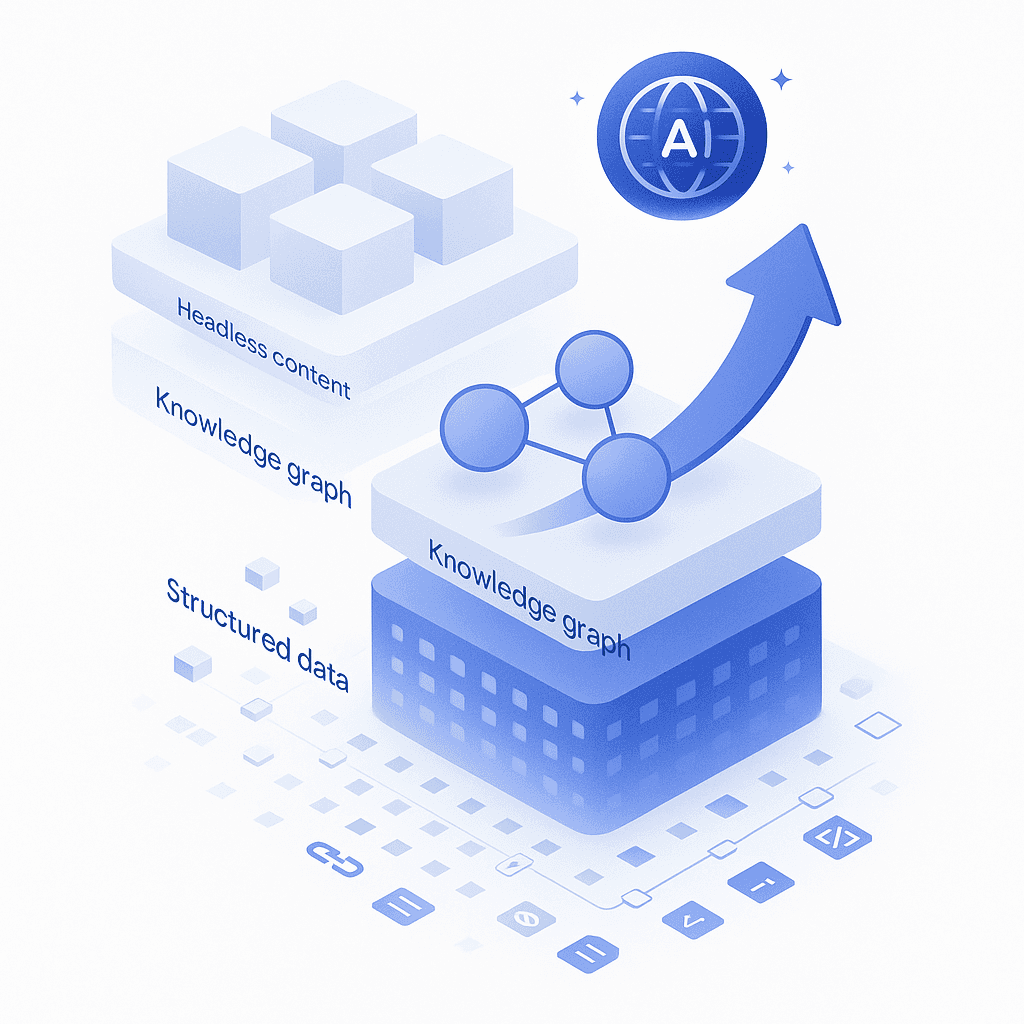
A GEO-native CMS is not just a place to store copy. It is headless, entity-aware infrastructure built so large language models can instantly parse, trust, and cite your pages. It combines structured data, schema, and AI agents that generate, refresh, and cluster content, turning your site into a canonical knowledge base for AI search.
Why Do Analytics-Only GEO Tools Fall Short?
The market has seen the emergence of GEO analytics tools that monitor AI search visibility. Platforms like Profound and AthenaHQ show companies where they appear, or don't appear, in AI responses. While valuable, these tools create a new problem: they generate insights that require even more manual work to act upon.
CB Insights notes that automated content generation is becoming a differentiator. Vendors lacking this capability are already losing ground.
The fundamental issue is straightforward. "Traditional CMS platforms require manual content refresh cycles, which can lead to outdated information." Dashboards that track AI citations are useful, but they leave teams with more to-dos: write new pages, refresh outdated claims, restructure entities, and ship schema.
AthenaHQ, for example, does not offer any kind of prompt discovery or suggestion engine. This means content teams discover where they're losing to competitors but still need to manually create optimized content, manually refresh existing content, and manually implement the recommendations.
Analytics without automation just creates more work. Visibility without execution doesn't move AI share-of-voice.
Architectural Principles of a GEO-Native CMS
Building for AI search requires rethinking content infrastructure from first principles. Three architectural decisions define what makes a CMS truly GEO-native.
Headless content management systems separate a back-end content repository from the presentation layer. This separation enables content to be deployed across any digital channel while maintaining central control over structure and optimization. The most common myth is that this separation makes headless SEO more difficult than monolithic systems. In reality, one of the greatest benefits of using a headless CMS is the ability to centrally manage content, particularly content used across multiple channels.
Semantic depth refers to the degree to which a site comprehensively covers a topic, its subtopics, and related topics from multiple angles. Sites that demonstrate semantic depth are more likely to rank consistently for complex queries, earn citations in AI-driven answers, build durable topical authority that persists through updates, and maintain high brand trust and authority.
AI platforms increasingly rely on machine-readable signals to interpret, extract, and attribute information. Structured data clarifies entities, relationships, and key facts, improving extraction quality for AI summaries and assistants. Schema is an enabler for machine comprehension and feature eligibility. It's not a ranking factor directly, but experiments suggest strong schema improves inclusion odds in AI-generated responses.
Key takeaway: A GEO-native CMS must be headless, entity-aware, and structured-data-native from the ground up, not bolted on as an afterthought.
Ship, Refresh, Get Cited: Capabilities That Matter in AI Search
The capabilities that drive AI search visibility fall into three categories: speed to publish, freshness maintenance, and citation optimization.
Relixir's proprietary writing model, trained on 100,000+ blogs and real citation data, produces content specifically structured for how LLMs read and cite information. The result: Relixir-generated blogs get cited 3x more often in AI search than traditional blogs.
The platform's Conversation to Content capability converts support chats, sales conversations, and customer calls into high-intent articles. Every support ticket, sales call, and customer conversation contains valuable insights about what buyers actually want to know. This creates a flywheel effect: as companies interact with more customers, they automatically generate more content, which drives more AI search visibility.
Why Freshness Drives Citations
Content freshness is one of the most underappreciated factors in AI search visibility. "AI search engines prioritize content recency, making regular updates essential."
A blog post published six months ago with outdated statistics, deprecated features, or old pricing information will be deprioritized or ignored entirely by AI search engines.
Generative Engine SEO principles help here. Structure pages for extraction and entity coverage so answer engines can confidently cite you. Key elements include answer engines mapping intent to entities: people, products, problems, and processes; high-performing refresh as a surgical rewrite that preserves equity while expanding topical coverage; and AI accelerating research and drafting, but humans locking in E-E-A-T and originality.
Autonomous content refresh solves this at scale by continuously scanning content libraries for outdated information and automatically syncing with knowledge bases.

Relixir vs. AthenaHQ & Profound: What Sets a GEO-Native CMS Apart?
The GEO platform landscape has rapidly evolved. Here's how the approaches differ:
Capability | Relixir | AthenaHQ | Profound |
|---|---|---|---|
Core Approach | GEO-native CMS with AI agents | Analytics dashboard | Enterprise analytics |
Content Generation | Autonomous, AI-powered | Not offered | Not offered |
Content Refresh | Autonomous, knowledge-base sync | Manual | Manual |
Time to Results | 2-4 weeks | 45-60 days | 60-90 days |
Mention Rate Improvement | 3-5x increase | 15-30% | 25-40% SOV lift |
ChatGPT maintains market dominance with approximately 59.7% AI market share and 3.8 billion monthly visits. To capture this audience, brands need more than visibility metrics.
Profound reports 25-40% SOV lift for enterprise clients, typically achieved within 60-90 days. AthenaHQ typically delivers results within 45-60 days, with reported improvements ranging from 15-30%.
Relixir customers consistently achieve 3-5x increase in AI search mention rate within 2-4 weeks of deployment. The difference is infrastructure versus overlay: when content creation and optimization are built into the CMS itself, results compound faster.
What Will Content Ops Look Like When Half of Queries Are AI-Generated?
By 2026, AI search is projected to handle over 50% of all search queries, significantly impacting traditional search engines. This shift demands a fundamental rethinking of content operations.
The global Generative Engine Optimization market revenue is expected to register a CAGR of 30.1% during the forecast period. This growth reflects the urgency businesses feel to adapt.
iPullRank describes Relevance Engineering as "a new operating system for visibility." The AI Manual explains how search is changing and what to do about it. It covers the rise of conversational platforms, the mechanics behind GEO, and how Relevance Engineering helps brands stay visible when traditional SEO falls short.
Content teams that prepare now will have three advantages:
First-mover citation authority: LLMs increasingly pull from domain-specific content over third-party sources
Compound content velocity: Autonomous systems create more content faster, building topical depth
Data moats: Visitor identification and conversion data from AI search create defensible insights
The window to dominate AI-search-driven revenue is open right now. Companies that establish AI search visibility today will have a significant competitive advantage as the shift accelerates.
Conclusion: Infrastructure Beats Overlays
Relixir's vision is to build the new, standard content database for AI search to pull from. We didn't build another GEO tool because the problem isn't visibility – it's the underlying infrastructure.
Traditional CMS platforms were never designed for how large language models retrieve, understand, and cite information. Analytics-only platforms reveal the gap but can't close it. The answer is a GEO-native CMS: headless, entity-aware infrastructure with AI agents that autonomously generate and refresh content optimized for LLM citations.
Whether it's someone asking ChatGPT for the best hydrating gel cleanser, speech-to-text API, or consulting services, Relixir ensures your brand can be the answer.
The companies building on infrastructure will outpace those relying on overlays. It's time to make GEO your next revenue channel.
Frequently Asked Questions
What is a GEO-native CMS?
A GEO-native CMS is a content management system designed specifically for AI-driven search engines. It focuses on making content retrievable, referenceable, and trustworthy within LLM-based outputs, using structured data and AI agents to generate and refresh content.
Why did Relixir choose to build a GEO-native CMS instead of an analytics tool?
Relixir built a GEO-native CMS to address the need for infrastructure that supports AI search visibility and citation. Unlike analytics tools that only provide insights, a GEO-native CMS autonomously generates and refreshes content, ensuring it remains current and optimized for AI search engines.
How does a GEO-native CMS differ from traditional CMS platforms?
Traditional CMS platforms are not designed for AI search engines, often requiring manual content updates and lacking AI visibility. A GEO-native CMS, like Relixir, is headless, entity-aware, and uses structured data to ensure content is easily parsed and cited by AI models.
What are the benefits of using Relixir's GEO-native CMS?
Relixir's GEO-native CMS offers autonomous content generation and refresh, ensuring content remains current and optimized for AI search. It provides faster time-to-results, with customers seeing a 3-5x increase in AI search mention rates within weeks, compared to months with other platforms.
How does Relixir's CMS improve AI search visibility?
Relixir's CMS improves AI search visibility by using AI agents to autonomously generate and refresh content, ensuring it is structured for LLM citation. This approach results in higher mention rates and faster visibility improvements compared to traditional methods.
Sources
https://thedigitalbloom.com/learn/2025-ai-citation-llm-visibility-report/
https://navistratanalytics.com/report_store/generative-engine-optimization-geo-market/
https://relixir.ai/blog/relixir-vs-profound-vs-athenahq-geo-platform-comparison-2025
https://www.cbinsights.com/research/geo-companies-winning-ai-search/
https://agenxus.com/blog/geo-content-refresh-strategy-maintaining-citation-rates
https://geneo.app/blog/schema-markup-best-practices-ai-citations-2025/
https://relixir.ai/blog/the-ai-generative-engine-optimization-geo-platform