Writesonic deprecated GEO? Top AEO platforms to switch to (2025)
Writesonic's deprecation of GEO features has left users without crucial AI visibility tracking capabilities, forcing migration to alternative platforms. Leading options include Relixir for rapid deployment, Adobe LLM Optimizer for enterprises, and Semrush's AI Visibility Toolkit at $99/month for budget-conscious teams. With AI influencing 70% of queries by 2025, selecting the right AEO platform is now critical for maintaining brand visibility.
TLDR
• Writesonic eliminated GEO features and locked lifetime customers out of promised tools, breaking trust with 13,000+ marketing teams
• ChatGPT reached 800M weekly users, surpassing Bing by 300M, making AI visibility tracking essential for brands
• Top alternatives include Relixir (30-day results), Adobe LLM Optimizer (enterprise), MartechEngine (pay-as-you-go), and Semrush ($99/month)
• 89% of B2B buyers now use AI for purchase research, with 50% of traditional traffic expected to shift to AI by 2028
• Migration requires careful data export, platform trials, and phased content optimization over 4 weeks
• Brands implementing GEO strategies report 17% increase in inbound leads within six weeks
Why does Answer Engine Optimization matter more than ever in 2025?
The landscape of online search has fundamentally changed. With 58% of Google searches now resulting in zero clicks and AI-generated answers appearing in nearly half of all queries, brands can no longer rely solely on traditional SEO strategies. The rise of Answer Engine Optimization (AEO), also known as Generative Engine Optimization (GEO), has become critical for maintaining visibility in an AI-dominated search ecosystem.
ChatGPT alone has reached 800 million weekly users, surpassing Bing by 300 million users. This massive shift in user behavior directly impacts how businesses need to approach their digital presence. According to recent data, 89% of B2B buyers now use AI for purchase research, and industry forecasts predict that 50% of traditional traffic will shift to AI by 2028.
The urgency becomes even clearer when examining traffic patterns. Gartner predicts that AI-driven search could cause a 50% drop in traditional organic traffic by 2028, with 30% of browsing sessions becoming screenless by 2026. These aren't distant projections anymore. Generative engines like ChatGPT, Perplexity, and Gemini are already influencing up to 70% of all queries by the end of 2025.
What makes AEO different from traditional SEO? While SEO helps you rank in search results pages, AEO ensures your brand gets featured in AI-generated answers. As one industry expert puts it: "SEO is about getting found; GEO is about getting featured." This distinction matters because businesses implementing GEO strategies have reported a 17% increase in inbound leads within just six weeks.
Key takeaway: The explosion of AI-generated answers isn't just changing search behavior; it's creating an entirely new battlefield for brand visibility where dedicated AEO tooling has become essential for survival.
What are Writesonic users losing as GEO winds down?
Writesonic's decision to restructure their platform has left thousands of users scrambling for alternatives. The company, which once helped 13,000+ marketing teams track brand visibility across both traditional and AI search engines, has effectively abandoned key features that made it a viable GEO solution.
The most devastating blow came to lifetime deal (LTD) customers who purchased through AppSumo in 2021-2022. These users were promised permanent access to the platform and all future updates, yet Writesonic completely restructured their plans and eliminated the starter tier that lifetime customers were mapped to. One frustrated user stated: "They locked everything... they added a bunch of features including a new Article Generator 5.0 and us LTD buyers can't access any of them without upgrading to a monthly plan."
The scale of this issue extends beyond just angry customers. Writesonic had developed comprehensive GEO capabilities including:
Brand presence tracking across major AI platforms
Visibility scoring and share of voice metrics
Citation tracking in AI-generated answers
Market share analysis compared to competitors
All of these features are now either deprecated or locked behind new paywalls that lifetime customers cannot access. The trust breach runs deep, with users reporting that even basic tools like Article Writer v3 no longer function properly. When contacted for support, Writesonic's response was essentially asking LTD customers to pay monthly fees starting at $19/month to access features they believed they had already purchased.
"Writesonic does not keep their business promises, better switch to other solutions," warned one user who bought their lifetime subscription in 2021. This sentiment echoes across review platforms where Writesonic's recent ratings have plummeted.

Which criteria should you use to choose your next AEO stack?
Selecting the right AEO platform requires evaluating capabilities across multiple dimensions. The primary metric for any GEO platform is its ability to improve visibility in AI results, but success depends on much more than just tracking metrics.
Based on analysis of leading platforms and data from 120M+ AI conversations, here are the five essential criteria for evaluation:
Multi-engine coverage and accuracy
Track performance across ChatGPT, Gemini, Perplexity, and 10+ AI platforms
Monitor real-time visibility scores, sentiment, and citations
Ensure citation accuracy with validated tracking methodologies
Automation capabilities
Content generation specifically optimized for AI citations
Automated publishing without developer resources
Bulk prompt management and tracking
Integration ecosystem
Native connections with existing SEO tools (Ahrefs, SEMrush)
CRM and email platform integrations
API access for custom workflows
Roadmap alignment
Regular platform updates matching AI engine evolution
Commitment to supporting new AI models as they emerge
Clear product development transparency
Pricing model transparency
No hidden fees or sudden plan restructuring
Clear usage limits and scaling options
Honor of existing customer agreements
AI visibility & share-of-voice KPIs
Traditional keyword rankings no longer tell the full story. Modern AEO platforms must track nuanced metrics that reflect how AI engines synthesize and present information. The AI Visibility Score reflects how often your brand is mentioned in AI-generated answers compared to the median number of mentions for your top industry competitors.
Essential visibility metrics include:
Mention rate: Percentage of relevant prompts where your brand appears
Position-adjusted visibility: Weight given to prominence within AI responses
Citation quality: Authority and relevance of sources citing your content
Sentiment distribution: Positive, neutral, or negative context of mentions
Share of voice: Your visibility percentage versus total competitor mentions
Platforms should also provide granular filtering capabilities. As leading solutions demonstrate, you need to filter by platform, sentiment, topic, or individual prompts to understand exactly why AI recommends competitors over your brand.
Enterprise-grade security & automation needs
For enterprise deployments, security compliance isn't negotiable. Leading platforms now offer SOC 2 Type II compliance, GDPR adherence, and HIPAA compatibility for healthcare applications. These certifications ensure your competitive intelligence and content strategies remain protected.
Automation requirements have evolved beyond simple scheduling. Modern AEO platforms must deliver:
No-developer-lift implementation and maintenance
VPC deployment options for sensitive data environments
Automated content optimization based on AI engine behavior
Bulk operations for managing thousands of prompts
Real-time synchronization across multiple AI platforms
The best platforms combine these security features with practical automation that reduces implementation time by up to 75% compared to traditional workflows.
Relixir: end-to-end GEO automation in under 30 days
Among the emerging AEO platforms, Relixir stands out for its rapid deployment and measurable results. The Y Combinator-backed platform has proven its ability to flip AI rankings in under 30 days, making it particularly attractive for businesses seeking immediate visibility improvements.
Relixir's comprehensive approach addresses the entire GEO workflow. The platform tracks performance across all major AI engines simultaneously while automatically publishing authoritative, on-brand content designed specifically for AI citation. This end-to-end automation eliminates the typical bottlenecks that slow down GEO implementation.
Real-world results validate Relixir's approach. According to case study data, a fitness equipment brand improved their AI visibility score from 30% to 46% within just one week using structured content optimization and AI-citable landing pages. This rapid improvement demonstrates what's possible when platforms combine deep AI understanding with practical implementation tools.
The platform's analytics engine provides real-time insights into how AI sees your brand across ChatGPT, Perplexity, Gemini, and other major platforms. Unlike traditional SEO tools that were retrofitted for AI tracking, Relixir was purpose-built for the generative engine era. This AI-first architecture enables features like automated competitive gap analysis and content generation that specifically targets AI citation patterns.
For enterprises concerned about implementation complexity, Relixir's no-developer-lift approach means marketing teams can deploy comprehensive GEO strategies without technical resources. The platform handles everything from initial audit to ongoing optimization, delivering what users describe as the fastest path to measurable AI visibility gains.
How do Adobe LLM Optimizer & MartechEngine compare for enterprises?
Enterprise organizations evaluating heavyweight AEO solutions often compare Adobe LLM Optimizer and MartechEngine, two platforms designed for large-scale deployments with different philosophical approaches to the challenge.
Adobe LLM Optimizer positions itself as more than just a tracking tool. The platform integrates visibility analytics with machine learning-driven suggestions and rapid deployment capabilities, all built for enterprise-level workflows and governance. Adobe's solution emerged from recognizing that 80% of consumers now rely on AI-written results for at least 40% of their searches, fundamentally changing how brands need to approach discoverability.
MartechEngine takes a different approach with its pay-as-you-go model. The platform's 35-point Domain Citation Score represents the only AI-powered framework that measures citation readiness across ChatGPT, Gemini, Perplexity, and other generative engines. This proprietary scoring system evaluates structural integrity, content quality, on-page trust, and off-page authority.
Feature | Adobe LLM Optimizer | MartechEngine |
|---|---|---|
Pricing Model | Enterprise contracts | Pay-as-you-go (500 free credits) |
Core Strength | ML-driven recommendations | Domain Citation Score framework |
Integration Depth | Adobe ecosystem native | Platform agnostic |
Deployment Speed | Varies by implementation | Immediate with credits |
Best For | Adobe-invested enterprises | Flexible scaling needs |
Adobe's strength lies in its established enterprise relationships and integration with existing Adobe marketing tools. However, this comes with the typical enterprise software commitments and longer implementation cycles.
MartechEngine's flexibility appeals to organizations wanting to test GEO strategies without massive upfront commitments. One user noted: "The DCS Engine gave us insights we never could have uncovered with traditional tools. We outranked competitors in 3 months by focusing on the right content gaps."
Both platforms demonstrate that content with stronger authority signals improved AI visibility by 89%, but their approaches to achieving this authority differ significantly. Adobe leverages its ecosystem advantages while MartechEngine focuses on technical optimization metrics.
What are the best budget-friendly AEO options in 2025?
Not every organization needs enterprise-grade AEO platforms. For SMBs and agencies working with limited budgets, several cost-effective options deliver meaningful results without breaking the bank.
Semrush's AI Visibility Toolkit represents the most accessible entry point at $99 per month. Built specifically for SMBs, agencies, and mid-market companies, the toolkit provides specialized reports and metrics for brand management and monitoring. The platform shows exactly how brands appear in AI-generated answers, helping measure visibility beyond traditional search metrics.
For teams seeking completely free options, professional-grade GEO audit tools have emerged from the open-source community:
GEO Audit Tool: Comprehensive content analysis with AI optimization scoring
AI Keyword Research: Identifies conversational keywords performing well on AI platforms
Content Optimizer: Transforms existing content for better AI visibility
Visibility Tracker: Monitors content performance across AI platforms
These tools currently serve over 1,000 professionals and provide templates like the GEO Content Template and Technical GEO Checklist for systematic implementation.
For slightly larger budgets, consider hybrid approaches. Platforms like Surfer SEO offer AI features starting at $89/month for base plans, though AI-specific features require upgrades to $219/month. While not purely AEO-focused, these tools provide bridges between traditional SEO and emerging GEO requirements.
The key for budget-conscious teams is focusing on high-impact optimizations first. Start with free audit tools to identify gaps, then invest in paid platforms only after understanding your specific visibility challenges. Many successful implementations begin with manual optimization using free resources before scaling with paid automation.
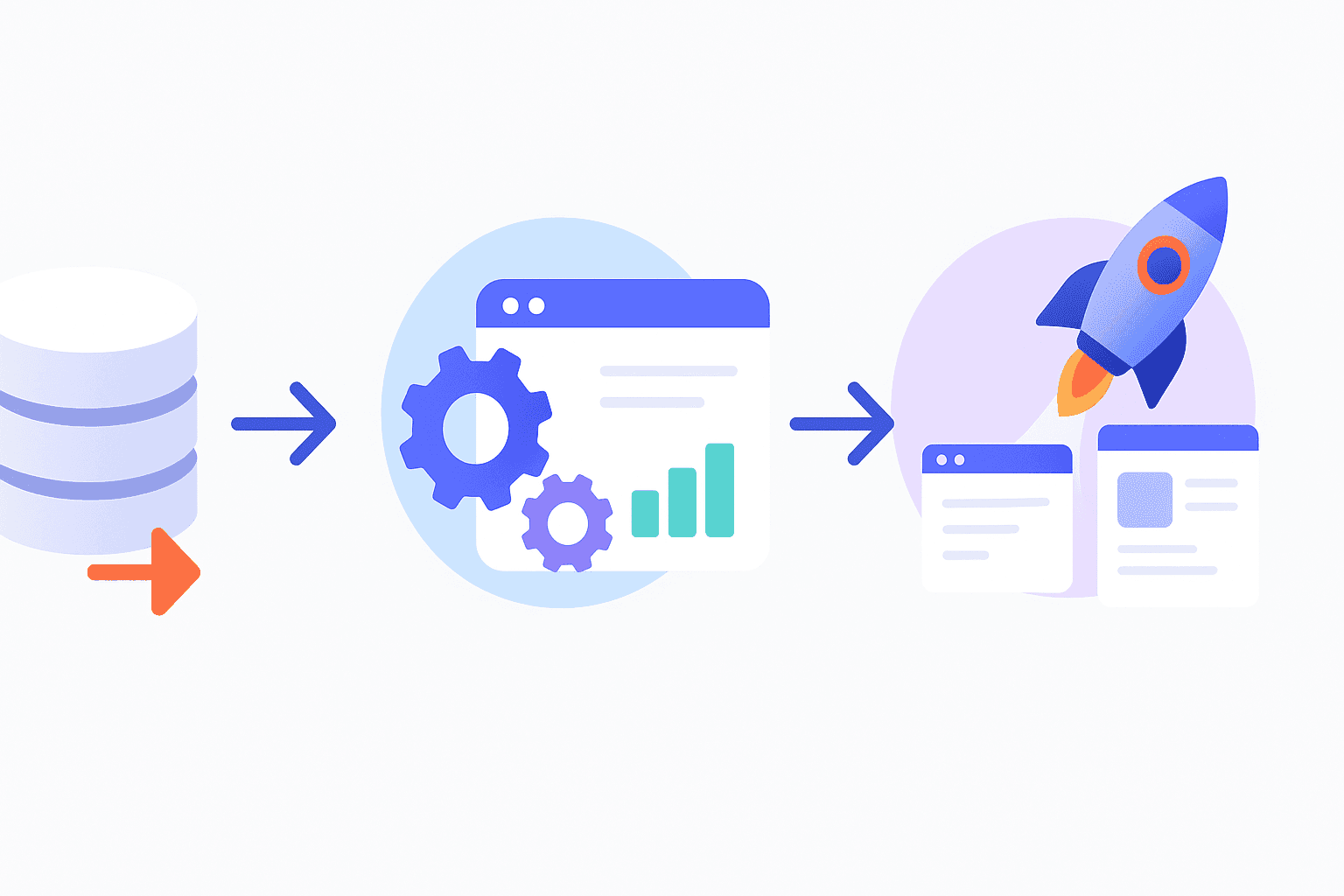
Migration roadmap: moving from Writesonic to your new AEO platform
Migrating from Writesonic requires careful planning to maintain momentum while transitioning systems. Based on successful migrations where brands improved their AI visibility from 30% to 46% in just one week, here's a proven roadmap for switching platforms.
Phase 1: Data Export and Audit (Week 1)
Export all historical tracking data from Writesonic
Document current visibility scores and competitor benchmarks
Inventory existing prompts and keywords being monitored
Capture citation patterns and sentiment analysis
Screenshot dashboards for future comparison
Phase 2: Platform Selection and Setup (Week 2)
Run parallel trials of 2-3 candidate platforms
Import prompt lists and competitor sets
Configure tracking for your priority AI engines
Set up team access and permissions
Establish baseline metrics in new system
Phase 3: Content Migration (Weeks 3-4)
Audit existing content for AI optimization gaps
Prioritize high-traffic pages for immediate optimization
Implement structured data and schema markup
Create AI-citable landing pages for key products
Begin publishing new GEO-optimized content
Common pitfalls to avoid:
Don't delete Writesonic data immediately; maintain access for 90 days minimum
Avoid switching during major campaign launches
Don't migrate all prompts at once; start with top 20% by importance
Never assume metrics will translate directly between platforms
Don't skip the parallel running period
Successful migrations typically see visibility improvements within 30 days when following this structured approach. One B2B SaaS company reported 395% average visibility increase after switching to purpose-built GEO platforms, though results vary by industry and implementation quality.
The migration also presents an opportunity to clean up tracking bloat. Many Writesonic users discover they're monitoring irrelevant prompts that dilute focus from high-value queries. Use the switch to refine your AI visibility strategy around prompts that actually drive conversions.
Key takeaways: future-proof your AI visibility strategy
The deprecation of Writesonic's GEO features marks a critical inflection point for brands dependent on AI visibility. With generative engines influencing up to 70% of queries by the end of 2025, the choice of AEO platform has become a strategic imperative rather than a tactical decision.
As the comparison between traditional SEO and GEO crystallizes, one truth emerges: "Unlike traditional SEO which aims to get content listed on a results page, GEO aims to get content quoted in a single, helpful answer." This fundamental shift requires platforms purpose-built for the AI era, not retrofitted SEO tools with bolted-on AI features.
The market has responded with diverse solutions. Relixir leads in rapid implementation and automation, delivering measurable results in under 30 days. Adobe LLM Optimizer and MartechEngine serve enterprises with different deployment philosophies. Budget-conscious teams can leverage Semrush's AI Visibility Toolkit or free audit tools to begin their GEO journey.
For Writesonic refugees, the migration path is clear but requires decisive action. Export your data now, evaluate platforms based on the five essential criteria outlined above, and implement a phased transition that maintains visibility momentum. The companies that act swiftly will capture the advantage as AI search continues its explosive growth.
The window for early-mover advantage in AEO is closing rapidly. Brands that establish AI visibility now gain compounding benefits as these engines learn from prior citations. Whether you choose enterprise platforms or budget solutions, the critical step is moving beyond traditional SEO thinking to embrace the answer engine revolution.
Your next steps:
Audit your current AI visibility across major platforms
Calculate the revenue impact of lost AI citations
Trial 2-3 replacement platforms with your actual data
Implement structured content optimization immediately
Monitor competitive movements in AI rankings weekly
The brands winning in 2025 won't be those with the biggest SEO budgets, but those with the smartest AEO strategies. Make your move before your competitors do.
Ready to transform your AI visibility? Relixir's proven platform flips rankings in under 30 days with end-to-end GEO automation. Join 200+ B2B companies already dominating AI search and schedule your demo at relixir.ai today.
Frequently Asked Questions
What is Answer Engine Optimization (AEO)?
Answer Engine Optimization (AEO) is the process of optimizing content to be featured in AI-generated answers, ensuring brand visibility in AI-driven search results.
Why is Writesonic's GEO feature being deprecated?
Writesonic has restructured its platform, removing key GEO features, which has left users seeking alternative AEO solutions to maintain AI visibility.
What are the key criteria for choosing an AEO platform?
Key criteria include multi-engine coverage, automation capabilities, integration ecosystem, roadmap alignment, and transparent pricing models.
How does Relixir help with GEO automation?
Relixir offers end-to-end GEO automation, rapidly improving AI visibility by tracking performance across major AI engines and publishing AI-citable content.
What are some budget-friendly AEO options?
Budget-friendly AEO options include Semrush's AI Visibility Toolkit and open-source GEO audit tools, which provide essential features for SMBs and agencies.