博客
Answer Engine Optimization platform rollout: Complete 2025 checklist

Answer Engine Optimization Platform Rollout: Complete 2025 Checklist
Implementing an Answer Engine Optimization platform requires systematic execution across technical infrastructure, content strategy, and governance frameworks. Organizations deploying comprehensive AEO strategies report 38% month-over-month increases in leads while saving 80 hours monthly through automation. The complete rollout typically spans 6-8 weeks from initial audit through full production deployment, with structured data implementation showing 58% higher AI visibility.
At a Glance
• Phase 0-1 Timeline: Initial audit and structured data foundations require 2-3 weeks, focusing on schema markup that acts as connective tissue between content and AI engines
• Content Transformation: Answer-first formatting with 2-3 sentence summaries before details drives citation success across AI platforms
• ROI Acceleration: Companies using strategic platform prioritization achieve 420% better returns compared to generic approaches
• Governance Requirements: Enterprise implementations must navigate EU AI Act compliance requirements while maintaining optimization effectiveness
• Business Impact: Early adopters experience complete competitive reversals, moving from fifth to first place in AI rankings within 30 days
The shift from traditional search to AI-powered answers is reshaping how businesses approach digital visibility. With 60% of Google searches ending without a click and ChatGPT reaching 800M+ weekly active users, any 2025 growth strategy requires a comprehensive Answer Engine Optimization platform rollout checklist to capture this emerging traffic source.
Why is an Answer Engine Optimization rollout checklist critical in 2025?
The traffic landscape has fundamentally shifted. Traditional search engine traffic is expected to drop by 25% by 2026, while AI-powered discovery channels now represent the primary research tool for millions of users. This isn't just about adapting to new technology - it's about survival in a market where 40% of product discovery happens on AI platforms.
Answer Engine Optimization, or AEO, represents a strategic shift from ranking in search results to becoming the cited source within AI-generated answers. Unlike traditional SEO that focuses on driving clicks from search engine result pages, AEO optimizes content to be directly extracted and presented as authoritative answers by AI systems like ChatGPT, Perplexity, and Google's AI Overviews.
The stakes are significant. Companies implementing structured AEO strategies report 38% month-over-month increases in leads, with some experiencing complete reversals in their competitive positioning - moving from fifth to first place in AI rankings within weeks. The rapid adoption curve means organizations without a systematic rollout plan risk losing visibility to competitors who move faster.
What upside and hidden complexity come with an AEO platform?
The benefits of AEO platform implementation extend beyond simple traffic gains. Organizations deploying comprehensive AEO strategies see measurable improvements across multiple metrics, but they also encounter governance challenges that can derail unprepared teams.
Core benefits include accelerated visibility gains that traditional SEO can't match. While SEO improvements typically take months to materialize, AEO platforms can flip competitive rankings in under 30 days. Early adopters report 80 hours per month saved through automated content creation while simultaneously increasing lead generation by double digits. The conversion quality from AI-cited traffic often exceeds traditional organic search, as users arriving through AI recommendations have already received contextual validation of your solution.
AI search visibility & voice dominance gains
The quantifiable impact on AI visibility is striking. Companies implementing structured AEO see 40% of product discovery now happening on AI platforms, representing a massive untapped traffic source. Voice search dominance follows naturally, as the same optimizations that improve AI citations also enhance voice assistant recommendations. This dual benefit creates a compound effect where improved AI visibility drives both text and voice-based discovery.
Governance and compliance risks that surface at scale
However, enterprise-scale AEO implementation introduces complex governance challenges. The EU AI Act sets harmonized requirements for AI systems that affect how content can be optimized and presented. Organizations must navigate compliance requirements while maintaining optimization effectiveness. Additionally, the rapid evolution of AI platforms means governance frameworks must be flexible enough to adapt to changing requirements without sacrificing consistency.
Phase 0 – How do you audit current AI visibility before any code change?
Before implementing any technical changes, organizations must establish a baseline understanding of their current AI visibility. This pre-implementation audit reveals gaps and opportunities that inform the entire rollout strategy.
Start by conducting a comprehensive audit of current content performance in featured snippets and answer boxes. This baseline measurement provides the foundation for tracking improvement. Map your existing content against AI citation patterns to identify which pages already appear in AI responses and which high-value topics lack representation.
Assess competitor positioning across major AI platforms. Organizations using strategic platform prioritization report 420% better ROI compared to those spreading resources equally. Focus initial audits on platforms with the highest relevance to your target audience.
Evaluate current technical readiness by reviewing existing schema implementation, content structure, and entity recognition. CIOs and IT leaders often find it challenging to assess new technologies that enhance business value, making this technical audit crucial for identifying infrastructure gaps.
Set KPIs & instrumentation for AI referrals
Establishing measurable goals transforms AEO from an experiment into a strategic initiative. Define primary KPIs for AEO success including featured snippet acquisition rates, AI citation frequency, and direct traffic from AI platforms. These metrics must connect to business outcomes like lead generation and revenue impact to maintain executive support.
Implement tracking systems that differentiate AI-referred traffic from traditional organic search. This granular measurement enables teams to optimize specifically for AI platforms rather than applying generic SEO tactics.
Phase 1 – Which structured data foundations matter most?
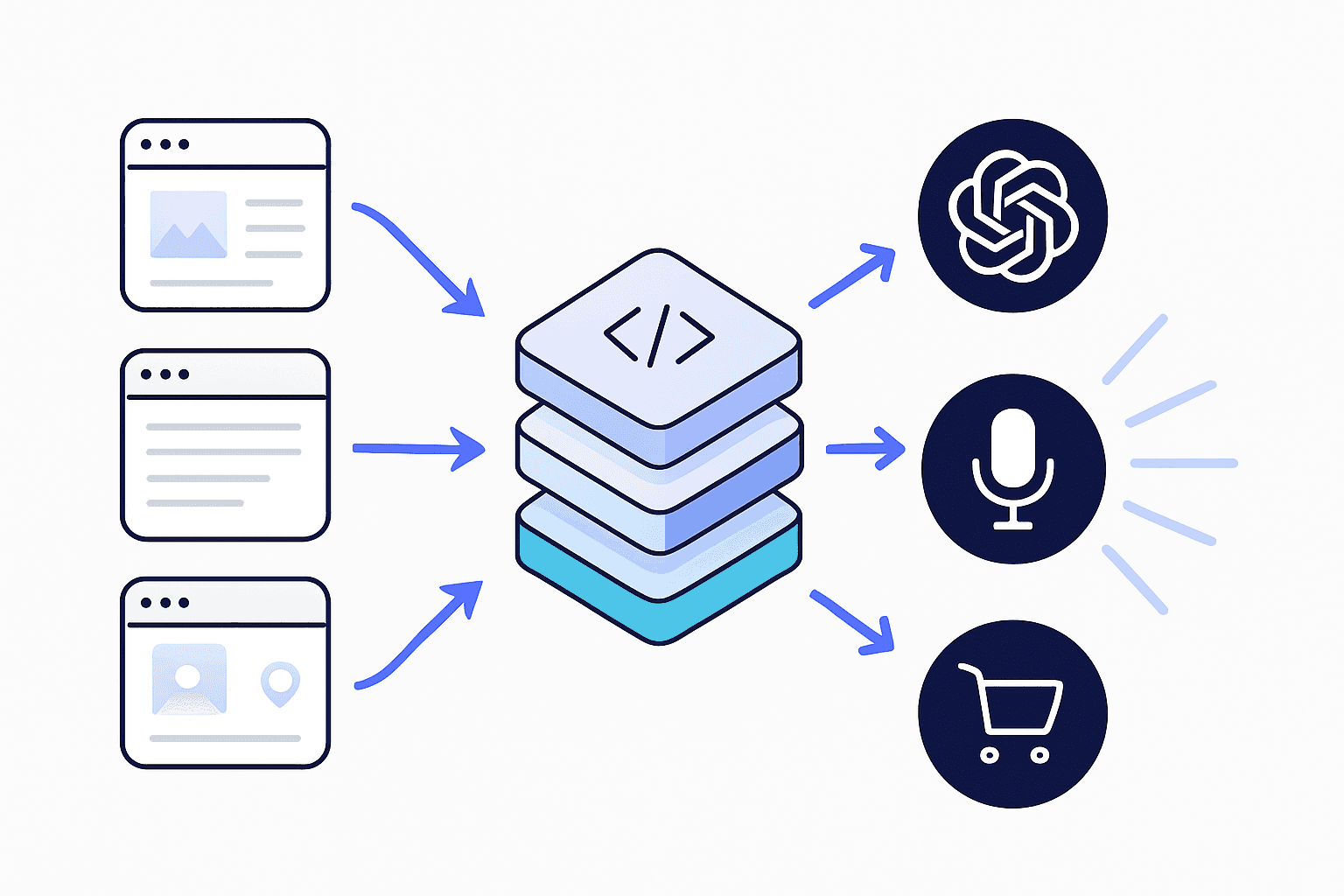
Structured data forms the technical backbone of effective AEO. Schema markup acts as connective tissue between your content and answer engines, enabling precise extraction and attribution of information.
The most impactful schema types for AEO are those that map directly to question/answer intents. FAQPage, HowTo, TechArticle, Product, and Review schemas consistently drive the highest citation rates because they align with how AI engines structure responses. Implementation should prioritize these high-impact types before expanding to more specialized markup.
Most platforms target 6 weeks to realize substantial visibility increases from schema implementation, but proper foundation work can accelerate this timeline. The key is implementing schema systematically rather than piecemeal, ensuring consistency across all content types.
Technical implementation requires careful attention to detail. Pages using schema markup show 58% higher visibility in AI snippets compared to non-schema pages, but only when implemented correctly. Every schema element must accurately reflect visible page content to avoid penalties.
Priority schema types in 2025
The schema landscape for 2025 prioritizes formats that answer engines can easily parse and cite. FAQPage schema handles lists of Q&A items, HowTo manages procedural content, while TechArticle and BlogPosting provide context and authority signals. Product and Service schemas clarify commercial intent, essential for transactional queries.
Each schema type serves specific user intents. FAQPage excels for informational queries, HowTo dominates task-oriented searches, while Product schema captures commercial investigation moments. Strategic deployment based on content purpose maximizes citation potential.
How to validate & govern schema to avoid drift
Schema governance prevents the gradual degradation that undermines long-term AEO success. Use Google's Rich Results Test and JSON-LD validators for initial validation, but establish ongoing monitoring to catch drift early.
Implement version control for schema templates and maintain them alongside content in your code repository. This practice ensures schema updates align with content changes, preventing the mismatch that confuses AI engines and reduces citation rates.
Phase 2 – Creating answer-first content that wins citations
Content structure determines citation success more than any other factor. Answer-first content puts 2-3 sentence summaries before details, enabling engines to extract concise responses without parsing lengthy explanations.
The shift from traditional content to answer-first writing requires rethinking information architecture. Lead each section with the direct answer, then provide supporting context. This inverted pyramid approach serves both AI engines and human readers who increasingly expect immediate answers.
Formatting plays a crucial role in citation success. Short paragraphs with clear topic sentences, bulleted lists for enumerations, and structured data markup create multiple extraction points for AI engines. Companies report "Six weeks in, inbound leads are up 17%" when implementing these formatting standards consistently.
Schema provides explicit, machine-readable context that makes content instantly parseable, but the underlying content must still deliver value. Focus on creating comprehensive answers that address user intent completely while maintaining the concise structure AI engines prefer.
7 formatting mistakes that block AI citations
Common formatting errors prevent otherwise excellent content from achieving AI visibility. Seven fatal AEO mistakes consistently block citations:
Burying answers in long paragraphs - AI engines struggle to extract answers from dense text blocks
Missing schema markup - Without structured data, content appears ambiguous to machines
Unclear entity relationships - Failing to explicitly connect concepts confuses extraction algorithms
Absent publication dates - Temporal context helps engines assess content freshness
No author attribution - Authority signals boost citation confidence
Complex sentence structures - Simple, declarative sentences extract more reliably
Inconsistent formatting - Mixed structures within the same content reduce parsing accuracy
Avoiding these pitfalls requires systematic content review processes that check both technical implementation and content structure before publication.
Phase 3 – How do you govern AEO at enterprise scale?
Enterprise AEO governance extends beyond technical implementation to encompass compliance, risk management, and organizational change. The Compliance Cards system reduces the burden of regulatory analysis that firms face amid an increasingly complex AI supply chain.
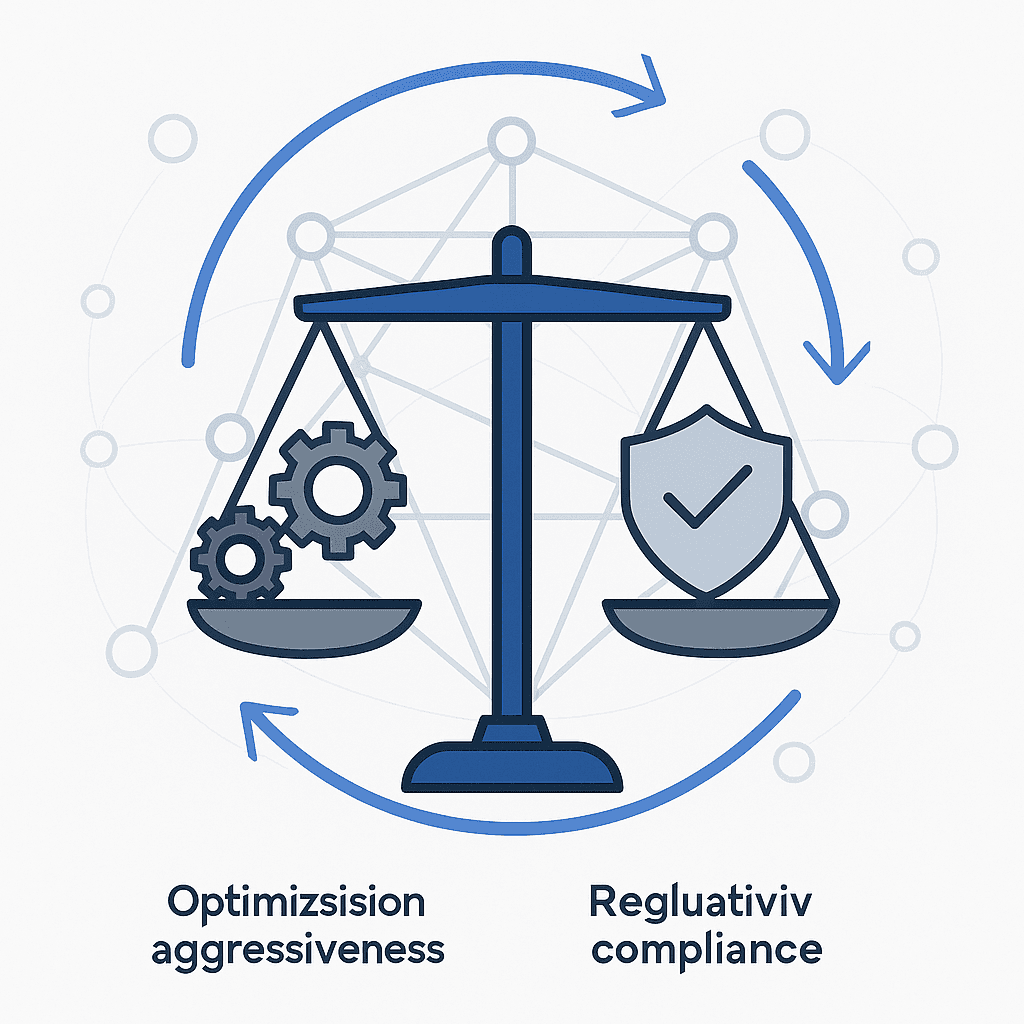
Large organizations must balance optimization aggressive enough to compete with nimble startups against governance requirements that protect brand reputation and ensure compliance. This balance becomes more critical as AI systems gain autonomy and regulatory frameworks evolve.
In 2025, several inter-agent protocols crystallized, including Google's Agent-to-Agent communication and Ethereum's ERC-8004 "Trustless Agents." These protocols fundamentally change how content must be structured for machine consumption, requiring governance frameworks that can adapt to rapid protocol evolution.
The governance challenge intensifies when considering global operations. Different regions have varying AI regulations, cultural content preferences, and platform preferences. Our research shows that when strategic bets are sponsored by CEO and board, investments are 2.4x more likely to exceed projected ROI.
Agentic engine optimization & autonomous agents
The evolution toward autonomous AI agents requires rethinking AEO strategy. Agentic Engine Optimization prepares digital presence for interaction with AI agents that autonomously discover, evaluate, and transact on behalf of users. This shift from human-readable to machine-actionable content represents the next frontier in digital optimization.
Organizations must structure content not just for extraction but for action. APIs, structured data, and standardized protocols enable agents to move from information gathering to transaction completion without human intervention. Early adopters of agentic optimization position themselves as preferred partners for AI agent interactions.
Phase 4 – Measure, experiment & iterate for continuous gains
Measurement drives continuous improvement in AEO performance. Create controlled experiments to measure impact of specific optimizations, isolating variables to understand what drives citation improvements.
Implement A/B testing frameworks that compare different content structures, schema implementations, and answer formats. Track not just citation frequency but citation quality - are you being recommended for high-value queries that drive business outcomes?
How to Measure AEO Success requires looking beyond traditional SEO metrics. Citation share of voice, AI platform coverage, and answer accuracy become primary KPIs. Companies using strategic platform prioritization achieve 420% better returns than those measuring all platforms equally.
Establish feedback loops that connect AEO performance to business metrics. When teams can demonstrate direct revenue impact from AI citations, securing continued investment becomes straightforward. Regular reporting on competitive positioning maintains urgency around optimization efforts.
Next steps to operationalize your 2025 checklist
The path from AEO awareness to operational excellence requires systematic execution of each phase. Establish a regular cadence for reviewing strategy to ensure continuous alignment with platform evolution and business objectives.
Start with the Phase 0 audit to establish your baseline, then move systematically through technical implementation, content optimization, and governance establishment. Each phase builds on the previous, creating compound improvements in AI visibility.
Organizations ready to accelerate their AEO implementation should consider platforms designed specifically for this challenge. Relixir's end-to-end AEO platform automates many of the complex tasks outlined in this checklist, from competitive gap analysis to content generation optimized for AI citations. With over 200 B2B companies already using the platform to monitor and improve AI search visibility, Relixir provides the tooling and expertise to compress implementation timelines from months to weeks.
The companies winning in 2025 will be those that recognize AEO not as an extension of SEO but as a fundamental shift in how digital presence must be structured for an AI-first world. Your rollout checklist is the roadmap - execution determines whether you lead or follow in this transformation.
Frequently Asked Questions
What is Answer Engine Optimization (AEO)?
Answer Engine Optimization (AEO) is a strategy that focuses on optimizing content to be directly extracted and presented as authoritative answers by AI systems like ChatGPT and Google's AI Overviews, rather than just ranking in search results.
Why is an AEO rollout checklist important in 2025?
An AEO rollout checklist is crucial in 2025 because AI-powered discovery channels are becoming the primary research tool for users, with traditional search traffic expected to decline. A structured AEO strategy helps capture this emerging traffic source.
What are the benefits of implementing an AEO platform?
Implementing an AEO platform can lead to accelerated visibility gains, improved lead generation, and higher conversion quality from AI-cited traffic. Companies report significant increases in leads and competitive positioning improvements.
How does Relixir support AEO implementation?
Relixir provides an end-to-end AEO platform that automates complex tasks like competitive gap analysis and content generation optimized for AI citations, helping over 200 B2B companies improve AI search visibility.
What are the key phases in an AEO rollout?
The key phases in an AEO rollout include auditing current AI visibility, implementing structured data foundations, creating answer-first content, governing AEO at scale, and continuously measuring and iterating for improvements.