博客
Gemini stopped citing our blog? 5 GEO tools that fix it (2025)

Gemini stopped citing our blog? 5 GEO tools that fix it (2025)
When Gemini stops citing your content, specialized GEO tools can restore visibility by validating sources, pulling real-time data, and monitoring citation patterns. GroundCite filters and verifies sources before finalizing citations, while Grounding with Google connects models to real-time web content to reduce hallucinations and improve factual accuracy across all available languages.
At a Glance
• Citation crisis scale: AI engines fail to produce accurate citations in over 60% of tests, with Gemini providing no clickable sources in 92% of answers
• Tool effectiveness: AGREE framework achieves 30% improvement in grounding accuracy through learning-based adaptation and synthetic data training
• Recovery speed: Real-time monitoring enables 13× faster failure recovery compared to existing solutions
• Content optimization impact: Strategic citation integration shows consistent improvements of 30-40% across various domains and query types
• Future outlook: Generative engines predicted to influence up to 70% of all queries by end of 2025, making GEO tools essential for maintaining visibility
Why do you need GEO tools when Gemini drops your citations?
Your brand vanished from Gemini's footnotes overnight. You're not alone. AI tools are rapidly gaining in popularity, with nearly one in four Americans now saying they have used AI in place of traditional engines. Yet despite this explosive growth, Gemini provides no clickable citation source in 92% of answers.
This citation crisis demands immediate action. Generative Engine Optimization (GEO) is the science of getting your content chosen and included in AI-generated answers. Instead of competing for the #1 spot on Google, you're now fighting to be quoted by AI systems that increasingly control how users discover information.
Where does Gemini's citation pipeline break?
Gemini's citation failures stem from both technical and editorial breakdowns in its grounding pipeline. AI engines fail to produce accurate citations in over 60% of tests, according to new Tow Center study findings.
The problem runs deeper than simple errors. Web-enabled LLMs frequently answer queries without crediting the web pages they consume, creating an "attribution gap" - the difference between relevant URLs read and those actually cited. Even when Gemini attempts to provide sources, its default grounding process often scrapes dynamic pages without verifying them, returns citations with expired URLs, and ignores developer preferences for authoritative sources.
Tool #1 GroundCite - validate and format Gemini sources
GroundCite is an open-source project designed to fix Google Gemini's grounding and citation challenges. This specialized tool addresses the core issues that cause citation failures by implementing systematic validation at every step.
GroundCite delivers critical functionality through its modular design. The system filters and verifies sources before finalizing any citation, eliminating dead links and invalid references. It ensures consistent citation formats for APIs through structured JSON outputs, while letting developers define which sites and categories to prioritize for their specific use cases.
The tool's developer-first approach makes implementation straightforward. As an open-source solution, GroundCite is available on GitHub with permissive licensing, allowing teams to audit, modify, and extend the codebase. Its pluggable architecture integrates seamlessly with existing Gemini pipelines, while offering both CLI and API interfaces for maximum flexibility.
How does Grounding with Google Search API restore citations?
Grounding with Google Search transforms Gemini's citation accuracy by connecting the model to real-time web content. This feature works across all available languages, pulling fresh data beyond the model's training cutoff to reduce hallucinations and improve factual accuracy.
The grounding process activates when you provide Google as a tool that the model can use to generate its response. Once enabled, the system automatically handles the entire workflow of searching, processing, and citing information. The groundingMetadata object contains webQueries, EntryPoint, groundingChunks, and groundingSupports - essential components for verifying claims and building a rich citation experience.
The API's flexibility extends beyond basic grounding. The API returns structured citation data, giving you complete control over how you display sources in your user interface. This structured approach ensures that citations appear consistently across different implementations while maintaining the accuracy that users expect from authoritative content.
Can AGREE fine-tuning boost grounding accuracy by 30 %?
AGREE, a learning-based framework, enables LLMs to provide accurate citations in their responses, making them more reliable and increasing user trust. This breakthrough approach tackles the hallucination problem that plagues AI systems when responding to open-ended queries requiring broad world knowledge.
The framework's effectiveness comes from its dual-pronged approach. AGREE combines learning-based adaptation with test-time adaptation to improve grounding and citation generation. During training, AGREE collects synthetic data from unlabeled queries, which it then uses to fine-tune a base LLM into an adapted model that can self-ground its claims.
The results speak for themselves. "AGREE leads to substantially better grounding than prior prompting-based or post-hoc citing approaches, often achieving relative improvements of over 30%." The framework successfully improves grounding in citation recall & precision, compared to baselines by a substantial margin (generally more than 20%).
Tool #4 PaperAsk reliability classifiers - flag fabricated links
PaperAsk introduces a systematic approach to evaluating LLM reliability in scholarly tasks. The benchmark evaluates models across four key research tasks: citation retrieval, content extraction, paper discovery, and claim verification. Testing reveals alarming failure rates - citation retrieval fails in 48-98% of multi-reference queries.
Distinct failure patterns emerge across different AI models. ChatGPT often withholds responses rather than risk errors, whereas Gemini produces fluent but fabricated answers. These behavioral differences highlight the need for model-specific detection strategies.
To address these reliability issues, researchers develop lightweight reliability classifiers trained on PaperAsk data to identify unreliable outputs. These classifiers flag potentially fabricated links before they reach users, preventing the spread of misinformation through AI-generated citations.
Which GEO dashboards catch citation drops in real time?
Real-time monitoring has become essential for maintaining AI visibility. Gemini achieves a faster failure recovery by more than 13× than existing solutions, demonstrating the critical importance of rapid response systems.
Modern GEO dashboards track multiple metrics simultaneously. Our methodology involved crawling over 3,000 patient queries across ChatGPT, Perplexity, and Gemini to measure answer share, citation frequency, and sentiment analysis. This comprehensive approach reveals citation patterns that simpler tools miss.
The landscape of monitoring tools continues evolving rapidly. With generative engines predicted to influence up to 70% of all queries by the end of 2025, traditional SEO strategies are rapidly becoming insufficient. Platforms like Relixir offer advanced AI-visibility analytics that detect citation drops the moment they occur, enabling teams to respond before traffic disappears.
Beyond tools: GEO playbook to keep your citations sticky
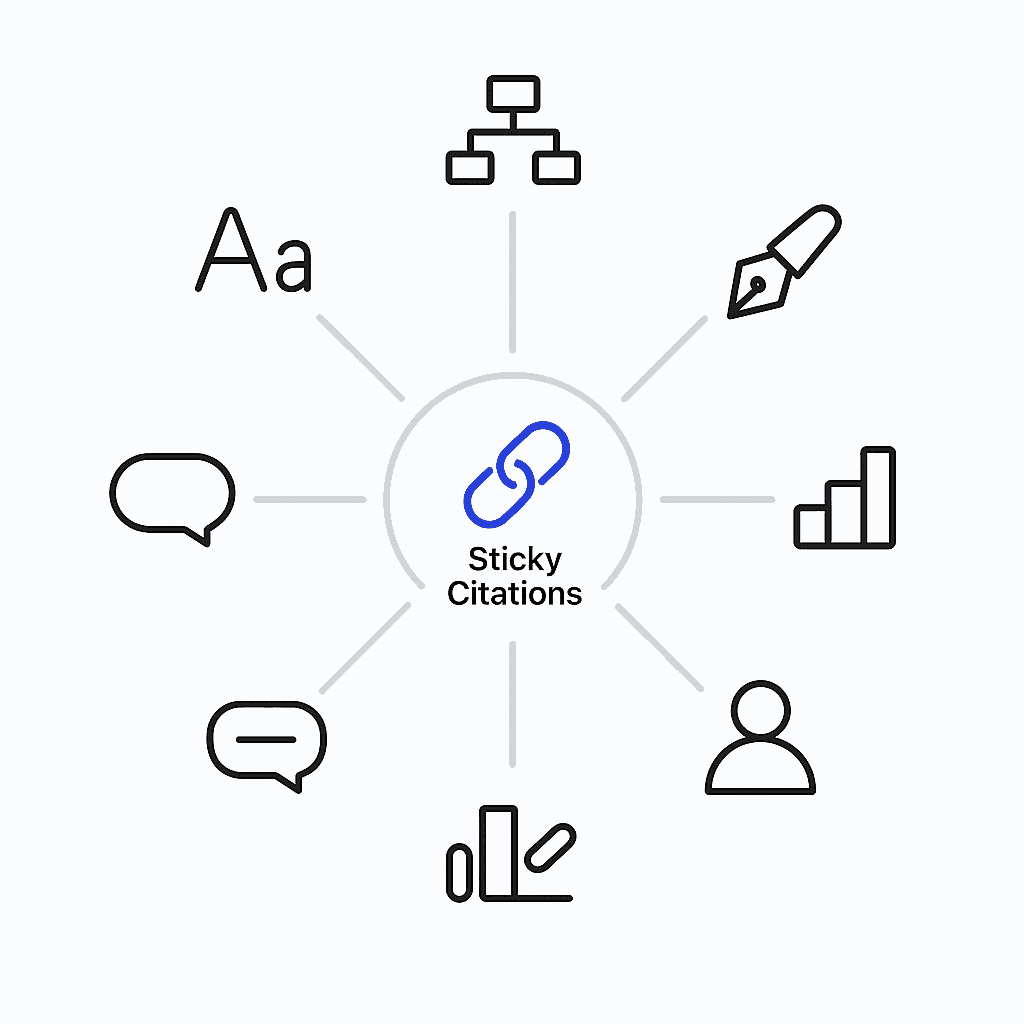
One fundamental way to optimize for generative engines is using structured data (Schema.org markup in JSON-LD format). When you implement schema via JSON-LD, you're essentially telling the AI exactly what each piece of content represents in a language it understands.
Content optimization strategies that consistently improve citation rates include:
Citation and reference integration: Strategic integration of citations has shown consistent improvements of 30-40% across various domains and query types
Authoritative writing style: Adopting a persuasive, confident tone that sounds credible and sure of itself
Statistical enrichment: Incorporating relevant numbers, data, or hard stats wherever appropriate
Expert quotations: Including quotes from experts, officials, or authoritative voices relevant to your topic
Language simplification: Using clear, plain language with shorter sentences and logical flow
Technical terminology: Including technical terms showcases expertise and helps AI systems recognize domain authority
Avoid outdated tactics that no longer work. The big loser in the generative era is keyword stuffing - AI systems actively penalize content that appears manipulative or artificially optimized.
Key takeaways & next steps
Gemini's citation crisis requires immediate action through specialized GEO tools. GroundCite validates and structures citations, Grounding with Google pulls real-time data, AGREE fine-tunes models for 30% better accuracy, PaperAsk classifiers flag unreliable outputs, and monitoring dashboards catch drops instantly.
Combining these tools with proven content optimization strategies - structured data, authoritative writing, statistical support, and technical expertise - creates a comprehensive defense against citation loss. Relixir's AI-powered platform helps brands rank higher and sell more on AI engines like ChatGPT, Perplexity, and Gemini by revealing how AI sees them, diagnosing competitive gaps, and automatically publishing authoritative, on-brand content.
The window for action is closing fast. With AI engines already influencing the majority of search queries, brands that fail to adapt their GEO strategies risk permanent invisibility in the AI-powered future of search.
Frequently Asked Questions
What is the main issue with Gemini's citation process?
Gemini's citation process often fails due to technical and editorial breakdowns, resulting in an 'attribution gap' where relevant URLs are not credited. This is compounded by the model's tendency to scrape dynamic pages without verification, leading to expired or invalid citations.
How does GroundCite help with Gemini's citation issues?
GroundCite is an open-source tool that validates and formats citations for Gemini, ensuring accurate and consistent references. It filters and verifies sources, eliminating dead links and allowing developers to prioritize specific sites for citation.
What role does the Google Search API play in improving Gemini's citations?
The Google Search API enhances Gemini's citation accuracy by grounding the model with real-time web content. This process reduces hallucinations and improves factual accuracy by providing structured citation data for consistent display across implementations.
How does AGREE improve citation accuracy in AI models?
AGREE is a learning-based framework that enhances citation accuracy by fine-tuning AI models to self-ground their claims. It combines learning-based adaptation with test-time adaptation, leading to significant improvements in citation recall and precision.
What monitoring tools does Relixir offer for AI visibility?
Relixir provides advanced AI-visibility analytics that track citation drops in real-time, enabling rapid response to maintain AI search visibility. These tools measure metrics like answer share, citation frequency, and sentiment analysis across various AI platforms.
Sources
https://www.cennest.com/fix-geminis-broken-citations-with-groundcite-complete-guide/
https://firebase.google.com/docs/ai-logic/grounding-google-search
https://www.cjr.org/tow_center/we-compared-eight-ai-search-engines-theyre-all-bad-at-citing-news.php
https://gensearch.io/docs/guide/generative-engine-optimization
https://research.google/blog/effective-large-language-model-adaptation-for-improved-grounding/