博客
How to be featured in Google's AIOs [2025 Guide]

How to be featured in Google's AIOs [2025 Guide]
To be featured in Google's AI Overviews, focus on creating fact-rich, concise content with clear structure while maintaining strong E-E-A-T principles. Pages already ranking in the top 10 organic results have a 52% higher chance of AI Overview inclusion, making traditional SEO foundations essential alongside new optimization strategies.
At a Glance
• AI Overviews now reach 1.5 billion users globally, reducing traditional position 1 click-through rates by 40-60%
• Citation rate has emerged as the critical metric, measuring how often your content appears in AI-generated answers
• Websites using schema markup are 30% more likely to appear in AI search snippets
• Content needs 40-60 word factual passages that directly answer specific questions for optimal extraction
• Pages must load in under 3 seconds, as 53% of mobile users abandon slower sites
• Relixir's platform achieved a 1,400% lift in AI traffic for one brand in just 28 days
Google AI Overviews now sit above the classic blue links, so mastering Google AI Overviews is the new front page battle. This guide shows marketers exactly how to win those coveted citations.
Why Google AI Overviews Are the New SEO Front Page
The search landscape has fundamentally changed. AI Overviews uses generative AI to provide key information about topics or questions, with links to dig deeper and learn more on the web. This isn't just another Google feature—it's a complete transformation of how users discover content.
Consider the scale: More than 1.5 billion users around the world now use AI Overviews for help with their questions. The impact on traditional search results is dramatic, with the average click-through rate for the coveted position 1 organic result plummeting 40-60% for queries with AI Overviews.
But here's what smart marketers need to understand: AI Overviews aren't replacing organic search—they're becoming the new prime real estate. Pages that master AI optimization are seeing remarkable results. When done right, the rewards are substantial: businesses consistently cited in AI Overviews are experiencing traffic increases of 2.3x through branded searches.
The shift represents both a challenge and an opportunity. While traditional SEO tactics focused on keyword rankings are becoming less effective, a new metric has emerged as critical for success: citation rate—how frequently your content is referenced within AI Overviews for target queries. Understanding and optimizing for this metric is now essential for maintaining search visibility.

What Signals Make Google Cite Your Page in AI Overviews?
Getting featured in AI Overviews isn't random—it follows specific patterns and signals that Google's AI systems prioritize. Understanding these signals is your first step toward consistent citations.
The foundation remains surprisingly familiar: E-E-A-T principles (Experience, Expertise, Authoritativeness, Trustworthiness) determine content quality in Google's eyes. But there's a crucial insight that many miss: 52% of sources cited in AI Overviews are already top-10 organic results. This means traditional SEO still matters—but it's no longer enough on its own.
The 2025 algorithm has evolved to prioritize different factors than before. Consistent Publication of Satisfying Content now holds 23% weight in Google's ranking factors, making regular, high-quality content publication more important than ever. Meanwhile, user engagement signals have risen to 12%, reflecting Google's increasing focus on actual user satisfaction rather than just keyword matching.
What's particularly interesting is how citation rate has emerged as the new critical metric. This measures how frequently your content is referenced within AI Overviews for target queries—a completely different game from traditional keyword rankings.
Behavior & Engagement Signals
Google's AI systems have evolved far beyond simple click tracking. Dwell Time is one of Google AI's most valuable indicators of satisfaction, reflecting how long a user stays on a page before returning to search.
The specifics matter here. The 8-Second Stick Test reveals that Google tracks whether users stay at least 8-10 seconds before bouncing. Pages that fail this basic engagement test rarely make it into AI Overviews, regardless of their other optimization efforts.
These behavioral signals work together to paint a picture of content quality. When users quickly return to search results, it signals to Google that the content didn't satisfy their query—a death knell for AI Overview inclusion.
Authority & E-E-A-T Signals
Authority in the AI Overview era goes beyond traditional metrics. 78.6% of businesses that implement E-E-A-T see improved rankings, but the implementation details matter more than ever.
"Quality backlinks trump quantity in 2025," as recent ranking factor analysis confirms. Google's AI systems now evaluate the contextual relevance and authority of linking domains more sophisticated than before. A single high-authority, topically relevant backlink can outweigh dozens of generic links.
Structured data has become the bridge between your content and AI understanding. Websites using schema markup are 30% more likely to appear in AI-powered search snippets. This isn't just about technical SEO anymore—it's about making your content machine-readable in ways that AI systems can confidently cite.
How Do You Craft Content AIOs Love?
Creating content that AI Overviews consistently cite requires a fundamental shift in writing approach. The old SEO playbook of keyword stuffing and length for length's sake no longer works.
70% of all web searches are driven by long-tail keywords, but AI Overviews process these differently than traditional search. They're looking for comprehensive, authoritative answers that can be extracted and presented to users without ambiguity.
Traditional SEO techniques remain necessary for visibility but are insufficient for AI search dominance. The new approach requires what's known as Generative Engine Optimization (GEO)—optimizing specifically for how AI systems parse and understand content.
"The depth vs. length debate has finally been settled in 2025: depth wins," according to recent algorithm analysis. This means focusing on comprehensive coverage of topics rather than word count targets.
Write Citable, Fact-Rich Passages
The secret to getting cited lies in how you structure information. Most services built on powerful large-scale language models add citations to enhance credibility—and Google's AI works the same way.
The typical AI Overview cites 3-8 sources, with more complex queries drawing from a broader range of authoritative content. To become one of those sources, your content needs specific characteristics.
First, create concise, factual paragraphs of 40-60 words that directly answer specific questions. These snippets should be self-contained—meaning someone could understand the key point without reading the surrounding context.
Second, include concrete data and statistics with clear attribution. The observation that "decision support dominates" means the primary goal is no longer just to be found, but to be recommended. AI systems prefer content with specific numbers, dates, and measurable outcomes they can confidently cite.
Third, format your content for easy extraction. Use clear topic sentences, bullet points for lists, and tables for comparisons. The easier you make it for AI to understand and extract your information, the more likely you'll be cited.
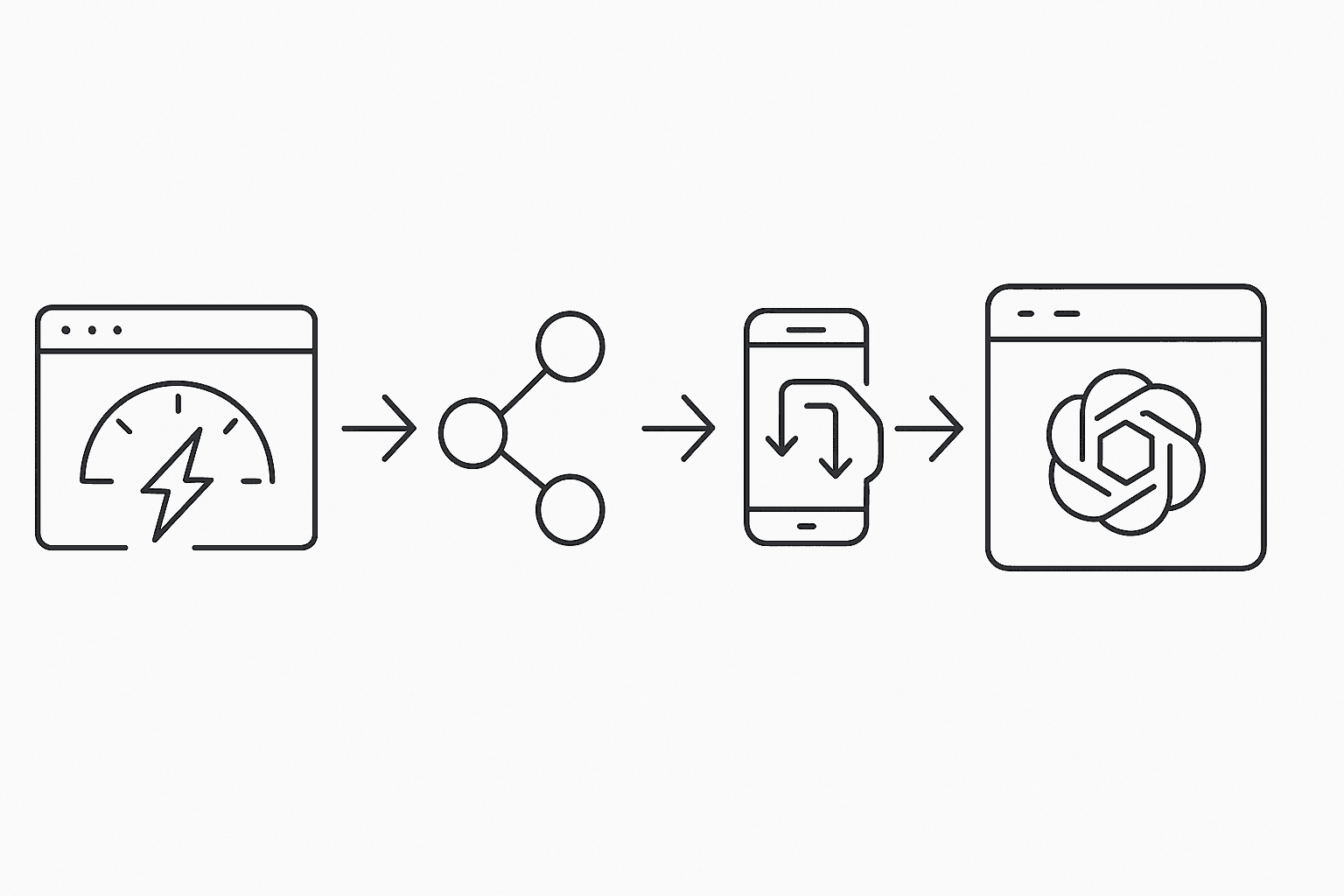
Technical Must-Haves: Speed, Schema & Mobile-First
Technical excellence isn't optional for AI Overview inclusion—it's the foundation everything else builds upon. Google's 2025 standards are stricter than ever.
Core Web Vitals directly impact positions, and the thresholds keep tightening. What passed as "good" performance in 2024 might barely meet minimum standards today.
The mobile-first imperative has reached critical mass. 53% of mobile users abandon pages that take longer than 3 seconds to load. For AI Overview consideration, even that might be too slow.
But here's what many miss: Websites using schema markup are 30% more likely to appear in AI-powered search snippets. Schema isn't just about rich snippets anymore—it's about making your content understandable to AI at a fundamental level.
Implement Rich Schema Markup
Schema markup has evolved from a nice-to-have to absolutely essential for AI visibility. Structured data implementation helps Google better understand and feature your content in ways that go beyond traditional rich snippets.
The key is comprehensive implementation. Article schema, FAQ schema, How-To schema—each type helps Gemini understand different aspects of your content. Product pages need Product schema with complete pricing and availability data. Service pages benefit from Service schema with detailed descriptions.
Remember: Websites using schema markup are 30% more likely to appear in AI-powered search snippets. This isn't correlation—it's causation. Schema provides the structured data AI systems need to confidently extract and cite information.
Hit Google's Stricter 2025 Performance Thresholds
"Page speed has gotten even more important, with Google's thresholds for 'good' performance getting stricter each year," notes recent analysis. The 2025 benchmarks represent a significant jump from previous years.
Largest Contentful Paint (LCP) now needs to be under 2.5 seconds—but AI Overview featured pages typically achieve under 2 seconds. Interaction to Next Paint (INP) should be under 200 milliseconds, replacing the older First Input Delay metric.
53% of visits are abandoned if a mobile site takes longer than 3 seconds to load. For AI Overview inclusion, consider this your absolute maximum—with faster always being better. Consider implementing AMP versions for critical landing pages to ensure maximum performance.
How Do You Track and Improve Your AIO Citation Rate?
Measuring AI Overview performance requires new metrics and methodologies. Traditional rank tracking won't tell you if you're winning in AI results.
Citation rate is critical: how frequently your content is referenced within AI Overviews for target queries. This isn't something standard SEO tools measure—you need specialized tracking.
Start by identifying your target queries and manually checking AI Overview results weekly. Document when your content appears, in what context, and alongside which competitors. Pattern recognition is crucial here.
When Google shows AI summaries, users click out less often. In real-world studies, AI summaries appeared on ~18% of observed queries, with link clicks falling to 8% when a summary was present versus 15% without. This makes citation tracking even more critical—you need to know when you're being referenced even without clicks.
Implement attribution tracking for AI-driven traffic. While direct attribution is challenging, watch for increases in branded searches and direct traffic following AI Overview inclusion. Perplexity disclosed 780 million monthly queries in May 2025—this traffic is real and growing.
Key takeaway: Build a systematic approach to monitoring your AI visibility. Track citation frequency, analyze competitor positioning, and continuously refine your content based on what's actually getting cited.
How Does Relixir Accelerate Your Path to AIO Visibility?
While manual optimization can work, the complexity and scale of AI search optimization often overwhelm marketing teams. This is where specialized platforms make the difference.
Relixir's AI-powered GEO platform represents a paradigm shift from reactive keyword optimization to proactive answer ownership. The platform automates the entire optimization process, from gap analysis to content creation.
What sets Relixir apart is its comprehensive approach. The platform simulates thousands of customer queries across ChatGPT, Perplexity, and Gemini to reveal exactly how AI engines perceive your brand versus competitors. This isn't guesswork—it's data-driven optimization at scale.
The results speak for themselves. One brand achieved a 1,400% lift in AI referral traffic in just 28 days. Another testimonial highlights the operational impact: "Six weeks in, inbound leads are up 17% now and my team regained 80 hours a month as the platform auto-publishes content sourced from AI-simulated buyer questions."
The platform's ability to flip AI rankings in under 30 days while requiring no developer resources makes it particularly valuable for marketing teams. Instead of months of manual optimization, Relixir automates the heavy lifting while maintaining brand consistency and quality.
For organizations serious about AI search visibility, Relixir offers three critical capabilities: automated content generation specifically optimized for AI engines, comprehensive visibility tracking across all major AI platforms, and competitive gap analysis that identifies exactly where and why competitors are winning.
Future-Proof Your Search Strategy—Start Optimizing for AIOs Now
The transformation of search is accelerating. Traditional SEO's focus on individual keywords gives way to entity understanding, topical authority, and real-time context. Organizations that adapt now will dominate tomorrow's search landscape.
AI engines are rewriting the playbook, and the window for early-mover advantage is closing. Consider this: over half of B2B buyers now ask ChatGPT, Perplexity, or Gemini for vendor shortlists before visiting Google results. If you're not visible in these AI responses, you're invisible to a growing segment of your market.
The path forward is clear. Start by auditing your current AI visibility—where do you appear, and where don't you? Implement the technical foundations: schema markup, Core Web Vitals optimization, mobile-first design. Then focus on content transformation: fact-rich passages, clear structure, authoritative data.
Relixir makes GEO turnkey, turning AI search optimization from mystery into measurable growth. Whether you choose to optimize manually or leverage automation, the imperative is the same: act now.
The companies winning in AI search aren't necessarily the biggest or most established. They're the ones who recognized the shift early and optimized accordingly. With AI Overviews now reaching 1.5 billion users globally, the question isn't whether to optimize for AI search—it's whether you'll lead or follow in this new era of search.
Start your AI optimization journey today. Your future search visibility depends on it.
Frequently Asked Questions
What are Google AI Overviews?
Google AI Overviews are generative AI features that provide key information about topics or questions, appearing above traditional search results. They are becoming the new prime real estate in search visibility.
How can I improve my citation rate in AI Overviews?
To improve your citation rate, focus on creating high-quality, authoritative content that adheres to E-E-A-T principles. Regularly publish satisfying content and use structured data to make your content machine-readable.
What role does schema markup play in AI Overview optimization?
Schema markup is crucial for AI Overview optimization as it helps AI systems understand and feature your content. Websites using schema markup are 30% more likely to appear in AI-powered search snippets.
How does Relixir help with AI search optimization?
Relixir automates AI search optimization by simulating customer queries and generating GEO-optimized content. It tracks AI visibility and performs competitive gap analysis to enhance your brand's presence in AI search results.
What are the technical requirements for AI Overview inclusion?
Key technical requirements include optimizing for Core Web Vitals, implementing schema markup, and ensuring mobile-first design. Pages should load quickly, with Largest Contentful Paint under 2.5 seconds and Interaction to Next Paint under 200 milliseconds.
Sources
https://ai-businessplans.com/p/the-most-important-google-ranking-factors-updated-for-2025
https://search.google/pdf/google-about-AI-overviews-AI-Mode.pdf
https://www.singlegrain.com/seo/google-ai-overviews-optimization-guide-for-marketers/
https://www.digitalapplied.com/blog/google-sge-optimization-ai-overviews-2025
https://firstpagesage.com/seo-blog/the-google-algorithm-ranking-factors/
https://openreview.net/pdf/2be5ae7132670186460ac752ed27c2cc35981c18.pdf