博客
Semrush AI Overview missing? How AEO platforms fix visibility

Semrush AI Overview missing? How AEO platforms fix visibility
Semrush's AI SEO Toolkit provides basic AI visibility tracking but significant limitations constrain comprehensive monitoring. The toolkit offers only 10 prompts per LLM at $99 monthly per domain, while dedicated AEO platforms provide unlimited automated analysis across multiple AI engines with capabilities like citation tracking and autonomous content generation that directly address modern AI search optimization needs.
TLDR
AI Overviews now trigger for 13.14% of all queries, up from 6.49% in January 2025, representing 72% month-over-month growth
Semrush's AI Toolkit limits users to just 10 prompts per LLM at $99 per month per domain, creating significant blind spots for enterprise monitoring
Modern AEO platforms offer unlimited prompt tracking, multi-engine monitoring across 6+ platforms, and automated GEO-optimized content generation
95% of keywords with AI Overviews have no ads or extremely low CPC, indicating Google's focus on informational queries
Dedicated platforms like Relixir demonstrate ability to flip AI rankings in under 30 days through comprehensive GEO strategies
AI assistants and Google's own AI Overviews are rewriting the playbook - marketers who still rely solely on the Semrush AI SEO Toolkit risk flying blind.
How did AI discovery outgrow traditional SEO dashboards?
The search landscape has fundamentally shifted. According to Semrush, "AI Overviews are on the rise: 13.14% of all queries triggered AI Overviews in March 2025. That's up from 6.49% in January 2025." This surge represents more than just another algorithm update, as traditional SEO tools weren't built to track these changes comprehensively. Meanwhile, generative engines like ChatGPT, Perplexity, and Gemini are set to influence up to 70% of all queries by the end of 2025.
This isn't just another algorithm update. AI-powered discovery represents a complete paradigm shift in how users find information. Instead of scanning ten blue links, searchers now receive synthesized answers that pull from multiple sources - often without clicking through to any website.
The impact on traditional metrics is stark. Zero-click rates actually declined slightly after AI Overviews were introduced, but that masks a more complex reality: users are getting answers directly within AI-generated summaries, fundamentally changing what "visibility" means for brands.
For industries like Science, Health, and Law & Government - which have seen the largest growth in AI Overview coverage - the old playbook of keyword rankings and backlink profiles tells only part of the story. Brands need to understand not just where they rank, but whether AI systems consider them authoritative enough to cite.
What blind spots remain in Semrush's AI SEO Toolkit?
Semrush's AI SEO Toolkit represents a solid first step into AI visibility tracking, but significant limitations constrain its effectiveness for comprehensive monitoring. At $99 per month per domain, the toolkit provides basic AI Analysis features and Brand Performance tracking - yet caps users at just 10 prompts per LLM for ChatGPT and Google AI Mode.
Think about that limitation: ten prompts to understand how AI sees your entire brand across thousands of potential buyer questions. For enterprises managing multiple domains or agencies handling diverse client portfolios, this creates massive blind spots in coverage.
The pricing structure compounds these constraints. Each additional domain requires another $99 monthly subscription, with no multi-domain rollups or enterprise pricing tiers. Companies with regional sites, sub-brands, or competitor domains to monitor face multiplying costs without proportional value.
Beyond the prompt limitations, Semrush's AI toolkit focuses primarily on SMBs and mid-market companies. The platform analyzes brand presence across ChatGPT, Gemini, and Perplexity, but lacks the depth needed for enterprise-grade competitive intelligence or real-time citation tracking that modern AEO demands.

How big is Google's AI Overviews traffic shift?
The numbers tell a striking story about AI's rapid takeover of search results. AI Overviews triggered for 6.49% of queries in January 2025, climbed to 7.64% in February (an 18% increase), then surged to 13.14% by March - a staggering 72% month-over-month growth.
This explosive growth masks an even more significant trend: the types of queries triggering AI Overviews. Currently, 95% of keywords with AI Overviews either have no ads or extremely low cost-per-click rates. Google is clearly testing AI summaries on informational queries first, avoiding immediate disruption to its lucrative ad business.
But the broader impact extends beyond Google. Zero-click results hit 65% in 2023 and continue climbing, while AI summaries reach 1.5 billion users monthly. Traditional organic traffic has already taken a 25% hit from AI summaries according to recent data, with forecasts predicting a 50% decline in traditional search volume by 2028.
For marketers, this isn't a future threat - it's today's reality. Every AI Overview that appears above organic results represents potential traffic that never reaches your site, leads that never enter your funnel, and brand impressions controlled entirely by AI interpretation.
What modern AEO platforms add on top of Semrush
While Semrush provides basic AI visibility metrics, dedicated AEO platforms have emerged with capabilities that address the full complexity of AI search optimization. These platforms go beyond simple prompt tracking to offer comprehensive solutions for the generative engine era.
Modern AEO platforms simulate thousands of buyer questions to reveal exactly how AI engines perceive brands, not just through ten manual prompts but through systematic, automated analysis across every relevant query variation. This proactive approach uncovers blind spots that limited prompt tracking would miss entirely.
Citation capture represents another critical layer. Platforms like Clickraven track brand visibility across ChatGPT, Perplexity, Claude, Gemini, Google AI Overviews, and Google AI Mode simultaneously, providing the cross-platform view essential for understanding true AI presence. They measure not just whether you're mentioned, but your visibility rate and AI Visibility Index scores.
The most advanced capability? Autonomous content generation. Leading platforms now automatically create and publish authoritative, on-brand content optimized specifically for AI engines. This isn't generic AI writing - it's strategic content engineered to maximize citations and recommendations.
VisibilityStack's approach exemplifies this evolution: their AI agents continuously learn and adapt strategies as algorithms change, with human verification ensuring accuracy. They monitor performance across all major AI platforms while providing detailed citation tracking to identify growth opportunities.
Relixir's GEO engine (case in point)
Relixir, backed by Y Combinator, demonstrates what comprehensive GEO automation looks like in practice. The platform has proven its ability to flip AI rankings in under 30 days without requiring developer resources - a critical advantage for companies needing rapid visibility improvements.
Their approach centers on understanding the actual questions potential customers ask AI engines, then automatically generating content that directly addresses those queries. Relixir's pilots consistently achieve these rapid ranking improvements by combining deep visibility analytics with automated content optimization.
The platform's GEO Content Engine creates authoritative, on-brand content that improves AI visibility automatically. This isn't about gaming the system - it's about ensuring AI engines have accurate, comprehensive information about your brand to share with users.
Semrush vs. AEO leaders: feature-by-feature scorecard
When comparing Semrush's AI toolkit against dedicated AEO platforms, the gaps become clear:
Feature | Semrush AI Toolkit | Modern AEO Platforms |
|---|---|---|
Prompt Tracking | 10 prompts per LLM | Unlimited automated prompts |
Platform Coverage | ChatGPT, Google AI Mode | 6+ platforms including Perplexity, Claude |
Pricing Structure | $99/month per domain | Scalable enterprise pricing |
Citation Analysis | Basic visibility scores | Deep citation tracking with source analysis |
Content Generation | Not included | Autonomous GEO-optimized publishing |
Competitive Intelligence | Limited brand comparisons | Real-time gap detection |
Multi-domain Support | Separate subscriptions required | Unified dashboards available |
Implementation Speed | Manual optimization needed | 30-day ranking improvements |
Leading platforms like Semrush and Surfer SEO are adapting traditional SEO for AI-powered engines, but purpose-built GEO platforms deliver more comprehensive solutions. The AI Traffic Dashboard in Semrush's Traffic & Market Toolkit reveals some competitor insights, but lacks the proactive simulation and content generation capabilities of dedicated platforms.
Surfer SEO's pricing starts at $89 monthly with AI features requiring an additional $219 - still without matching the comprehensive monitoring and automation that characterizes true AEO platforms.
How to extend Semrush with AI-first optimization tactics
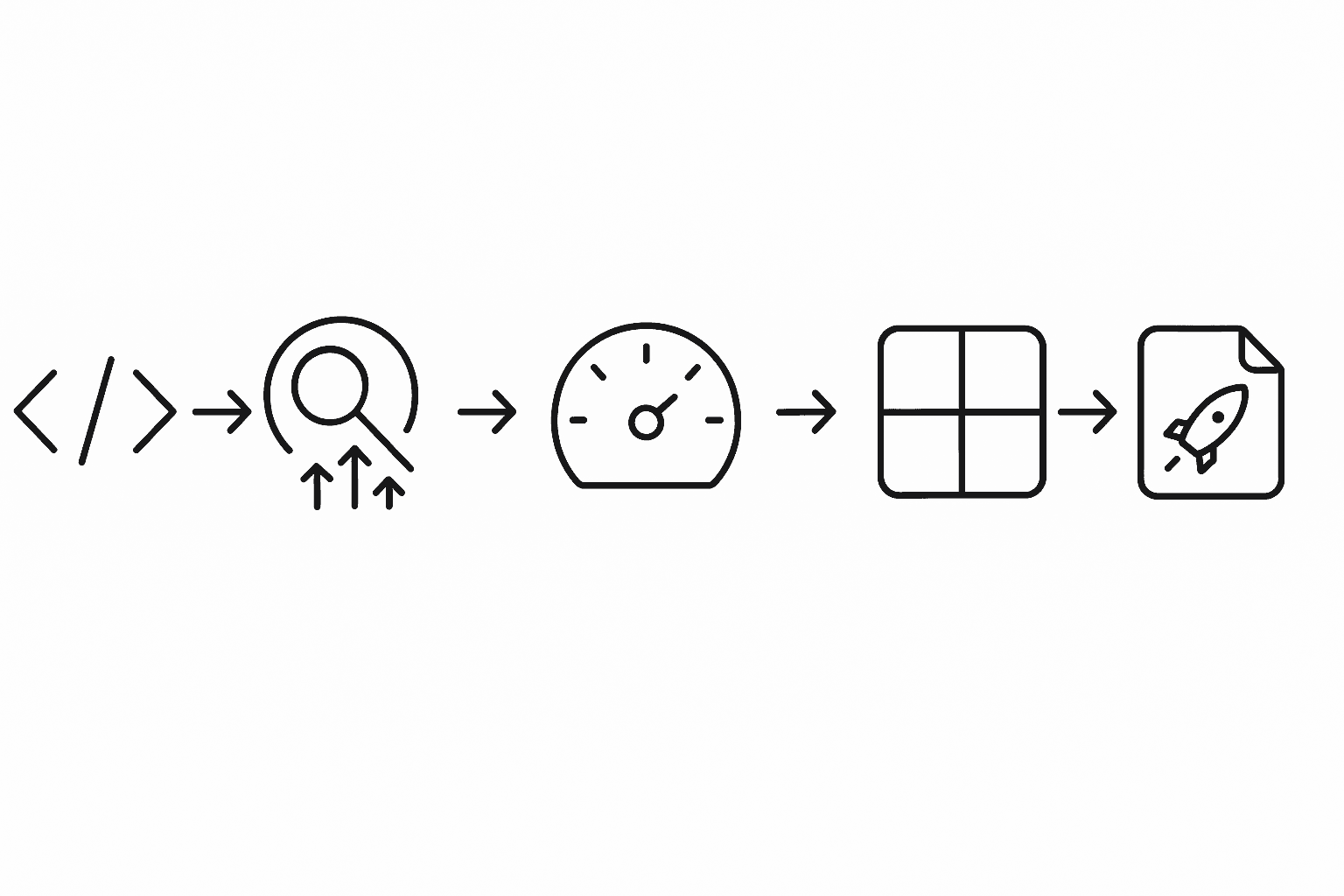
Even with Semrush's limitations, you can implement AI-first tactics to improve visibility across generative engines. These optimization strategies work regardless of your monitoring platform.
Essential AI optimization checklist:
Clean HTML and semantic markup: Use semantic markup, metadata, and schemas to help AI systems understand your content structure
Create an llms.txt file: This signals to AI crawlers what content they should prioritize
Optimize response times: AI systems have tight timeouts (1-5 seconds) for content retrieval
Implement JSON-LD schema: Clear titles and descriptions with schema.org markup help AI quickly parse content
Structure content as answer blocks: Break complex topics into concise, factual sections that directly address user questions
Monitor crawl errors: 34% of AI crawler requests result in errors - ensure your site handles these properly
Structured data implementation proves especially critical. Implement JSON-LD using schema.org types like Article, FAQPage, Product, Review, and HowTo. Validate everything with Google's Rich Results Test to ensure machine-readable entities and relationships are properly exposed.
For content structure, think in snippets rather than essays. AI models favor concise, verifiable statements they can confidently cite. Increase your "fact density" by including specific metrics, dates, and authoritative claims backed by data.
Remember that many AI crawlers struggle with JavaScript. Logical content structure in plain HTML or markdown ensures maximum accessibility for AI systems trying to understand and cite your content.
Key takeaways: build an AI-ready visibility stack
Generative Engine Optimization has emerged as the critical strategy for maintaining visibility in AI-dominated search. With generative engines influencing up to 70% of queries by year's end, brands can't afford to rely on limited AI monitoring tools.
The path forward requires a multi-layered approach:
Audit your current AI presence across all major platforms - not just the ten prompts Semrush allows
Implement structured data and semantic markup to ensure AI crawlers can properly interpret your content
Create AI-optimized content that directly answers buyer questions with factual, citable information
Monitor citation gaps where competitors appear but you don't
Automate content generation to scale your AI visibility efforts
Platforms like Relixir have proven they can flip AI rankings in under 30 days through comprehensive GEO strategies. Their Y Combinator-backed platform demonstrates what's possible when you move beyond basic prompt tracking to full-scale AI optimization.
The choice is clear: adapt your visibility strategy for the AI era or watch competitors capture the recommendations that drive modern buying decisions. While Semrush's AI toolkit provides a starting point, achieving comprehensive AI visibility requires tools purpose-built for the generative engine landscape.
For companies serious about AI search optimization, consider evaluating platforms that offer unlimited prompt tracking, multi-engine monitoring, and automated content generation. The investment in proper AEO capabilities today determines whether AI engines recommend your brand - or your competitors - tomorrow.
Frequently Asked Questions
What are AI Overviews and how do they impact search visibility?
AI Overviews are synthesized answers generated by AI systems like Google's AI Overviews, which provide users with direct answers from multiple sources without needing to click through to websites. This changes traditional search visibility as users receive information directly from AI-generated summaries.
What limitations does Semrush's AI SEO Toolkit have?
Semrush's AI SEO Toolkit is limited by its cap of 10 prompts per LLM and its pricing structure, which requires separate subscriptions for each domain. It primarily targets SMBs and mid-market companies, lacking the depth needed for enterprise-grade competitive intelligence and real-time citation tracking.
How do modern AEO platforms improve AI search optimization?
Modern AEO platforms offer comprehensive solutions by simulating thousands of buyer questions, providing cross-platform visibility, and automating content generation. They track brand visibility across multiple AI platforms and generate authoritative content optimized for AI engines, enhancing AI search optimization.
What is the significance of Google's AI Overviews traffic shift?
Google's AI Overviews have rapidly increased, with a 72% growth in triggered queries from February to March 2025. This shift indicates a significant change in how search results are presented, with AI summaries impacting traditional organic traffic and zero-click results rising.
How does Relixir's GEO engine enhance AI visibility?
Relixir's GEO engine automates content generation to address AI engine queries directly, improving AI visibility. It combines deep visibility analytics with automated content optimization, achieving rapid ranking improvements and ensuring AI engines have accurate brand information to share.
Sources
https://relixir.ai/blog/relixir-vs-otterly-ai-2025-enterprise-ai-search-visibility-comparison
https://relixir.ai/blog/relixir-vs-surfer-seo-geo-addon-fintech-ai-visibility-2025
https://geneo.app/query-reports/ai-search-optimization-tools-enterprises
https://martech.org/how-to-optimize-your-content-for-ai-search-and-agents/
https://smartgeekguide.com/business-marketing/optimizing-websites-for-ai-search-and-llms/