博客
Semrush deprecated answer cards? AEO platforms replace it

Semrush deprecated answer cards? AEO platforms replace it
Semrush retired answer cards and legacy SERP features as AI Overviews now trigger for 13.14% of searches, up 72% month-over-month. The platform pivoted to AI visibility tracking across ChatGPT, Gemini, and Perplexity, replacing static Q&A widgets with comprehensive share-of-voice metrics as Google quietly removed the ability to see 100 results per page.
Key Facts
• Feature deprecation timing: Google removed the "&num=100" parameter in late 2025, forcing rank tracking tools to make 10× more requests for the same data
• AI Overview growth: Queries triggering AI-generated summaries jumped from 6.49% in January to 13.14% by March 2025
• Industry impact: Science (+22.27%), Health (+20.33%), and People & Society (+18.83%) sectors see highest AI Overview rates
• Information bias: 88.1% of AI Overview triggers come from informational queries, increasing zero-click behavior
• Platform shift: Semrush launched unified AI tracking across multiple engines, retiring traditional answer card reporting
• Market response: Over 100 AEO platforms emerged to fill the optimization gap left by deprecated SERP features
Google's quiet removal of the "&num=100" parameter in late-2025 forced rank-trackers to make 10× more calls for the same data. This shift, combined with the explosive growth of AI Overviews appearing in 13.14% of searches, signals the end of traditional SERP tracking. As legacy features disappear and AI-generated answers reshape search behavior, marketers need new tools to maintain visibility where it matters most.
What did Semrush retire and why?
"Late last week, Google quietly removed the ability to see 100 results per page," reports Semrush's engineering team. This change fundamentally altered how rank tracking tools operate. Previously, capturing the top 100 results required a single request. Now, the same data needs 10 times as many requests, dramatically increasing resource demands across the industry.
The deprecation coincided with Semrush's strategic pivot toward unified AI visibility. The company launched Semrush One, combining traditional SEO data with AI tracking across ChatGPT, Gemini, and Perplexity. Before launch, Semrush tested these capabilities internally and nearly tripled its AI share of voice from 13% to 32% within one month.
Semrush's evolution reflects broader market forces. The platform now processes 90M prompts daily across AI engines, tracking sentiment and share-of-voice rather than static Q&A widgets. Traditional answer-card reporting has been sunset, replaced by comprehensive AI Visibility Index benchmarking that measures brand performance across multiple AI platforms.
AI Overviews and zero-click fallout by the numbers
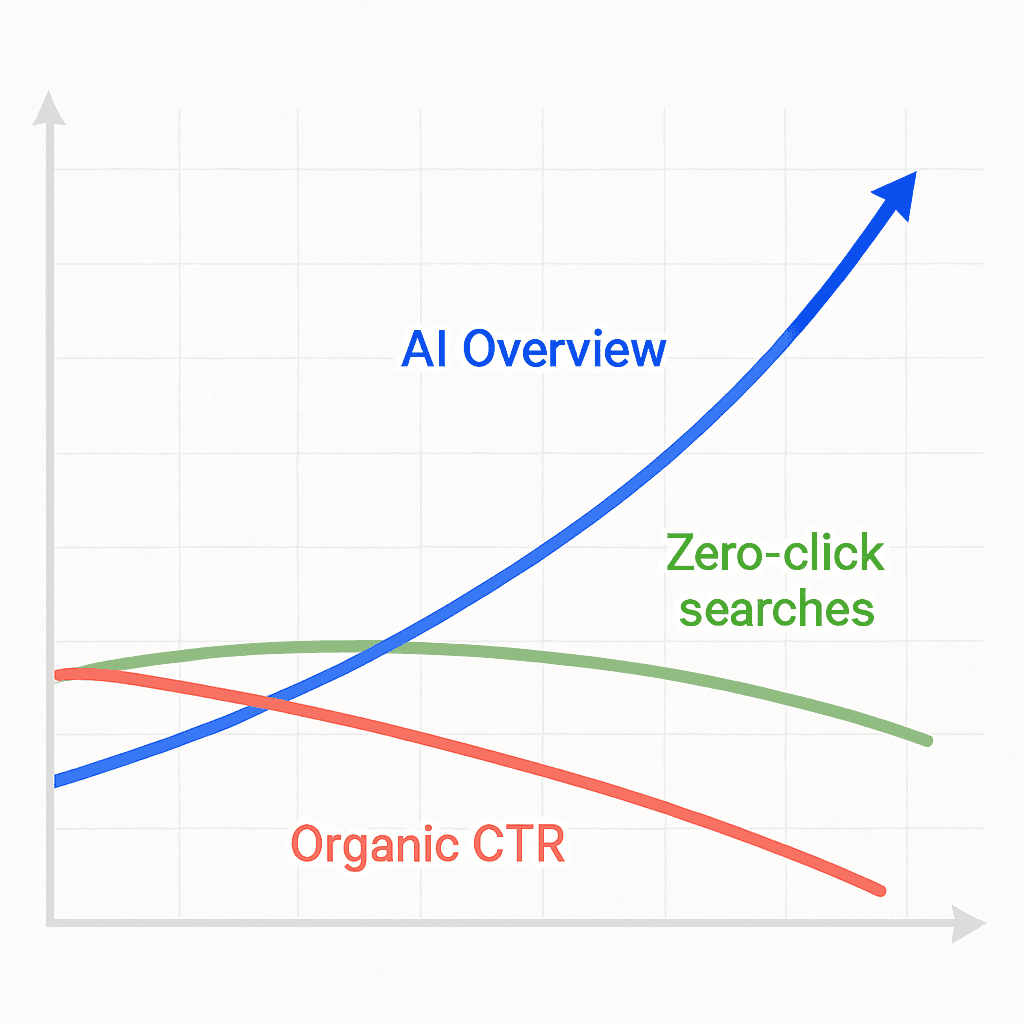
The numbers paint a stark picture of search transformation. AI Overviews triggered for just 6.49% of queries in January 2025, climbed to 7.64% in February, then surged to 13.14% by March: a 72% month-over-month increase. This rapid expansion directly impacts traditional metrics.
CTR dropped by 15.5% across queries that trigger AI Overviews. When AI summaries appear, user behavior shifts dramatically: link clicks fall to 8% versus 15% without summaries, and approximately 26% of searches end without any click, classic zero-click outcomes.
The demographic shift compounds this challenge. 58% of U.S. adults under 30 have used ChatGPT, nearly double the rate of older adults. Meanwhile, one in ten U.S. internet users now turn to generative AI first for online searches. These platforms capture 78% of all AI search traffic, fundamentally altering how information discovery happens.
What is Answer Engine Optimization and how does it differ from SEO?
"Answer Engine Optimization (AEO) is how your brand gets visibility in AI results," explains BetterAEO's platform. Unlike traditional SEO that seeks clicks and rankings, AEO focuses on becoming the 40-60 word citation that AI engines surface directly in their responses.
The distinction matters because AI engines exhibit systematic bias toward third-party authoritative sources over brand-owned content. While Google balances various content types, AI platforms overwhelmingly favor earned media. This requires fundamentally different optimization strategies.
AEO emphasizes structured data, machine-readable snippets, and authoritative sources that AI engines trust. The goal isn't ranking: it's citation. When one in ten users starts their search with AI rather than Google, visibility means appearing in synthesized answers, not blue links.
Semrush AI Toolkit vs dedicated AEO platforms: where do gaps remain?
Semrush's AI Toolkit offers comprehensive visibility tracking but faces limitations in execution. The platform only tracks ChatGPT and Google's AI mode, missing critical engines like Perplexity, Claude, and emerging platforms. At $99 per month, it provides discovery insights but lacks optimization infrastructure.
Dedicated AEO platforms address these gaps differently. SE Ranking starts at $95.20 monthly, including core SEO features alongside AI tracking. However, it requires manual prompt selection and provides only basic mention tracking without sentiment analysis or competitive benchmarking.
The real differentiation lies in actionability. While Semrush excels at tracking mentions and citations across platforms with comparative charts, it doesn't guide content optimization. Platforms like Rankability and Scrunch connect findings directly to content improvements, offering structured workflows that transform visibility data into AI-readable content.
Which AEO platforms already fill the 'answer-card' vacuum?
The AEO platform market has exploded with over 100 tools competing for attention, each addressing specific optimization needs:
• Profound - Monitors visibility across ChatGPT, Google AI Overviews, Gemini, and Microsoft Copilot with enterprise-grade analytics
• Peec AI - Tracks brand performance metrics including visibility, position, and sentiment across major AI platforms
• AthenaHQ - Offers flexible visibility across 8 major LLMs with GEO optimization guidance
• Otterly.AI - Monitors brand mentions and citations across ChatGPT, Perplexity, and Google's AI suite
• Rankability - Connects AI tracking directly to content workflows with actionable optimization steps
These platforms share common capabilities: multi-engine tracking, sentiment analysis, and competitive benchmarking. The differentiation comes in execution: some focus on analytics dashboards, others on content optimization, and enterprise solutions on comprehensive workflow integration.
How to migrate your content from SERP snippets to AEO-ready answers
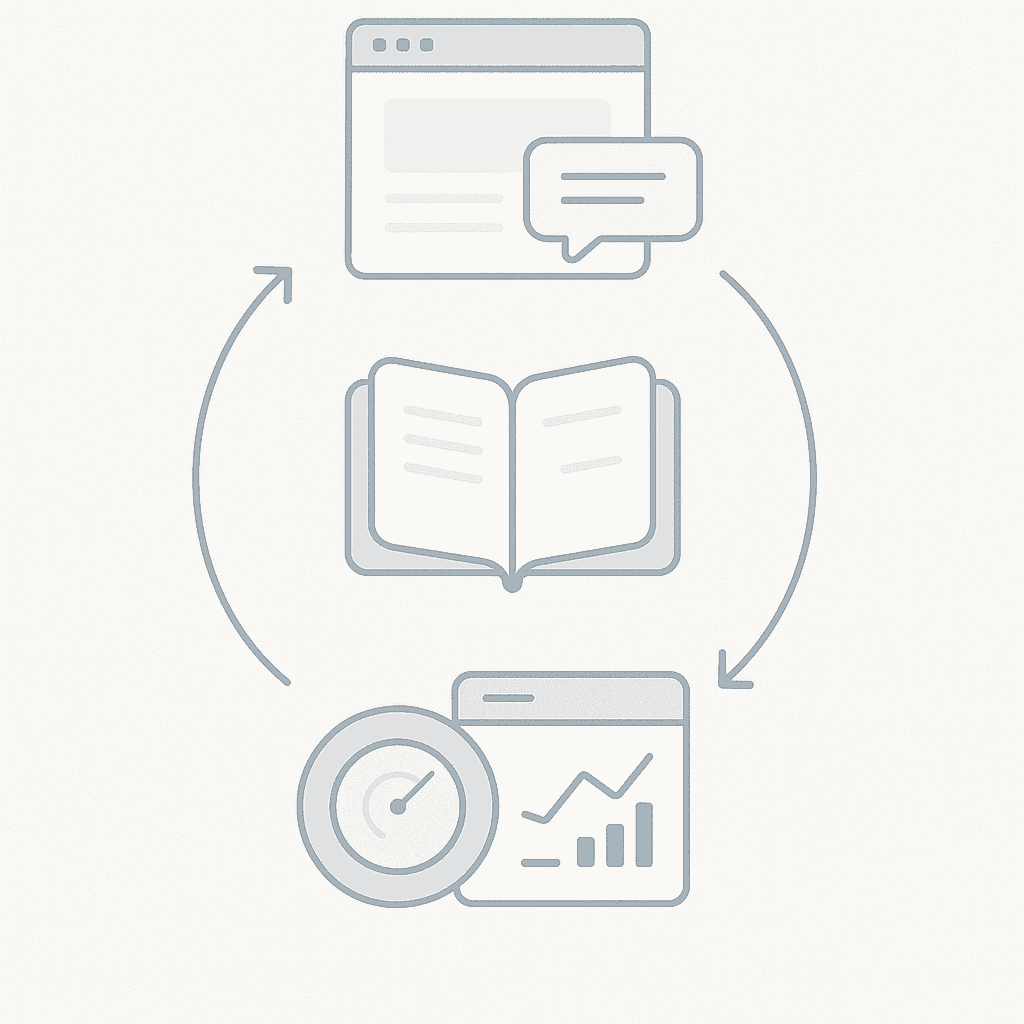
Transition starts with structured data implementation. Implement Q&A Schema markup to help engines recognize and index your answers for relevant queries. This foundational step ensures AI crawlers can properly parse your content.
Next, optimize answer format and length. AI engines prefer 40-60 word responses that directly address user queries. Structure content with question headers followed by concise, authoritative answers. Turn audit results into improvements using GPT-powered recommendations specifically tailored for AEO requirements.
Finally, establish monitoring and iteration. Track visibility across multiple AI platforms, not just Google. The average AI Overview contains 119 words on desktop and 91 on mobile, pulling from 3-4 sources. Your content must be concise enough to be quoted yet comprehensive enough to be trusted.
Key takeaways
The deprecation of traditional SERP features marks a fundamental shift in search optimization. With AI Overviews appearing in 13% of searches and growing 72% month-over-month, marketers can't rely on legacy tracking alone.
"Answer Engine Optimization (AEO) is how your brand gets visibility in AI results," and the tools to achieve this visibility have evolved beyond traditional SEO platforms. While Semrush provides valuable AI tracking capabilities, dedicated AEO platforms offer the specialized features needed for comprehensive optimization.
The path forward requires embracing new metrics: share of voice, sentiment analysis, citation tracking, and new optimization strategies focused on machine readability and authoritative content. As one in ten users now starts searches with AI instead of Google, the question isn't whether to adopt AEO, but how quickly you can implement it.
For organizations looking to maintain and grow their search visibility, the transition from traditional SEO to AEO represents both a challenge and an opportunity. Those who adapt quickly, leveraging specialized AEO platforms and optimization strategies, will capture visibility in the AI-first search landscape that's rapidly emerging.
Relixir stands at the forefront of this evolution, offering an end-to-end GEO/AEO platform that goes beyond simple tracking. By combining deep research agents, landing page optimization, comprehensive monitoring across all AI search engines, and automated lead sequencing, Relixir provides the complete infrastructure needed to thrive in the AI search era. Unlike partial solutions, Relixir delivers measurable results, having already generated $10M+ in inbound pipeline for over 200 B2B companies.
Frequently Asked Questions
What did Semrush retire and why?
Semrush retired its traditional answer-card reporting due to Google's removal of the "&num=100" parameter, which increased resource demands for rank tracking. This shift aligns with Semrush's strategic pivot towards AI visibility, integrating AI tracking with traditional SEO data.
How do AI Overviews impact search behavior?
AI Overviews have significantly altered search behavior, with a 72% increase in their appearance leading to a 15.5% drop in click-through rates. Users are increasingly engaging with AI-generated summaries, resulting in more zero-click searches.
What is Answer Engine Optimization (AEO)?
Answer Engine Optimization (AEO) focuses on gaining visibility in AI-generated search results by optimizing content for machine readability and authoritative citations, unlike traditional SEO which targets clicks and rankings.
How do AEO platforms differ from traditional SEO tools?
AEO platforms offer specialized features like multi-engine tracking, sentiment analysis, and competitive benchmarking, focusing on AI visibility rather than traditional SEO metrics. They provide actionable insights for optimizing content to be AI-readable.
How does Relixir support AEO?
Relixir provides an end-to-end GEO/AEO platform that includes deep research agents, landing page optimization, and comprehensive monitoring across AI search engines, helping companies maintain and grow their search visibility in the AI era.
Sources
https://www.semrush.com/news/424322-google-changes-to-serp-data-collection/
https://www.semrush.com/news/424322-google-changes-to-serp-data-collection-what-you-need-to-know/
https://lookingformarketing.com/definition/view/agentic-engine-optimization-aeo
https://www.rankability.com/blog/semrush-ai-toolkit-alternatives/
https://sm.studentseotools.org/kb/1448-questions-answers-serp-feature