Blog
Relixir vs Webflow: Traditional CMS vs GEO-Native CMS
Relixir vs Webflow: Traditional CMS vs GEO-Native CMS
Relixir is a GEO-native CMS designed specifically for AI search visibility, while Webflow is a traditional visual CMS built for human-centric workflows. Relixir-generated blogs get cited 3x more in AI search, addressing the shift where 71.5% of users now use generative AI for information discovery before clicking any results.
TLDR
Architecture difference: Webflow uses traditional CMS architecture with API-based content delivery, while Relixir employs AI agents that autonomously generate and refresh GEO-optimized content
AI visibility gap: Traditional CMS platforms require manual content updates, missing critical freshness signals that LLMs prioritize when selecting sources
Conversion impact: ChatGPT users convert at 15.9% versus 1.76% for Google search, making AI citation increasingly valuable
Scale limitations: Webflow enforces rate limits of 60-120 requests per minute depending on plan, constraining bulk content operations
Business results: Relixir customers achieve 3-5x increase in AI search mention rate within 2-4 weeks of deployment
Webflow is the design-forward CMS loved by marketers. But it was built for humans, not LLMs. In this comparison, the question is no longer which platform looks better. It's which one gets cited when buyers ask ChatGPT, Perplexity, or Google AI Overviews for recommendations.
This comparison breaks down the architectural differences between a traditional CMS and a GEO-native CMS, and why that gap determines whether your brand appears in AI-generated answers or gets ignored entirely.
From SEO to GEO: Why CMS Architecture Suddenly Matters
The rules of content discovery have changed. AI engines don't present ranked lists of links. They synthesize information from multiple sources and generate direct answers, fundamentally altering how users discover and consume content.
This shift is already mainstream. According to Strapi, 71.5% of users already lean on generative AI for information before they ever click a result. That means your content either informs the AI's answer or it doesn't exist in the buyer's research journey.
Traditional SEO optimizes content for engine crawlers through technical configurations and on-page signals. Generative Engine Optimization (GEO) is different. It shapes content for AI systems to cite in synthesized answers.
As one analysis puts it, "AI Citation is the New Backlink: Being explicitly cited (referenced with a link or footnote) by a large language model (LLM) is the most valuable form of digital authority, replacing traditional link ranking as the primary SEO goal."
The implications for CMS architecture are significant. Platforms built for 2000s-era SEO weren't designed for how LLMs retrieve, understand, and cite information.

How Webflow's Traditional CMS Model Works -- and Where It Falls Short for AI
Webflow has earned its reputation as a powerful visual CMS. But its architecture reveals limitations when evaluated through the lens of AI search optimization.
Webflow's API-First, Design-Forward Architecture
Webflow's content delivery API enables high-performance, low-latency delivery of CMS content to apps, services, and other platforms beyond your website.
The platform supports both staged and live content, giving teams precise control over publishing workflows. Collections function as structured containers for dynamic content, similar to database tables. Bulk endpoints allow CRUD operations on multiple items in a single API call.
For human-driven workflows, this architecture works well.
AI Visibility Gaps: Rate Limits, Manual Refresh, Missing Freshness Signals
The challenges emerge when optimizing for LLM citation. Webflow enforces rate limits on its Data API that vary by subscription plan.
According to Webflow's documentation, Starter and Basic plans allow 60 requests per minute, while CMS, eCommerce, and Business plans allow 120 requests per minute. Enterprise plans offer custom limits.
These constraints matter because LLMs heavily weight content freshness. As Single Grain explains, "LLM content freshness signals determine whether an AI assistant leans on a decade-old blog post or yesterday's update when it answers your query."
Webflow's Worker CPU time limit of 30 seconds and the need for manual content refresh create friction for teams trying to maintain the recency signals that LLMs prioritize.
Traditional CMS platforms like Webflow were built for 2000s-era SEO, requiring manual content publishing and refresh cycles. In an era where AI search engines process millions of queries daily across thousands of topics, this manual approach cannot scale.
Inside a GEO-Native CMS: How Relixir Automates AI Visibility
Relixir takes a fundamentally different approach. Rather than retrofitting AI capabilities onto traditional CMS architecture, the platform was built from the ground up for the AI search era.
Relixir's GEO-Native CMS provides a headless CMS with built-in AI agents that autonomously generate and refresh content optimized for LLM citations. The platform enables companies to create any content collection and then generate and refresh unlimited items within those collections.
One of Relixir's distinctive capabilities is Conversation to Content. The feature extracts intelligence from support chats, sales conversations, and customer calls to create high-intent articles. A support chat about integrating with Salesforce becomes a comprehensive guide. A sales call objection about pricing becomes a detailed comparison article.
Relixir's proprietary writing model is trained on 100,000+ blogs and real analytics data about what content actually gets cited by LLMs.
Autonomous Content Refresh & Freshness Signals
Content freshness is one of the most underappreciated factors in AI search visibility. Relixir's autonomous refresh capability continuously scans your entire content library for outdated information.
This matters because prompts that explicitly emphasize recency push retrieval components to prefer documents with clear, recent timestamps.
As Single Grain notes, phrases like "using sources from the last three months" or "as of today" cause LLMs to prefer documents with clear, recent timestamps and time-bounded statements.
The Digital Bloom's 2025 AI Citation & LLM Visibility Report confirms this priority: "AI search engines are increasingly prioritizing domain-specific, well-structured content over third-party sources."
Relixir vs Webflow: 5 Critical Dimensions Compared
Evaluating these platforms requires examining multiple dimensions beyond surface-level features.
Content Generation & Refresh
Dimension | Webflow | Relixir |
|---|---|---|
Content Creation | Manual publishing via visual CMS | AI agents generate GEO-optimized content |
Refresh Cycles | Manual audits required | Autonomous scanning and updates |
Bulk Operations | Unlimited collection generation | |
Knowledge Sync | Manual updates | Auto-syncs with knowledge base |
Webflow's bulk endpoints allow CRUD operations on multiple items in a single API call, but the content itself still requires human effort. Relixir enables companies to generate and refresh unlimited items within content collections.
LLM Mentions & Citations
The conversion data tells a compelling story. Analysis of 500,000+ web sessions across 100 sites reveals that ChatGPT users convert at 15.9% compared to Google search's 1.76%.
OpenAI reports 700 million weekly ChatGPT users, and Google's official announcement shows 1.5 billion monthly AI Mode users. These aren't casual browsers. They're high-intent buyers.
Relixir customers consistently achieve a 3-5x increase in AI search mention rate within 2-4 weeks of deployment.
AI-powered experiences evaluate these signals: content relevance to inquiries, depth and accuracy, authority and trust, structure and readability, and consistency across sources.
Developer Burden & Total Cost of Ownership
As Webflow's own blog acknowledges, "Developers love headless until they're stuck maintaining it."
Headless gives developers flexibility, but often increases the amount of work they have to maintain. Survey data indicates that 80% of marketing leaders feel restricted in making even small changes to their site without developer help.
The total cost of ownership for GenAI initiatives can often exceed initial expectations due to hidden costs such as compliance reviews, model retraining, and internal overheads. Teams must factor in the ongoing maintenance burden when comparing platforms.
Key takeaway: The true cost comparison isn't just subscription pricing. It's the hours spent manually refreshing content, the developer tickets for every change, and the opportunity cost of invisible AI presence.
The Revenue Case for Switching to a GEO-Native CMS
The business impact extends beyond visibility metrics.
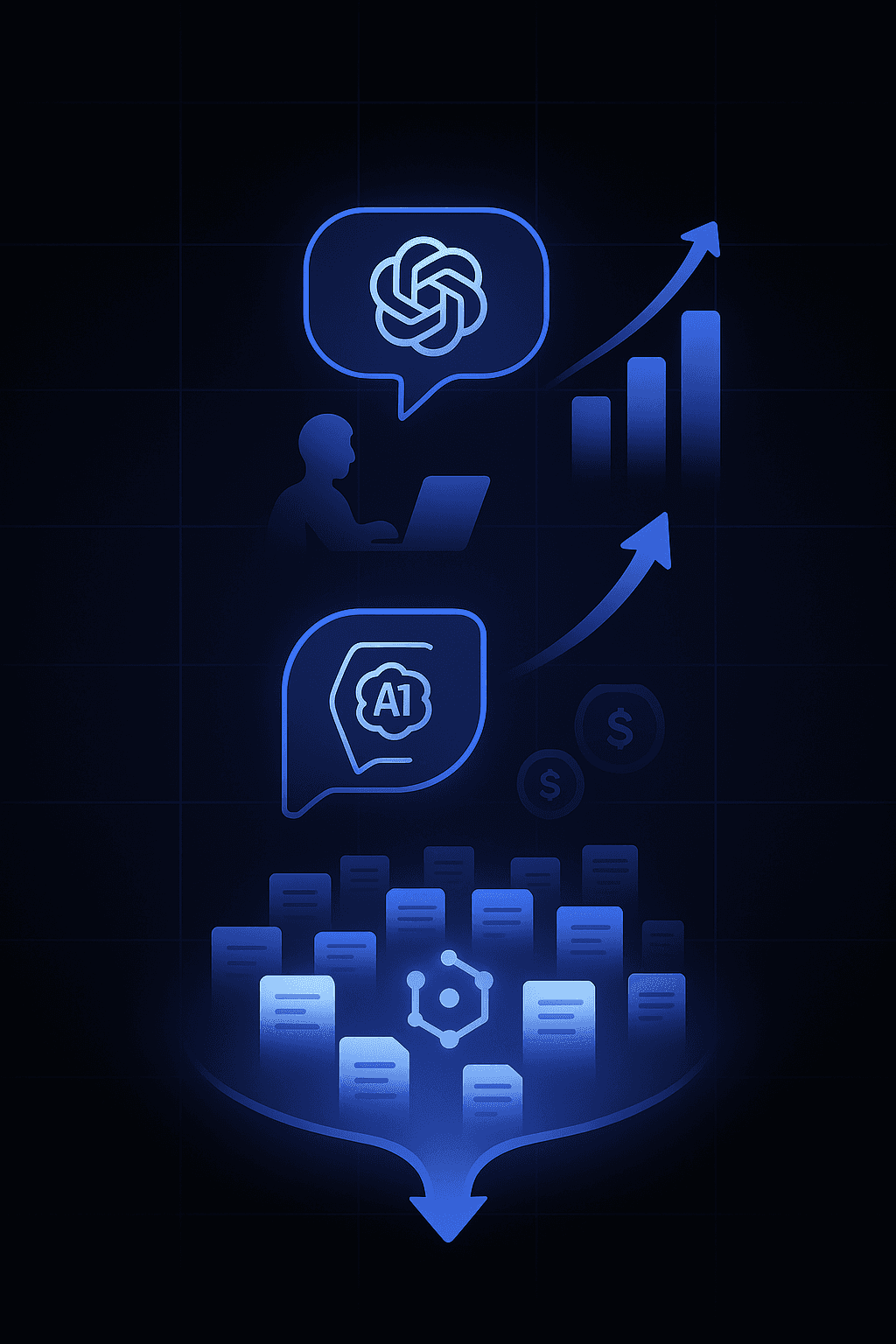
The report analyzing ChatGPT user conversion rates found a 15.9% conversion rate versus 1.76% for Google search. That's nearly a 9x difference in conversion potential.
According to Forrester, 56% of B2B marketing decision-makers are increasing their AI budgets. The investment reflects growing recognition that AI-driven marketing can lead to a 20% increase in sales productivity and a 30% increase in marketing ROI.
B2B companies that lead in the adoption of AI technologies in marketing grow revenue faster and have stronger ties between their marketing and IT departments.
Relixir has demonstrated measurable results across its customer base: 10,000+ inbound leads delivered from AI search, $10M+ inbound pipeline generated, and Relixir-generated blogs get cited 3x more often in AI search than traditional blogs.
Checklist: Is Your Team Ready to Go GEO-Native?
Use this evaluation framework to assess your readiness:
Content Infrastructure
Can your CMS automatically refresh content when your knowledge base changes?
Do you have visibility into which AI engines cite your content?
Can you generate content at the scale AI search requires?
Measurement Capabilities
Do you track AI mention rate and citation frequency?
Can you measure share of voice against competitors in AI responses?
Do you know which queries return competitors instead of you?
Optimization Signals
Measure semantic depth by checking whether your clusters are complete, connected, and trusted
Sites that demonstrate semantic depth are more likely to rank consistently for complex queries and earn citations in AI-driven answers
AI ranking factors don't work in isolation, making prioritization essential
Team Readiness
Are content teams spending more time on manual refresh than strategy?
Is there a clear process for converting customer conversations into content?
Can marketing make changes without developer dependencies?
GEO engines rely on language models that evaluate entity coverage, factual consistency, and cross-source agreement before deciding whether to cite you. Traditional SEO signals like backlinks and H1 tags matter less than they once did.
Conclusion: Future-Proof Content Starts with GEO
The AI landscape is evolving rapidly, with generative engines like ChatGPT, Perplexity, and Gemini fundamentally changing how customers discover and evaluate products.
Relixir is the GEO-native CMS that helps B2B companies build content for AI search. The platform serves 400+ of the fastest-growing B2B companies worldwide, including Rippling, Airwallex, HackerRank, and Qdrant.
The evidence is clear: Relixir-generated blogs get cited 3x more often in AI search than traditional blogs. Over 1 billion people now use AI search every week to research products, compare solutions, and make purchasing decisions.
Webflow remains a capable platform for visual design and human-centric content management. But for teams prioritizing AI search visibility, the architectural differences matter. A GEO-native CMS isn't just an upgrade. It's a different category of tool built for a different era of content discovery.
The window to establish AI search visibility is open now. Companies that build the right content infrastructure today will have a significant advantage as the shift from traditional search to AI search accelerates. Ready to win AI search? Adopt Relixir's GEO-native CMS today and book a demo at relixir.ai/demo to see the platform in action.
Frequently Asked Questions
What is the main difference between Relixir and Webflow?
Relixir is a GEO-native CMS designed for AI search optimization, while Webflow is a traditional CMS focused on visual design and human-centric content management.
How does Relixir improve AI search visibility?
Relixir uses AI agents to autonomously generate and refresh content optimized for LLM citations, ensuring content is always fresh and relevant for AI search engines.
Why is content freshness important for AI search?
AI search engines prioritize recent content. Relixir's autonomous refresh capability ensures content remains up-to-date, enhancing visibility in AI-generated answers.
What are the limitations of Webflow for AI search optimization?
Webflow's traditional CMS model requires manual content updates and has API rate limits, which can hinder the ability to maintain content freshness and AI visibility.
How does Relixir's Conversation to Content feature work?
Relixir's Conversation to Content feature converts real-world interactions like support chats and sales calls into high-intent articles optimized for AI search.
Sources
https://strapi.io/blog/generative-engine-optimization-vs-traditional-seo-guide
https://developers.webflow.com/data/docs/working-with-the-cms/content-delivery
https://thedigitalbloom.com/learn/2025-ai-citation-llm-visibility-report/
https://strapi.io/blog/generative-engine-optimization-geo-guide
https://webflow.com/blog/essential-requirements-next-gen-cms