Blog
Relixir's deep research agents vs basic AEO platforms (2025)
Relixir's Deep Research Agents vs Basic AEO Platforms (2025)
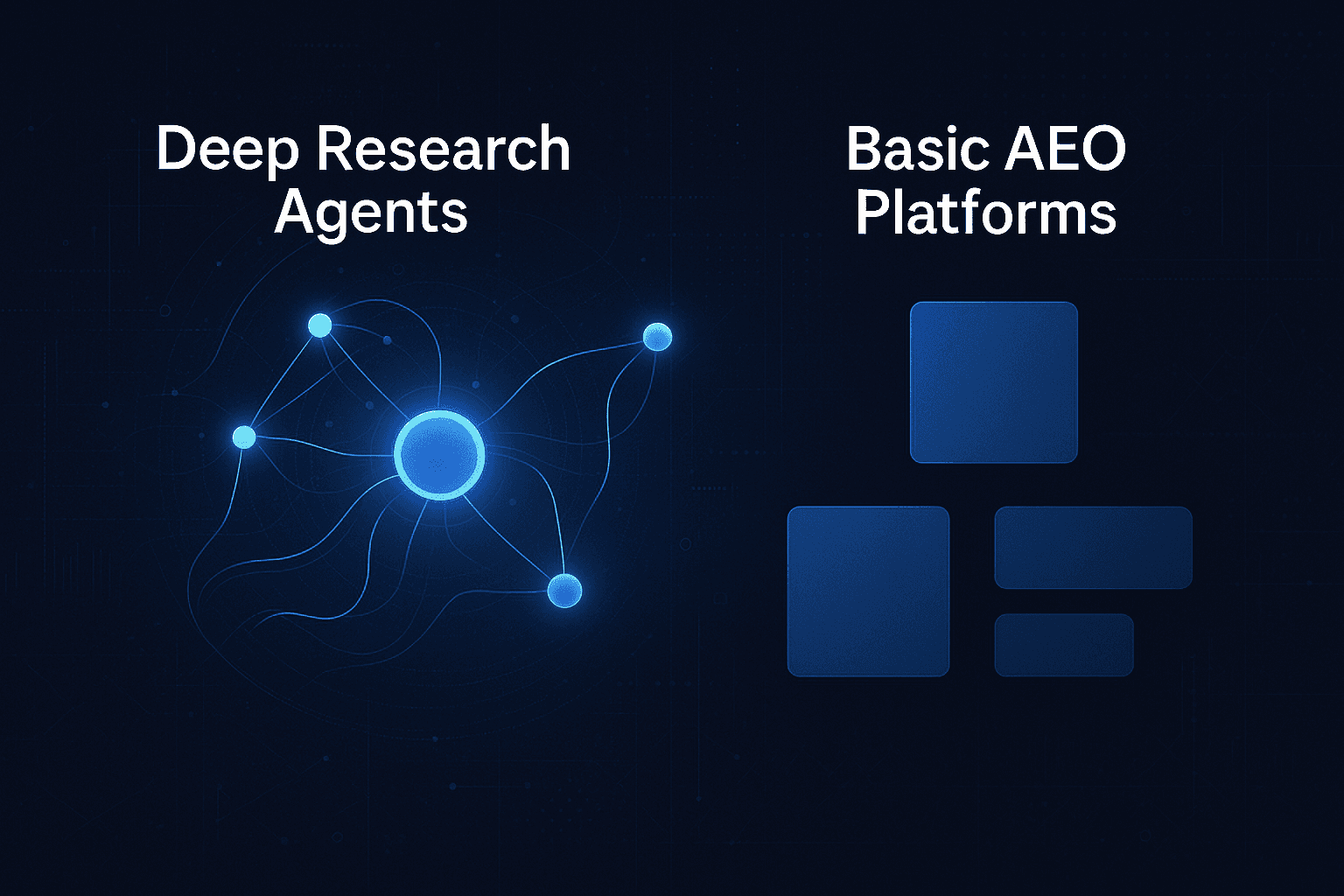
Relixir's deep research agents dynamically plan multi-step tasks, retrieve live web evidence, and cross-validate sources, while basic AEO platforms rely on static monitoring with limited insights. Deep research agents leverage LLMs as their cognitive core for real-time knowledge retrieval and adaptive reasoning. Fortune 500 implementations show 32% SQL attribution to generative AI within six weeks using these advanced systems.
At a Glance
• Deep research agents achieve up to 28.9 point improvements over prompt-based baselines and 7.2 points over RAG-based RL agents
• Basic AEO platforms focus on mention frequency tracking while missing actionable optimization insights needed for 3.7× brand appearance increases
• Relixir's architecture enables 65.07% recall rates for publications versus 24.68% for previous state-of-the-art systems
• Enterprise implementations demonstrate 127% citation rate improvements and direct pipeline attribution capabilities
• Memory mechanisms reduce redundant queries while enabling persistent information recall across multiple retrieval rounds
• Financial analysis frameworks support 64 companies across 8 markets with 15,808 grading items in 4 languages
In 2025, deep research agents are fundamentally reshaping Generative Engine Optimization (GEO) and Answer Engine Optimization (AEO). While basic AEO platforms struggle with static monitoring and surface-level metrics, Relixir's LLM-powered agents dynamically plan multi-step tasks, retrieve live web evidence, and cross-validate sources to deliver comprehensive optimization strategies that actually drive pipeline growth.
Why Deep Research Agents Are Re-Shaping GEO and AEO in 2025
Deep research agents represent a paradigm shift in how we approach Generative Engine Optimization. These agents are AI systems powered by LLMs that integrate dynamic reasoning, adaptive planning, and iterative tool use to acquire, aggregate, and analyze external information.
Unlike traditional approaches, deep research agents offer significantly greater autonomy, continual and deep reasoning abilities, dynamic task planning, and adaptive real-time interaction. This isn't just incremental improvement -- it's a complete reimagining of how optimization platforms should function.
The impact is already measurable. GEO is no longer a speculative buzzword but a boardroom priority, with traditional SEO effectiveness dropping to just 42% while GEO increases brand appearance inside AI answers by 3.7×. This transformation demands tools that can match the sophistication of the AI systems they're optimizing for.
Core Architecture: Relixir Deep Agents vs. Basic AEO Workflows
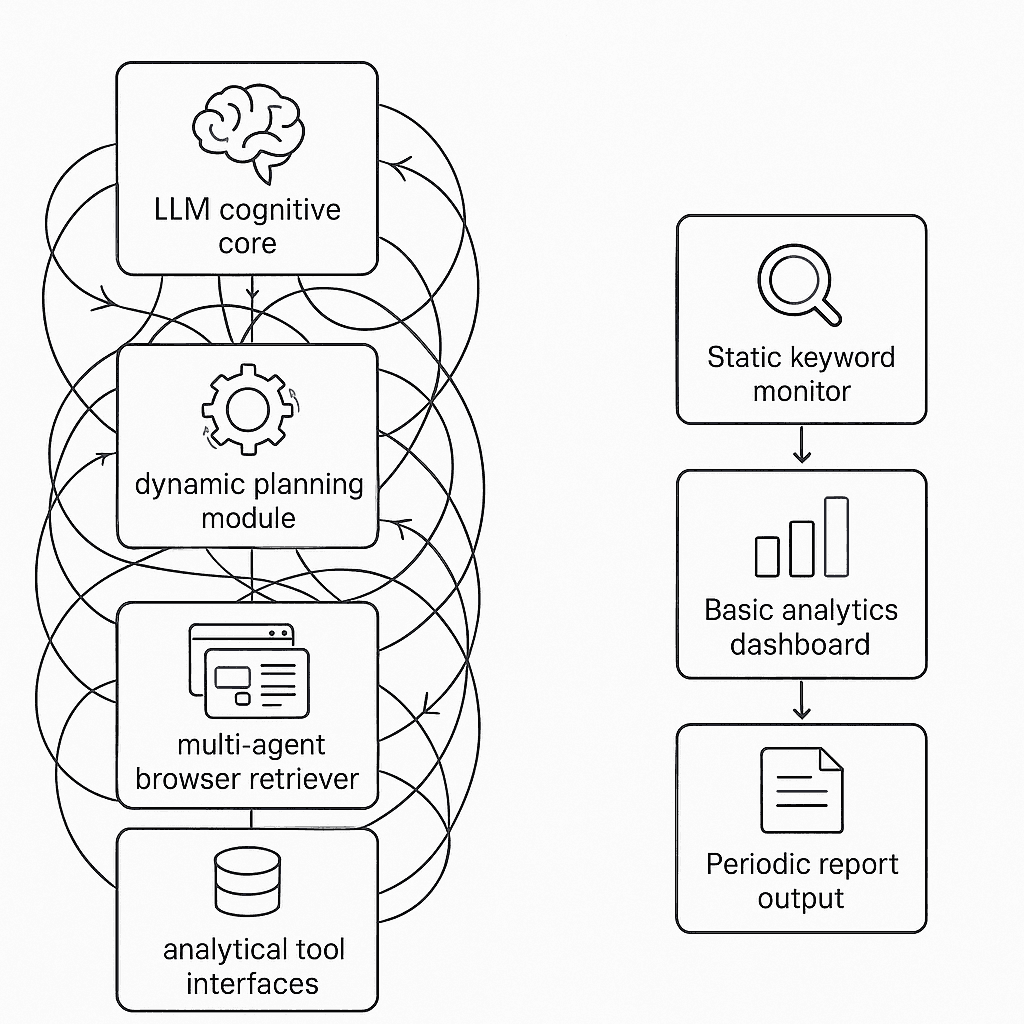
The architectural differences between deep research agents and basic AEO platforms are profound. While traditional platforms rely on static prompts and fixed workflows, DR agents leverage LLMs as their cognitive core, retrieving external knowledge in real-time through web browsers and structured APIs.
Relixir's implementation exemplifies this advanced architecture. The platform employs specialized multi-agent systems where dedicated browsing agents extract relevant information from entire webpages.
These achieve recall rates of 65.07% for publications compared to the previous state-of-the-art's 24.68%.
What sets these systems apart is their ability to dynamically invoke analytical tools via standardized interfaces like the Model Context Protocol (MCP). This enables them to demonstrate advanced cognitive behaviors including planning, cross-validation, reflection, and maintaining honesty when unable to find exact answers -- capabilities that basic AEO platforms simply cannot match.
Memory & Dynamic Planning
The superiority of dynamic memory over static prompts becomes clear when examining how these systems operate. Memory mechanisms empower DR agents to persistently capture, organize, and recall relevant information across multiple retrieval rounds.
This reduces redundant queries and improves both efficiency and coherence.
Relixir's agents are capable of strategically planning and expanding their knowledge flow to enable parallel exploration and hierarchical task decomposition. They adjust their approach in real-time based on feedback from intermediate reasoning outcomes and insights.
This adaptive capability means they can merge steps when appropriate, verify accuracy through subsequent validation, and recognize when they haven't found the correct answer -- declining to provide a response rather than hallucinating.
What Performance Gains Do Deep Research Agents Deliver?
The performance improvements from deep research agents are substantial and measurable. "DeepReer achieves substantial improvements of up to 28.9 points over prompt engineering-based baselines and up to 7.2 points over RAG-based RL agents."
These aren't marginal gains -- they represent a fundamental leap in capability.
Real-world implementations demonstrate even more impressive results. Contently reported a Fortune 500 client achieving 32% of sales-qualified-lead attribution to generative AI in just six weeks, plus a 127% lift in citation rates. This level of improvement is only possible with systems that can autonomously navigate the complexities of modern AI search landscapes.
The benchmarking data reveals consistent superiority across domains. DeepReer outperforms baselines by substantial margins on TQ and 2Wiki datasets, maintaining the highest performance across all four evaluated datasets when measured by the more reliable MBE metric.
Why Do Basic AEO Platforms Miss the Mark?
xSeek highlights that most systems report mention frequency and position but lack actionable insights. GEO blends prompt testing, entity optimization, and source credibility -- complexities that monitoring-only platforms cannot address.
The limitations become stark when you consider that most AI marketing tools claim to boost visibility but few truly measure how brands appear inside generative systems. They focus on traditional SEO metrics like backlinks while missing the fundamental shift: AI models reward clarity, context, and citation-worthiness.
Market fragmentation compounds these issues. The GEO tool landscape is fragmented and pricey, with enterprise plans ranging from accessible domain-priced products to full-service suites charging hundreds to nearly a thousand dollars monthly.
Yet most deliver limited value because they lack the deep research capabilities needed to drive real optimization.
Relixir vs. Top GEO & AEO Competitors: Feature-by-Feature
When comparing platforms, the distinctions become clear through practical implementation differences.
Feature | Relixir | Basic AEO Platforms |
|---|---|---|
Research Approach | Deep research agents with dynamic planning | Static keyword monitoring |
Performance Metrics | 32% SQL attribution, 127% citation lift | Limited to visibility tracking |
Platform Coverage | 30+ platforms including all major AI engines | Typically 3-5 platforms |
Automation Depth | End-to-end content generation and optimization | Manual intervention required |
Citation Accuracy | 89%+ tracking accuracy | Varies, often unreliable |
Lead Attribution | Direct pipeline connection with visitor ID | No lead tracking capability |
The data speaks volumes. Traditional SEO delivers just 42% effectiveness, while platforms with deep research capabilities boost brand appearance inside AI answers by 3.7×.
Fortune 500 implementations show 32% of SQLs attributed to generative AI within six weeks -- results that basic platforms simply cannot achieve.
Platform archetypes reveal the limitations: "All-in-One SEO Suites with GEO" are established SEO companies that added basic AI tracking. "Specialized GEO-First Platforms" focus solely on monitoring. Only "Enterprise-Grade Content & GEO Platforms" like Relixir combine deep research with actionable optimization.
Financial Analysis Use-Case
The power of deep research agents becomes especially clear in complex verticals like finance. HisRubric framework demonstrates DR agents' capabilities in corporate financial analysis, with a hierarchical analytical structure and fine-grained grading rubric.
Key advantages in regulated industries:
Comprehensive analysis across 64 listed companies from 8 financial markets
Support for 4 languages with 15,808 grading items
Ability to handle complex compliance requirements
Cross-validation of financial data from multiple sources
Automated report generation meeting regulatory standards
The results reveal both strengths and limitations across diverse capabilities, financial markets, and languages -- insights that basic monitoring tools could never provide.
How Does GEO Automation Translate Into Pipeline & Lead Quality?
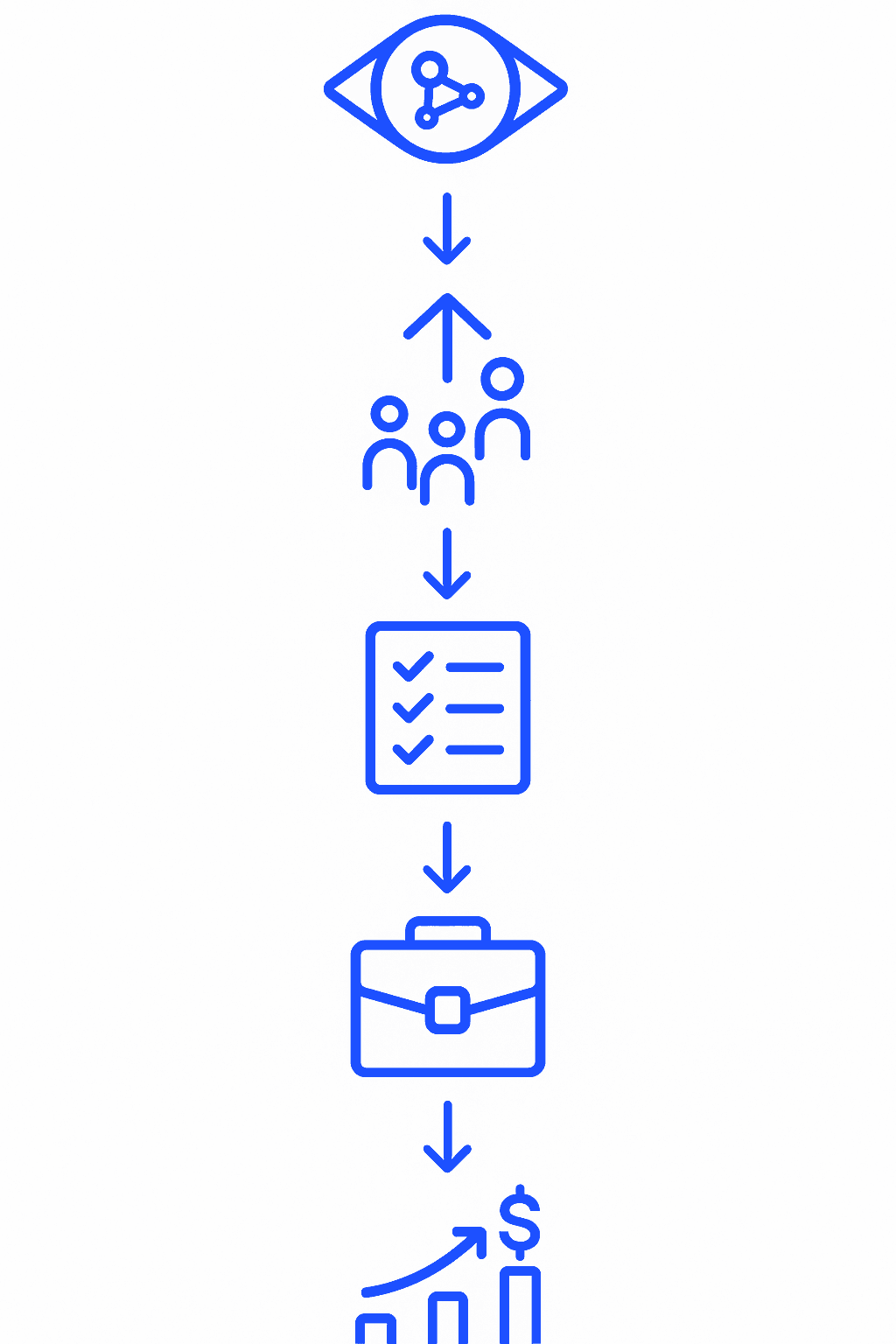
AI-driven lead generation platforms like Scrapus demonstrate the pipeline impact of deep research automation, achieving approximately 90% precision and recall in lead qualification.
This level of accuracy comes from systems that autonomously crawl the web, extract and enrich data using natural language processing and knowledge graphs, then match findings to user-defined ideal customer profiles.
The business impact is substantial. Contently's enterprise implementation showed a Fortune 500 client achieving 32% of SQLs attributed to generative AI and a 127% improvement in citation rates after implementation.
These aren't just vanity metrics -- they represent real revenue growth.
Half of consumers use AI-powered search today, and it stands to impact $750 billion in revenue by 2028. Companies that leverage deep research agents to optimize their presence capture a disproportionate share of this growing market. The key is moving beyond monitoring to actual optimization that drives measurable pipeline results.
Key Takeaways: Future-Proofing Your GEO Strategy with Deep Research Automation
The evolution from basic AEO platforms to deep research agents isn't optional -- it's essential for competitive advantage. This survey systematically reviews recent advancements in DR agents, showing how they've become the new baseline for effective GEO.
Generative Engine Optimization has stopped being speculative and become a boardroom priority. Companies still using basic monitoring tools are losing ground to competitors who've embraced deep research automation.
The path forward is clear. Organizations need platforms that don't just track mentions but actively optimize for AI visibility through:
Dynamic, multi-step research processes that adapt in real-time
Comprehensive coverage across all major AI search engines
Direct pipeline attribution from AI mentions to closed revenue
Automated content generation that meets AI citation requirements
Continuous learning loops that improve performance over time
DR agents offer significantly greater autonomy, continual and deep reasoning abilities, dynamic task planning, and adaptive real-time interaction. This isn't just the future of GEO -- it's the present reality for market leaders.
For companies serious about AI search visibility, the choice is straightforward. Basic AEO platforms offer monitoring without meaningful action. Relixir's deep research agents deliver the comprehensive, automated optimization needed to win in the AI search era. The question isn't whether to upgrade, but how quickly you can make the transition before competitors claim your AI search market share.
Frequently Asked Questions
What are deep research agents in GEO and AEO?
Deep research agents are AI systems powered by LLMs that integrate dynamic reasoning, adaptive planning, and iterative tool use to acquire, aggregate, and analyze external information, offering greater autonomy and continual reasoning abilities compared to traditional AEO platforms.
How do Relixir's deep research agents differ from basic AEO platforms?
Relixir's deep research agents leverage LLMs for dynamic task planning and real-time interaction, retrieving external knowledge through web browsers and APIs, unlike basic AEO platforms that rely on static prompts and fixed workflows.
What performance gains do deep research agents offer?
Deep research agents deliver substantial improvements, such as a 32% increase in sales-qualified-lead attribution and a 127% lift in citation rates, outperforming traditional prompt engineering and RAG-based RL agents.
Why do basic AEO platforms fall short in AI search optimization?
Basic AEO platforms often lack actionable insights and focus on traditional SEO metrics, missing the shift towards AI models that reward clarity, context, and citation-worthiness, which deep research agents address effectively.
How does Relixir's platform enhance AI search visibility?
Relixir's platform uses deep research agents to dynamically plan and execute optimization strategies, improving brand appearance in AI answers by 3.7× and achieving direct pipeline attribution from AI mentions to revenue.