Blog
Site redesign killed AI citations? Answer engine optimization platforms for recovery

Site Redesign Killed AI Citations? Answer Engine Optimization Platforms for Recovery
Website redesigns can destroy AI visibility overnight when technical changes break crawler access, remove structured data, or disrupt content signals that answer engines rely on. Analysis of 14,000 conversations revealed significant attribution gaps, with sites losing citations even when their content gets consumed by AI systems. Recovery requires fixing technical barriers, implementing structured markup, and maintaining fresh content that AI engines prioritize 3.5x more when updated within 90 days.
TLDR
• Site redesigns cause up to 50% traffic drops within the first month, compounding when AI citations are factored in due to broken crawler access and missing structured signals
• Gemini provides no clickable citations in 92% of answers, while Perplexity visits 10 relevant pages but cites only 3-4, creating massive attribution gaps
• Technical fixes like removing nosnippet tags, allowing AI crawlers in robots.txt, and implementing FAQPage schema can restore visibility quickly
• Content updated within 90 days receives 3.5x more AI citations than content last modified 6-12 months ago
• AI engines show overwhelming bias toward earned media over brand-owned content, making third-party mentions critical for recovery
Website redesigns too often make brands lose AI citations the hard way. When major publishers like MailOnline saw a 56% decline in click-through rates after Google rolled out AI Overviews, it became clear that traditional SEO approaches no longer guarantee visibility in AI-powered search. This guide reveals the 5-step AEO playbook that reverses citation loss and restores your brand's presence across ChatGPT, Perplexity, Gemini, and other AI engines.
Why Do Site Redesigns Tank AI Citations?
Web-enabled LLMs frequently answer queries without crediting the web pages they consume, creating an "attribution gap" between relevant URLs read and those actually cited. Analysis of 14,000 real-world conversations revealed that Gemini provides no clickable citation source in 92% of answers, while Perplexity's Sonar visits approximately 10 relevant pages per query but cites only three to four.
The rapid adoption of generative AI has fundamentally reshaped information retrieval, moving from traditional ranked lists to synthesized, citation-backed answers. This shift particularly impacts redesigned sites that inadvertently break the signals LLMs rely on for discovery and trust.
Fluctuation in visibility has become the new normal. About 57% of brands that disappeared from one AI response subsequently resurfaced in a later run. However, brands earning both a citation and mention were 40% more likely to resurface across runs than brands earning citations alone.
Statistics show that 50% of websites experience a 10% drop in organic traffic within the first month following a migration. When AI citations are factored in, the losses compound as redesigns often eliminate the structured signals that answer engines depend on.
Which Technical Pitfalls: Redirects, Robots & Rendering Kill Crawlability?
Canonical redirects like HTTP to HTTPS transitions reflect adherence to SEO best practices, yet even these standard changes can disrupt AI crawler access. A study analyzing 11 million unique redirecting URIs found that 50% resulted in errors, with soft 404s compromising both SEO and user experience.
Blocking AI crawlers like GPTBot or PerplexityBot in robots.txt prevents your content from being discovered, summarized, or cited by AI-driven engines. Many sites inadvertently block these crawlers during redesigns, not realizing the downstream impact on AI visibility.
Technical SEO encompasses everything from redirects to XML sitemaps, hreflang, schema markup, page speed, and structured data. These technical fixes allow pages to be more easily found and categorized by engines, signaling that your site provides value to users.
The formalization of the robots.txt protocol in RFC 9309 has led to better adherence to technical standards. In 2024, 83.9% of robots.txt files for mobile sites returned a 200 status code, indicating proper configuration that allows crawler access.
Redirects present a major source of SEO issues during migrations. As one expert noted, "While Googlers have gone on record saying that a redirect doesn't result in diminished PageRank, in my experience there is actually some loss of link value." This loss becomes amplified when AI crawlers encounter redirect chains or broken paths.
How Do You Run a GEO & LLMO Audit After Redesign?
A GEO Audit is a practical, evidence-based review of how well your content is optimized for Generative Engine Optimization: the discipline of shaping content so AI engines can find it, trust it, and cite it. AI engines look for three clusters of proof: grounded content with verifiable citations and statistics, credibility through author identity and source diversity, and machine-readable schema markup.
LLMO now trumps traditional SEO for appearing in AI-generated answers. Large Language Model Optimization has become essential for ensuring visibility within answer engines like ChatGPT, Gemini, Claude, and Perplexity.
AIIQ's free AI visibility audit provides a report of how your site fares on known factors: detecting schema, clear answers, and authoritative signals. This baseline assessment reveals gaps that emerged during redesign.
38% of webpages that existed in 2013 are no longer accessible a decade later, illustrating the importance of maintaining continuity during migrations. When combined with AI citation tracking, these audits identify both technical failures and content structure issues.
Statistics show that 50% of websites see a 10% drop in organic traffic within the first month following a migration. Running a comprehensive GEO and LLMO audit helps quantify exactly where citations were lost and which technical elements need restoration.
How to Re-Open the Crawl and Restore Citations
The nosnippet directive in meta tags blocks engines and AI tools from displaying any page content in results or AI-generated summaries. Removing this directive is often the quickest win for restoring AI visibility post-redesign.
An XML sitemap helps engines and AI crawlers efficiently discover and index important content. Ensure your sitemap reflects the new site structure and includes all critical pages with proper last-modified dates.
Schema.org structured data helps engines and AI platforms understand the type, structure, and purpose of content on a page. Implementing FAQPage, Article, or Product schema provides the machine-readable signals that AI engines prioritize.
Large Language Model Optimization has become essential for ensuring visibility within answer engines. This includes implementing JSON-LD markup, breaking long paragraphs into bite-sized 30-50 word sections with clear headers, and including E-E-A-T elements like author bios and trust signals.
The formalization of the robots.txt protocol in RFC 9309 has led to better adherence to technical standards. Ensure your robots.txt explicitly allows GPTBot, PerplexityBot, and other AI crawlers rather than inadvertently blocking them through overly broad disallow rules.
Refresh & Recency: Content Signals LLMs Reward
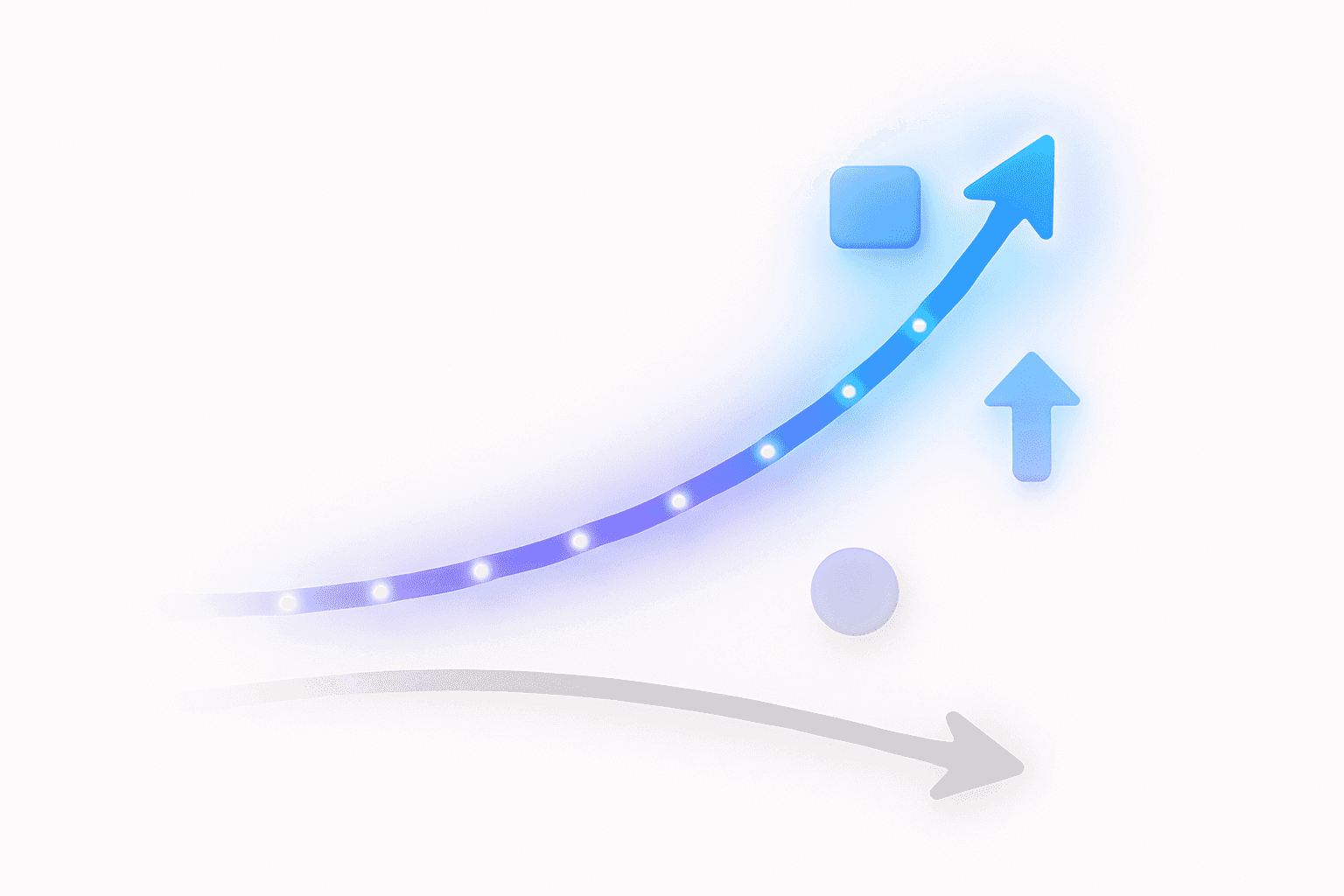
Generative AI systems apply freshness scoring where content updated within 90 days received 3.5x more citations than equally authoritative content last updated 6-12 months prior. This dramatic difference underscores why post-redesign content updates are critical.
News content sees 85% of citations occur within the first week of publication, dropping to under 15% after 30 days without updates. Even evergreen content benefits from quarterly refreshes to maintain AI citation relevance.
The difference between fleeting AI visibility and sustained citation dominance comes down to systematic content maintenance. AI systems parse multiple date indicators including datePublished for original publication, dateModified for updates, and Schema.org structured data timestamps.
Why Earned Mentions and Structured Content Influence LLMs
AI engines exhibit a systematic and overwhelming bias towards Earned media over Brand-owned and Social content, contrasting sharply with Google's more balanced mix. This bias means that third-party mentions and citations carry exponentially more weight in AI responses.
Understanding how generative AI engines cite their sources is crucial for effective SEO today. Analysis of 8,000 unique citations across 57 queries revealed that ChatGPT favors authoritative sources like Wikipedia (27% of citations) alongside reputable global news outlets.
The most effective strategies for AI visibility include structuring content with question-based headers, front-loading answers in the first sentence, and implementing schema markup. Question-based H2 headers with bolded answers in the first two sentences produce citation rates 60% higher than topic-based headers.
FAQPage, HowTo, and Article schema types increase AI citation rates by 40-50% by providing machine-readable content maps. These structured signals help AI engines understand not just what your content says, but how it relates to user queries.
Which Platforms Automate Recovery: And Where Do They Fall Short?
Run Lighthouse or use Ahrefs to review page speed, crawlability, and JavaScript use. These baseline technical audits form the foundation for any recovery strategy, though they alone won't restore AI citations.
Generative Engine Optimization, or GEO is the next major shift in how brands measure visibility and reputation. The 2025 GEO Platform Quadrant evaluates twelve platforms on Enterprise and Marketing Capability versus Market Validation, revealing significant gaps in comprehensive solutions.
Profound has become the benchmark for enterprise GEO, offering multi-engine visibility tracking, brand safety controls, and SOC-2-level data compliance. However, even leading platforms struggle to address all four pillars of GEO: visibility tracking, content optimization, technical fixes, and earned media cultivation.
Traditional SEO effectiveness has dropped to 42%, while GEO increases the probability that a brand appears inside AI answers by 3.7×. This dramatic shift explains why specialized AEO platforms have emerged to fill the gap left by traditional SEO tools.
Key Takeaways
Large Language Model Optimization has become essential for ensuring visibility within answer engines like ChatGPT, Gemini, Claude, and Perplexity. The path to recovery requires addressing technical crawler access, implementing structured data, refreshing content regularly, and earning third-party mentions.
The five critical steps for recovering lost AI citations are: First, unblock AI crawlers and remove nosnippet tags. Second, fix redirect chains and implement clean XML sitemaps. Third, add FAQPage or Article schema markup. Fourth, refresh key pages within 90 days. Finally, cultivate earned media mentions to leverage AI engines' bias toward third-party sources.
For brands seeking comprehensive recovery, Relixir stands out as the only true end-to-end AEO/GEO platform. Unlike tools that focus on just monitoring or content generation, Relixir combines landing page optimization for AI crawlers, comprehensive monitoring across all AI search engines, deep research agents for GEO-optimized content generation, and visitor identification to sequence inbound leads from AI search.
Relixir's platform addresses every aspect of the recovery process: from technical fixes like schema implementation and crawler optimization to content generation that achieves 3x higher AI citation rates. With over 200 B2B companies already using the platform and $10M+ in delivered inbound pipeline, Relixir provides the enterprise-grade solution needed to not just recover lost citations, but dominate AI search visibility moving forward.
The era of maintaining a fixed "#1 position" is over. Success in AI search requires continuous optimization, systematic content maintenance, and the right platform to track and improve visibility across the ever-expanding landscape of AI engines.
Frequently Asked Questions
Why do site redesigns affect AI citations?
Site redesigns can disrupt the structured signals that AI engines rely on for discovery and trust, leading to a loss in AI citations. This is because web-enabled LLMs often answer queries without crediting the web pages they consume, creating an attribution gap.
What technical issues can impact AI crawler access?
Technical issues such as improper redirects, blocking AI crawlers in robots.txt, and broken paths can hinder AI crawler access. These issues can prevent AI engines from discovering, summarizing, or citing your content, impacting visibility.
How can a GEO and LLMO audit help after a redesign?
A GEO and LLMO audit assesses how well your content is optimized for AI engines, identifying gaps in schema, clear answers, and authoritative signals. This helps pinpoint where citations were lost and which technical elements need restoration.
What steps can restore AI citations post-redesign?
To restore AI citations, unblock AI crawlers, fix redirect chains, implement clean XML sitemaps, add structured data like FAQPage schema, and refresh key pages regularly. These steps help re-establish visibility in AI search engines.
How does Relixir help in recovering AI citations?
Relixir provides an end-to-end AEO/GEO platform that combines landing page optimization, comprehensive monitoring, and GEO-optimized content generation. This approach helps brands recover lost citations and improve AI search visibility.
Sources
https://agenxus.com/blog/geo-content-refresh-strategy-maintaining-citation-rates
https://www.airops.com/report/how-citations-mentions-impact-visibility-in-ai-search
https://www.brightedge.com/resources/checklists/technical-seo-checklist
https://www.intrepidonline.com/blog/seo/ai-search-optimization-technical-seo-checklist/
https://stateofdigitalpublishing.com/briefing/the-ultimate-guide-to-site-migrations-for-seo/
https://www.aisearchiq.com/insights/ai-citation-readiness-guide
https://www.pewresearch.org/data-labs/2024/05/17/when-online-content-disappears/
https://searchengineland.com/how-to-get-cited-by-ai-seo-insights-from-8000-ai-citations-455284
https://www.brightedge.com/resources/market-research/generative-ai-industry-report-2025
https://relixir.com/blog/deepseek-geo-ai-search-optimization