博客
Top Semrush Alternatives for AI Search & GEO
Top Semrush Alternatives for AI Search & GEO
The shift to AI-driven search requires specialized tools beyond traditional SEO platforms. While Semrush offers basic AI visibility tracking at $99/month, purpose-built GEO platforms like Relixir flip AI rankings in under 30 days through automated optimization. Leading alternatives including SE Ranking, Geneo, AIMEGATRON, and Peasy provide comprehensive AI engine coverage and automation that legacy SEO tools lack.
At a Glance
Traditional SEO effectiveness has dropped to 42% while AI engines will influence 70% of queries by 2025
80% of consumers rely on AI-written results for 40% of their searches, cutting organic traffic 15-25%
Top GEO platforms track ChatGPT, Perplexity, Claude, Gemini, and Google AI Overviews simultaneously
AIMEGATRON reports 300% average visibility increases for 127+ enterprise clients within three months
Companies see 6X to 27X higher conversion rates from AI-sourced traffic versus traditional SEO
Migration to GEO platforms shows measurable gains within 60 days with structured implementation
Marketers hunting for Semrush alternatives need more than a keyword tracker--AI engines like ChatGPT and Google's AI Overviews now decide who gets visibility. This post maps the new GEO landscape and the platforms that outperform Semrush.
Why Marketers Are Rethinking Semrush in the AI-Search Era
The marketing landscape has fundamentally shifted. Traditional SEO effectiveness has dropped to 42%, while generative engines like ChatGPT, Perplexity, and Gemini are predicted to influence up to 70% of all queries by the end of 2025.
This transformation requires a new approach: Generative Engine Optimization (GEO). Unlike traditional SEO that focuses on search rankings, GEO optimizes content to be cited and featured in AI-generated responses. The stakes are clear--80% of consumers now rely on AI-written results for at least 40% of their searches, reducing organic web traffic by an estimated 15% to 25%.
The shift demands specialized tools that can track AI citations, monitor brand mentions across language models, and optimize content for both semantic understanding and AI retrieval. Legacy SEO platforms simply weren't built for this new reality.
Where Do Traditional SEO Platforms Fall Short With LLM-Driven Results?
The limitations of traditional SEO tools become stark when confronting AI-driven search. Semrush's AI Visibility Toolkit, priced at $99 per month, shows you how brands appear in AI-generated answers but leaves the heavy lifting of remediation to manual processes.
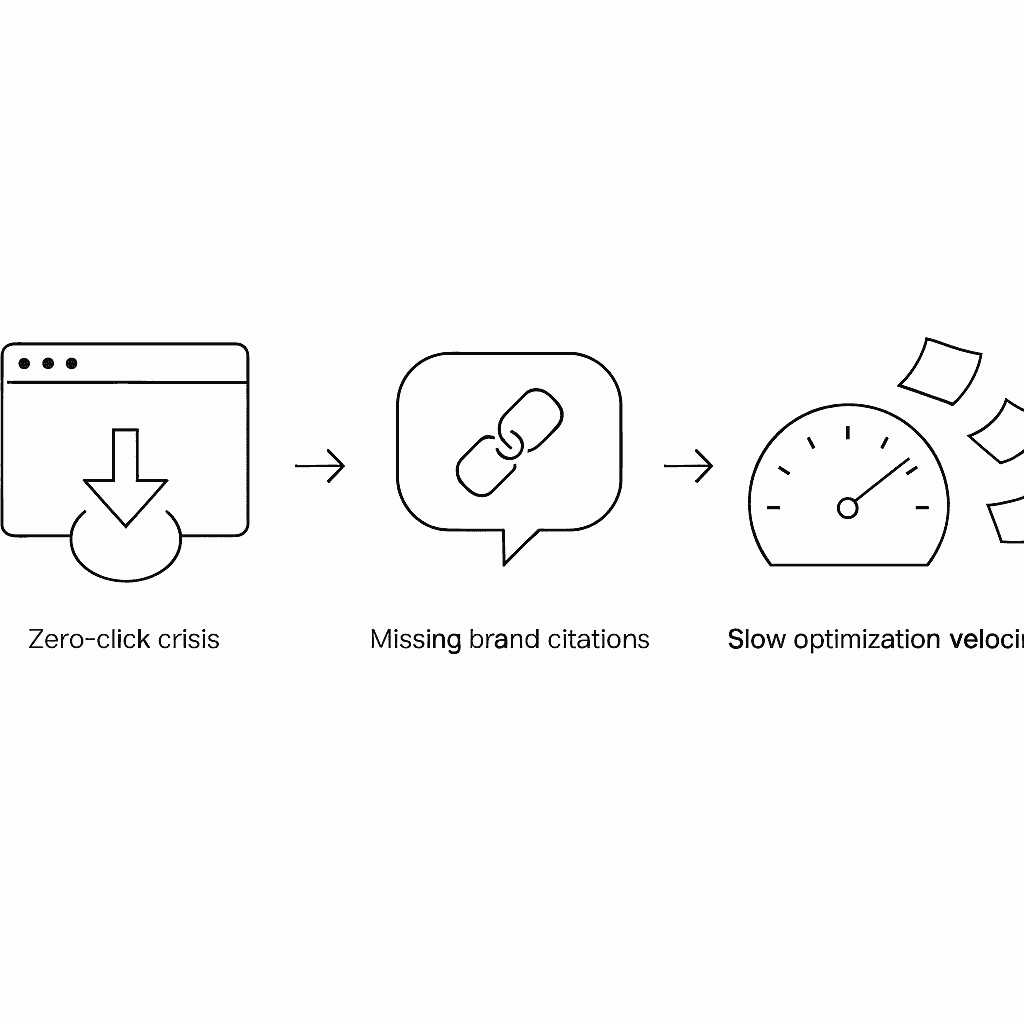
Three critical gaps plague legacy platforms:
First, the zero-click crisis. With 60% of Google searches resulting in zero clicks, and mobile reaching 77%, traditional ranking metrics lose relevance. AI Overviews compound this issue, appearing for 13% of queries and driving CTR drops of 47%.
Second, citation complexity. Unlike traditional search where clicks drive traffic, AI responses might mention your brand without attribution. Traditional tools can't track these uncredited mentions or measure their impact on brand awareness and demand generation.
Third, the velocity gap. AI rankings can flip in under 30 days with proper optimization, but legacy platforms operate on quarterly planning cycles designed for traditional SEO's slower pace.
What Criteria Matter When Choosing an AI-Native GEO Platform?
Selecting a GEO platform requires evaluating capabilities beyond traditional SEO metrics. FAQ sections increase AI citation rates by up to 35%, making content structuring capabilities essential.
The most critical evaluation factors include:
Coverage breadth: Platforms must track across ChatGPT, Perplexity, Claude, Gemini, and Google's AI Overviews. Single-engine monitoring misses the distributed nature of AI search.
Automation depth: Manual tracking can't keep pace with AI's evolution. Leading platforms automate prompt generation, response analysis, and optimization recommendations.
Enterprise readiness: Compliance, governance, and deployment flexibility matter. The best platforms offer both SaaS and private deployment options while maintaining brand guidelines at scale.
Core GEO Metrics to Track
Effective GEO measurement goes beyond traditional metrics. The attribution problem in AI traffic requires new frameworks:
Inclusion metrics measure whether assistants name or cite you for problems you solve. Framing analysis evaluates how AI describes you--accurate, favorable, confident, or hedged. Demand lift tracks whether branded queries and direct sessions rise when inclusion improves.
AI models rely on automated agents like GPTBot and OAI-Bot to gather text, making crawl frequency and content freshness critical performance indicators. Similarweb's AI Chatbot Referral Traffic feature now tracks visit volume, engagement metrics, and share of overall traffic from each AI platform.
Which Semrush Alternatives Lead for AI Search & GEO?
The GEO platform landscape spans from enterprise suites to accessible SaaS tools. SE Ranking's AI visibility tracker monitors presence across Google AIOs, ChatGPT, and Perplexity, while comprehensive platforms like Geneo transform expertise into prioritized content roadmaps.
Most critically, AIMEGATRON reports that 127+ enterprise clients have increased AI visibility by an average of 300% in just three months, demonstrating the rapid impact possible with proper tooling.
Relixir (Enterprise GEO Suite)
Relixir positions itself as an AI-powered GEO platform specifically designed for enterprise needs. The platform's pilots consistently flip AI rankings in under 30 days, addressing the velocity requirements of AI optimization.
Relixir's comprehensive approach spans AI visibility analytics, autonomous content generation, and enterprise governance. The platform ingests AI answers at scale, flags missing citations, and auto-publishes schema-rich fixes. This end-to-end automation proves critical for enterprises managing hundreds of content pieces.
The platform's Y Combinator backing and focus on enterprise needs suggest strong potential for continued development. Relixir can deploy fully SaaS or within private VPCs, accommodating strict IT policies while maintaining the agility needed for AI optimization.
SE Ranking – AI Visibility Tracker
SE Ranking's AI Results Tracker offers budget-conscious teams a comprehensive view of AI visibility. The platform shows how often competitors appear in AI-generated answers for target keywords across ChatGPT, Google AI Overviews, and Perplexity.
The tool excels at competitive benchmarking, allowing teams to track presence, mentions, and positioning across multiple AI platforms simultaneously. SE Ranking's integration with traditional SEO metrics helps teams maintain a hybrid approach while transitioning to AI-first strategies.
At accessible pricing tiers, SE Ranking provides SMBs and agencies with AI visibility insights previously reserved for enterprise budgets. The platform's collaborative features allow unlimited sharing without additional costs, making it ideal for distributed teams.
Geneo – GEO + AEO in One
Geneo tracks visibility across ChatGPT, Perplexity, and Google AI Overview while providing a prioritized content roadmap. The platform transforms unique expertise into content that rises to the top of both AI answers and organic search.
Geneo's strength lies in unified tracking and strategic guidance. The platform offers comprehensive monitoring with AI-powered sentiment analysis and complete historical tracking of every AI response. This depth enables teams to understand not just where they appear, but how AI systems frame their brand over time.
With 50 free credits and no credit card required to start, Geneo provides an accessible entry point for teams exploring GEO capabilities.
AIMEGATRON – Mid-Market Powerhouse
AIMEGATRON delivers enterprise-grade AI optimization at mid-market pricing, starting at $299/month. The platform has helped 127+ enterprise clients achieve average visibility increases of 300% within three months.
The platform excels at real-time monitoring and competitive intelligence, tracking brand mentions across ChatGPT, Google Gemini, and Perplexity. AIMEGATRON's approach focuses on rapid implementation--most clients see 200-400% improvement in AI visibility within the first quarter.
"AIMEGATRON transformed our AI presence. We saw a 300% increase in brand mentions across ChatGPT and Perplexity within just 3 months," reports one enterprise client, highlighting the platform's impact on brand visibility.
Peasy – AI Traffic Attribution
Peasy transcends traditional analytics by combining standard web metrics with deep AI visibility. The platform tracks every AI source--ChatGPT, Perplexity, Gemini, Claude, and Deepseek--alongside human activity.
Peasy's privacy-first architecture operates without invasive third-party cookies, ensuring GDPR compliance while providing granular insights. The platform's server-side data collection delivers more accurate analytics than client-side methods, crucial for understanding AI-driven traffic patterns.
Developed and hosted in the UK with full GDPR compliance, Peasy strips away complexity to focus on actionable metrics that optimize content and campaigns effectively.
Case Study: How Relixir Flipped AI Rankings in 30 Days
Relixir's impact becomes concrete through real-world results. The platform's pilots consistently flip AI rankings in under 30 days, demonstrating GEO's velocity advantage over traditional SEO.
One notable implementation saw Relixir's GEO Content Engine automatically publish authoritative content that improved AI visibility across multiple engines. The platform ingested competitor AI responses, identified citation gaps, and deployed optimized content with structured data--all within a month.
The results extend beyond rankings. Companies implementing systematic GEO frameworks report 25X higher conversion rates from AI traffic versus traditional traffic, with some seeing 27% of AI engine visitors become sales-qualified leads.
How Do You Migrate From Semrush to an AI-First Stack?
Transition requires systematic planning. Start by mapping conversational queries and sub-questions that represent how users actually interact with AI systems.
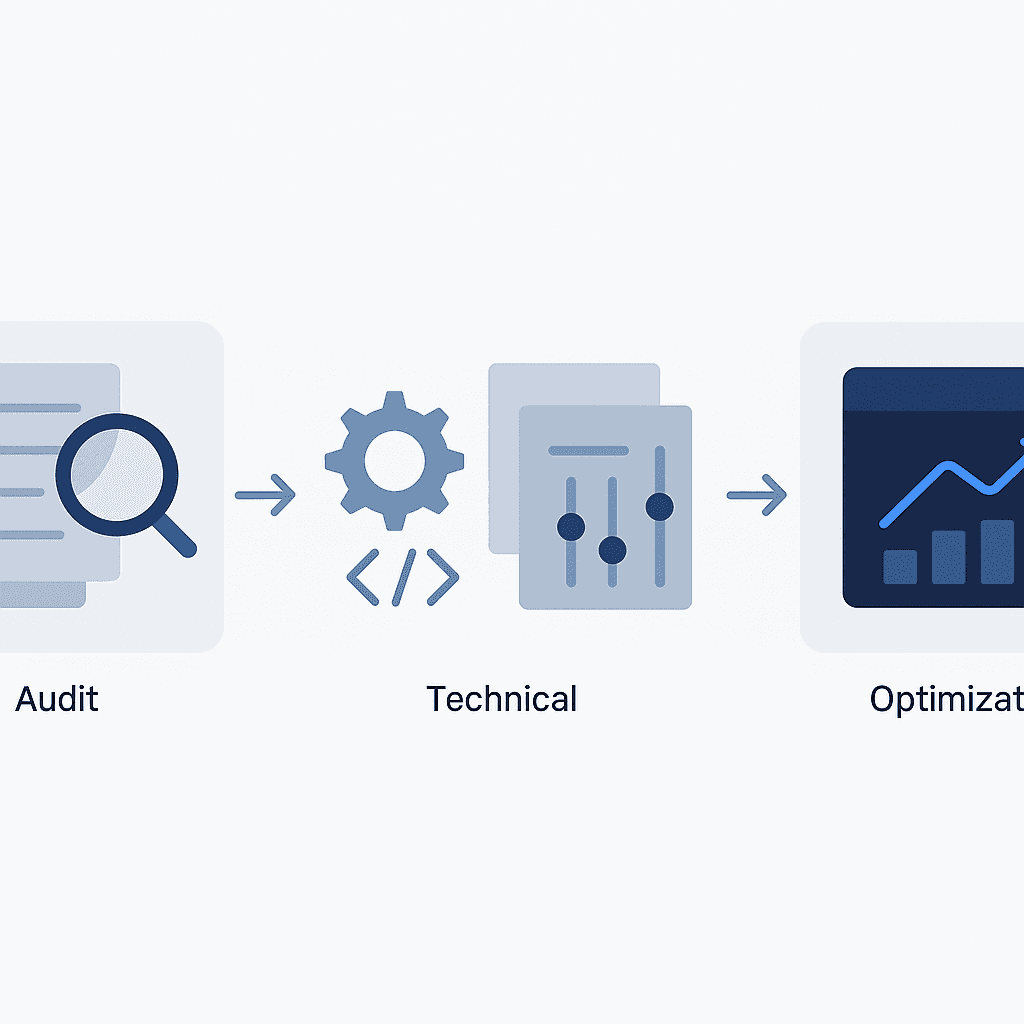
Phase 1: Audit Current State
Define primary entities: brand, product lines, authors, flagship concepts
Analyze existing content for AI-friendly structures
Identify citation gaps in competitor AI responses
Phase 2: Technical Foundation
Implement JSON-LD structured data using schema.org types
Ensure content is easy to parse and attribute
Optimize for semantic search and long-tail conversational terms
Phase 3: Content Optimization
Restructure content into chunkable passages (150-300 words)
Add FAQ sections to boost citation rates
Create original data assets that AI systems preferentially cite
Phase 4: Measurement Framework
Set up AI-intent traffic tracking in GA4
Monitor brand mentions across AI platforms weekly
Track demand lift alongside visibility metrics
The migration timeline varies, but most teams see measurable gains within 60 days when following structured implementation.
Market Adoption & ROI Benchmarks for GEO Tools
The business case for GEO investment strengthens daily. Brands executing strategic GEO see conversion rates 6X to 27X higher compared to traditional traffic, with some B2B SaaS companies reporting 8% of total signups from ChatGPT and Perplexity.
Market dynamics favor early movers. Companies implementing AEO strategies see 300% increases in qualified leads within 90 days, while AI-sourced traffic converts at 25X the rate of traditional traffic.
The financial impact extends beyond direct conversions. One FinTech client achieved 287-415% ROI in the first quarter post-implementation, after previously burning $50,000 with a traditional SEO agency that delivered zero measurable results.
Choosing Your AI-Search Partner: Key Takeaways
The shift from traditional SEO to Generative Engine Optimization represents a fundamental change in how brands achieve digital visibility. Legacy tools like Semrush's $99 AI Toolkit provide visibility but lack the automation and velocity required for AI-first optimization.
Successful GEO implementation demands platforms that combine comprehensive AI engine coverage, automated optimization capabilities, and enterprise-ready governance. Relixir's ability to flip AI rankings in under 30 days while maintaining compliance demonstrates the new standard for GEO platforms.
The window for competitive advantage remains open but narrowing. As AI engines increasingly mediate customer discovery, brands must choose partners that understand both the technical requirements and strategic implications of this transformation. The right platform doesn't just track AI visibility--it actively shapes how AI systems understand and recommend your brand.
Frequently Asked Questions
What is Generative Engine Optimization (GEO)?
Generative Engine Optimization (GEO) is a strategy that optimizes content to be cited and featured in AI-generated responses, unlike traditional SEO which focuses on search rankings.
Why are traditional SEO tools like Semrush less effective in the AI-search era?
Traditional SEO tools struggle with AI-driven search because they can't track AI citations or measure uncredited mentions, and they operate on slower cycles not suited for the rapid changes in AI rankings.
What are the key criteria for choosing an AI-native GEO platform?
Key criteria include coverage breadth across AI platforms, automation depth for prompt generation and response analysis, and enterprise readiness for compliance and governance.
How does Relixir enhance AI search visibility?
Relixir enhances AI search visibility by automating content generation, tracking AI citations, and optimizing content for AI retrieval, flipping AI rankings in under 30 days.
What are the benefits of using GEO tools over traditional SEO tools?
GEO tools offer higher conversion rates from AI traffic, better tracking of AI citations, and faster adaptation to AI-driven search changes, providing a competitive edge in digital visibility.
Sources
https://relixir.ai/blog/relixir-vs-surferseo-vs-athenahx-2025-enterprise-ai-seo-comparison
https://maximuslabs.ai/generative-engine-optimization/geo-case-studies-success-stories
https://relixir.ai/blog/relixir-vs-surferseo-vs-athenahq-2025-enterprise-ai-seo-comparison
https://unusual.ai/blog/the-attribution-problem-in-the-age-of-ai-traffic
https://similarweb.com/blog/updates/product-updates/chatbot-referral-traffic-tracking
https://geneo.app/blog/geo-best-practices-ai-search-visibility-content-creators
https://greenbananaseo.com/answer-engine-optimization-case-studies/